Why does CERN use Linux?
Talking about scientific computing without Linux is almost impossible. All the supercomputers in the TOP500 ranking run Linux, and major research centers have relied for decades on the kernel that Linus Torvalds released in 1991, which recently turned 35, as we reviewed in Observatorio.
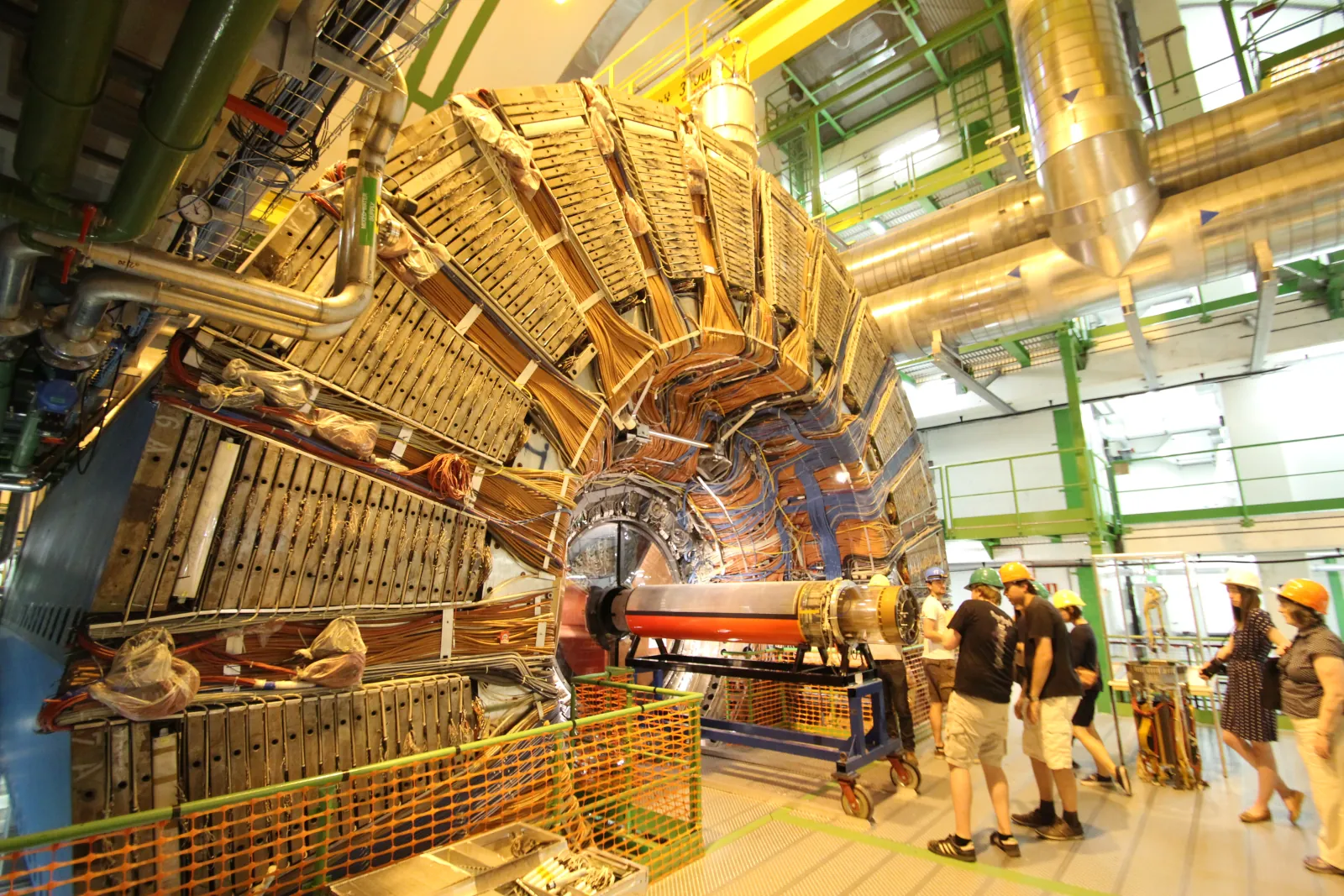
But at CERN, the dependence is even deeper. Accelerators need operating systems that adapt to very specific hardware, that work for years without surprises and whose code can be audited and modified. Linux, with its open source and its huge community, meets those three conditions. That is why the laboratory has built its entire infrastructure on it, from data analysis clusters to the boards that govern the LHC magnets. Linux is, in practice, the lingua franca of modern physics.
The scale helps to understand it. The LHC generates data volumes counted in petabytes, and that data travels through a global network of interconnected computing centers. Maintaining that infrastructure with closed operating systems, without being able to audit the code or adjust the kernel, would be unviable. The laboratory needs an open system that evolves with it, and Linux is the best option for that.
The 5 perfect Linux distributions to take your first steps
A quarter of a century in the Red Hat family
On the other hand, CERN's relationship with the Red Hat family is long. In the early 2000s, the laboratory and Fermilab, its equivalent in the United States, jointly maintained Scientific Linux, a distribution derived from Red Hat Enterprise Linux designed for research. The project, started in 2004, served for about ten years, until Red Hat decided to take the reins of CentOS in 2014.
CERN then switched to CentOS, first with its own build of CentOS 7 and later with an eye on CentOS 8. The plan went awry in December 2020, when Red Hat cut the lifespan of CentOS 8 overnight. Originally, the distribution was to receive support until 2029, but with the changes, it was set to expire at the end of 2021. For a laboratory that plans its machine shutdowns years in advance, it was a serious warning.
The response was to move to AlmaLinux, a community-maintained RHEL clone. Before that, the engineers tried an intermediate path: validating CentOS Stream 9, the continuous distribution model that Red Hat was promoting, and then jumping to Stream 10 and Stream 11. It was precisely while studying that path that the obstacle that would end up sinking the plan appeared.
A compiler flag as the trigger
But the trigger for the change has been an apparently minor technical detail. RHEL 9, the version that began arriving in 2022, set the x86-64-v2 instruction set as the minimum processor requirement, enabled by default with the -march=x86-64-v2 compiler option. That level requires CPU features, such as certain vector instructions, that older processors do not have.
The x86-64-v2 and x86-64-v3 levels are a microarchitecture classification that groups processor capabilities: in practice, they determine which CPUs can run software compiled with each level. CERN's industrial equipment, designed to last decades, was left out of the new path.
The impact on CERN was immediate. As they explained at the conference, that requirement left out 47 percent of its embedded control computers. And RHEL 10, which arrived in 2025, raised the stakes to the x86-64-v3 level, discarding another 17 percent of the survivors. In total, keeping pace with Red Hat would have forced the replacement of nearly 65 percent of the accelerators' control fleet.
The engineers summed it up with two expressions that are already circulating around the world: forced obsolescence and the straw that broke the camel's back. An internal analysis from 2023 estimated at about 5.4 million Swiss francs the cost of staying on Red Hat's path, not counting the months of accelerator shutdown during board replacement. An event that could easily take five years between replacements, tests and validation of the new environment.
Hugging Face hack and the powerful message it sends to the world
Which systems will be affected?
It is worth clarifying the scope, because the migration does not touch all of CERN. The laboratory divides its control systems into three levels. The first is made up of the consoles from which operators supervise the accelerators. The second are the data centers, where the commands that later travel to the machine are recorded and validated. The third, the most delicate, are the underground computers that directly control the accelerator equipment.
| Level |
Function |
Operating system |
| Consoles |
Operator supervision |
RHEL and AlmaLinux |
| Data center |
Command recording and validation |
RHEL 9, toward AlmaLinux 10 |
| Underground front-end |
Direct control of the accelerators |
Debian 13 |
It is that third level that changes operating system. They are more than 2,200 machines spread across some 43 square kilometers of tunnels, buildings and technical rooms, connected to about 17,000 devices. Among them there is highly specialized hardware: VMEbus single-board computers, PCI cards developed specifically at CERN and proprietary monitoring systems.
These machines live underground, next to the machine, and connect directly to the custom control equipment. They do not support a conventional rolling deployment: accelerator operation follows fixed schedules of run periods, technical stops and commissioning windows, so every change is planned months in advance.
The official clarification is important: the data centers and experimental computing stay on RHEL and AlmaLinux. In fact, CERN's Linux pages still recommend AlmaLinux or RHEL for most of its users. Debian is installed, for now, on the systems that live underground.
Why Debian and not another distribution?
Why Debian and not stay within the Red Hat family with another option? CERN's evaluation was not trivial. The engineers placed the candidates on two axes: the control and maintenance that each distribution offers, and its integration with CERN's platform. RHEL, CentOS Stream, Rocky Linux and AlmaLinux scored high on integration, because CERN has spent decades building its tools around them. Less common options were also evaluated, such as the Civil Infrastructure Platform.
Debian and Ubuntu, by contrast, appeared as low-maintenance options, but with poor integration with the laboratory's systems. There was even a way out that did not require changing families: AlmaLinux 10 offers a separate build for x86-64-v2 hardware with a decade of support. CERN chose Debian despite everything.
The Debian community, moreover, boasts one of the largest package collections in the ecosystem and a release process based on consensus, without a company behind it that could alter the roadmap overnight.
The engineers' explanation was that independence weighed more than convenience. Changing distribution once is fine; depending on an RHEL clone that in turn depends on Red Hat, and living with the risk that it changes the terms again, not so much.
Free software: The invisible scaffolding of internet civilization
Advantages and challenges of leaving Red Hat
What does CERN gain from the change? On paper, quite a lot.
- Debian maintains much looser hardware requirements, so current machines survive without redesigns.
- Its release cycle, with support of about five years per version, fits the accelerators' maintenance windows.
- The community and independent model avoids depending on a company's decisions.
- For the long horizon, CERN has contracted support and training from Freexian, the company that maintains Debian's ELTS packages, which extend the useful life of each version.
- Debian promotes the reproducibility of its packages, a value aligned with the demands of a scientific laboratory.
Not everything is advantages. In the talk, the engineers were candid about the gaps they found. Debian does not have standard tools to build and publish packages automatically, and some workflows do not support several versions of the same package at once.
CERN has had to adapt its Koji build service to produce .deb packages and uses ELBE to set up build environments. In addition, the change requires training teams that have been in the Red Hat ecosystem for twenty years.
The migration, a long-term project
How the change is executed also has its complications. These computers are not updated like a laptop: they boot over the network and mount their root filesystem over NFS, and CERN compiles its own kernels, initramfs images and configures its own boot manager. Each image must be validated with each combination of kernel, driver and hardware before being deployed, in an environment where an unscheduled shutdown is measured in physics, not minutes.
That is why the migration is not a weekend job. The plan is to continue with Debian 12 Bookworm for the rest of 2026, deploy Debian 13 Trixie as the stable base from 2026 to 2030 and begin preparing Debian 15. The project's horizon reaches 2033. As the engineers joked, the idea is to avoid having to hot-patch a particle accelerator.
The rollout will be in stages, taking advantage of technical maintenance windows, and each group of machines is validated separately before making the leap.
Flathub, the Linux App Store that has already surpassed 4 billion downloads
The future of science is written with free software
CERN's decision has readings that go beyond a change of operating system. A laboratory that for twenty years was a standard-bearer of the Red Hat family has chosen the community distribution par excellence to control the most complex machines on the planet. Not because Debian is perfect, but because free software allowed it to solve a software problem without touching the hardware.
It is one more confirmation that modern science relies on open source. Without Linux and without reproducible and auditable systems, projects like the LHC would be much harder to maintain. The same is true of the great scientific megaprojects driven by free software, where shared code is part of the scientific method.
And the irony is delicious. The birthplace of the World Wide Web, which was born precisely as an open project, is once again looking toward the model that made it possible. The future of science is written, increasingly, with free software.
The question now is whether other institutions will follow the example. For years, the scientific ecosystem moved as a bloc behind Red Hat; if CERN's migration goes well, other high-energy physics laboratories could look at Debian with different eyes.