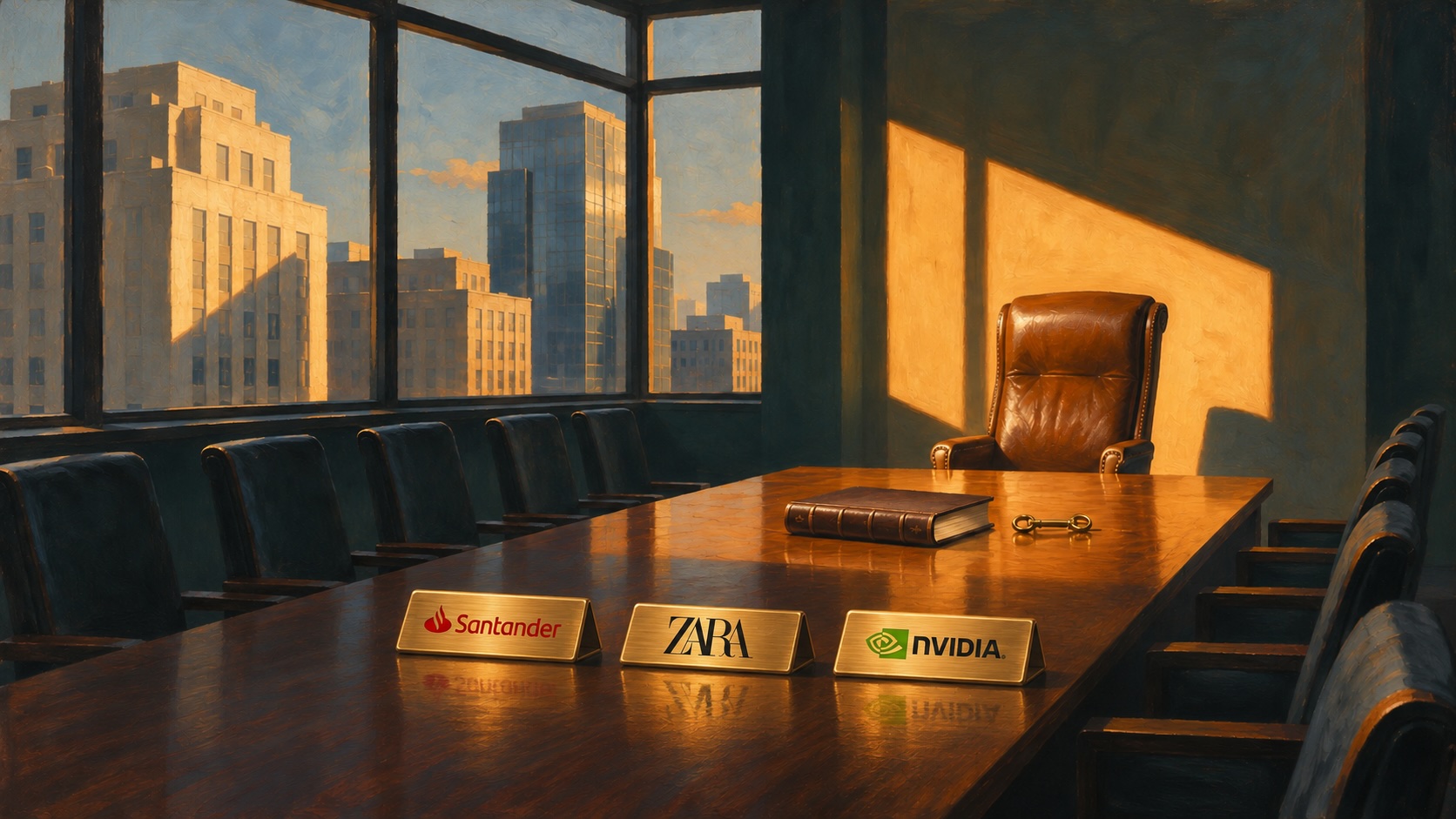
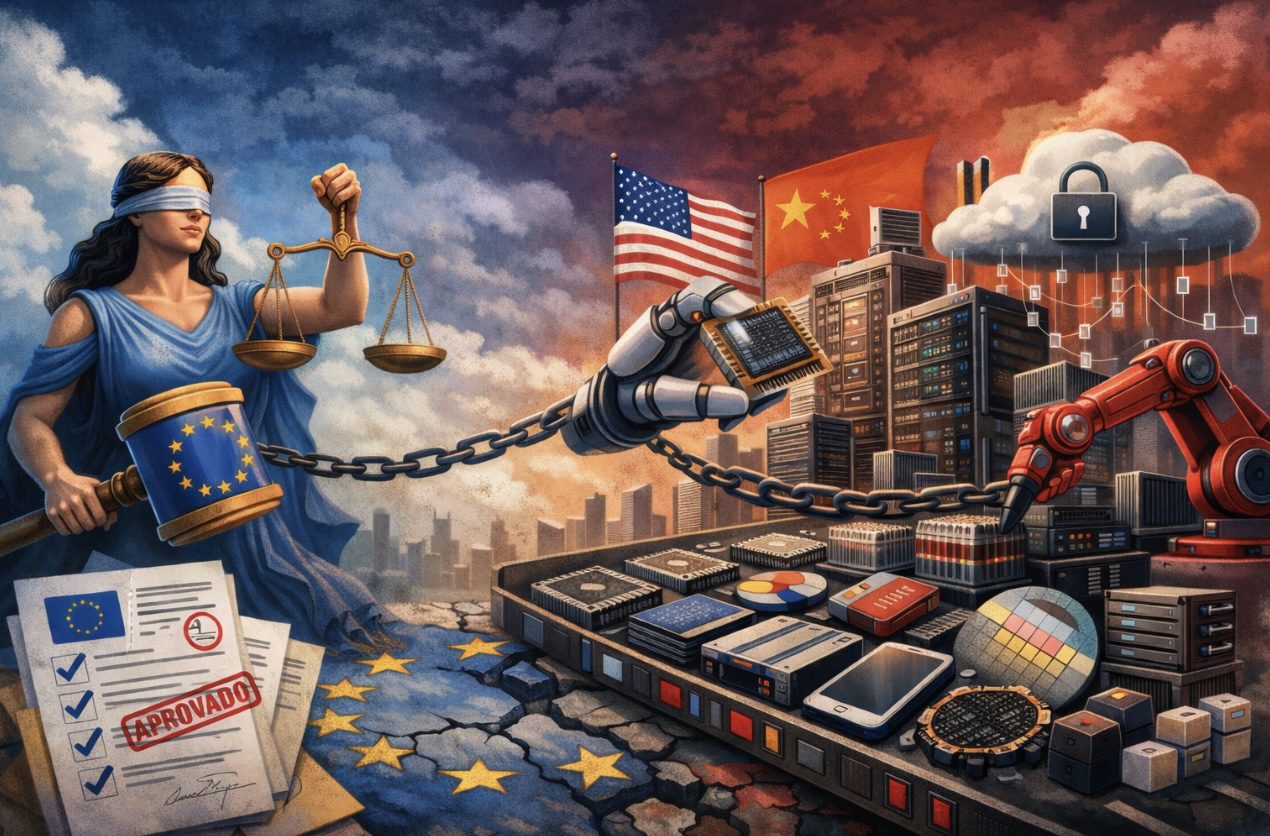
The cases of Jensen Huang (Nvidia), Ana Botín (Banco Santander), Amancio Ortega and Marta Ortega (Inditex-Zara) and Andy Byron (Astronomer) push us to think about the relationship between family, big business and global capitalism. Of course, these are not equivalent cases, which allows us to address four different models of the company: charismatic technological leadership, professionalized family succession, the continuity of family wealth without the automatic transfer of executive power, and the reputational fragility of leaders in the economy of public exposure. They represent different ways of exercising, transmitting, controlling and losing corporate power.
The contemporary company is undergoing a transformation that goes far beyond digitalization, artificial intelligence or the internationalization of markets. The nature of corporate power is also changing: who exercises it, how it is transmitted, what legitimacy it has and what the limits of the authority of those who run large corporations are.
For decades, capitalism has been explained fundamentally through three figures: the founding entrepreneur, the owner of capital and the professional executive.
Three threads: that of original value, that of character and the professional one. However, 21st-century global capitalism has made this relationship extraordinarily more complex. Today, large family fortunes, listed corporations, technology companies whose value depends on global ecosystems and organizations subject to practically permanent public exposure all coexist.
Passion defeats Nvidia's algorithm and corners Jensen Huang
The recent events involving Jensen Huang, founder and until a few days ago chief executive of Nvidia; Ana Botín, chair of Banco Santander; the Ortega family, owner of a controlling stake in Inditex; and Andy Byron, former CEO of Astronomer, allow us to reflect on a fundamental question: is the company still an economic institution, or has it also become an extension of the power, identity and reputation of its leaders
Huang's resignation
Nvidia represents one of the most extraordinary examples of contemporary technological capitalism. Its growth has placed it at the center of the artificial intelligence revolution and has turned its processors into strategic infrastructure for the world economy. The reigning company of chips in a world of chips.
For more than three decades, Jensen Huang was much more than the company's top executive. He was its founder, its main spokesperson, its strategist and a central figure in relations with governments, investors, manufacturers and technology companies. The problem with this model appears when the founder's personality acquires such a large dimension that it becomes difficult to separate his image from the organization itself.
On November 12, 2026, Nvidia announced Huang's resignation as chair, chief executive and member of the board of directors. The decision came after a reputational crisis and reports about personal relationships and possible national security implications that prompted an investigation. The company appointed its chief financial officer, Colette Kress, as interim chief executive and announced the search for a definitive successor. The company was for chips; but not for gossip, with tech spies involved.
The Botín family
Beyond the specific circumstances, the case raises an essential question for corporate governance: how can a company of systemic dimension guarantee its continuity when its leadership is so personalized? Nvidia is not only a company that makes chips. It is a central piece of the technological infrastructure on which a good part of the digital economy is being built. Its importance transcends its shareholders and affects manufacturers, data centers, governments, universities and companies across the planet.
The business lesson is clear: the larger a corporation's dimension, the less its stability can depend on a single person. The founder can be the origin of competitive advantage, but the institutionalization of power, the existence of independent controls and succession planning are indispensable conditions for guaranteeing continuity.
The Banco Santander case introduces a different dimension: the relationship between family ownership, institutional control and the professionalization of management. A centuries-old relationship. The Botín family represents one of the great Spanish business stories. Four generations have been linked to the leadership of an entity that has gone from being a bank of regional origin to becoming one of the great international financial groups.
Ana Botín has recently announced that she will not be replaced by another member of her family when she leaves the Santander chairmanship. Her approach opens a new stage in the relationship between the family and the institution: the continuity of family values does not necessarily require that executive management fall to a descendant. This distinction is especially important.
Equity stake
In the traditional family business, ownership, management and succession are usually closely related. The founder transmits the wealth and, often, also the responsibility of running it. But in large international corporations this formula may be of little relevance.
The family can maintain an equity stake, a presence on the board and an influence on corporate culture without having to automatically reserve executive positions for itself. In this sense, Botín's approach connects with one of the great transformations of capitalism: the progressive separation between capital, corporate governance and professional management.
It also introduces a regulatory question. The separation between the executive functions of the chair and the supervisory responsibilities of the board is a relevant issue in the European debate on the governance of financial institutions. Santander's future will therefore be something more than a matter of personal succession. It may become an example of how a large company of family origin evolves toward an institutional model in which the family preserves its historical link, but management opens up to professionals from outside it. The question is no longer who will inherit the bank, but how to guarantee that the culture, strategic vision and values that explain its trajectory survive its leaders.
Marta Ortega
The case of Amancio Ortega and his daughter Marta Ortega offers a third perspective, especially interesting for understanding Spanish capitalism. Inditex shows that a family business can reach an extraordinary international dimension without necessarily losing its identity of origin.
Amancio Ortega's trajectory is not explained solely by the creation of Zara. His great business contribution was building an integrated system of design, production, distribution and marketing capable of responding quickly to changes in the global market. But he also knew how to anticipate a fundamental problem: the continuity of the company after the founder. Amancio Ortega's departure from the chairmanship in 2011 and the appointment of Marta Ortega as chair of Inditex in 2022 reflect a transition that combines family continuity and managerial professionalization.
The current structure distinguishes between the institutional and strategic representation of the family, on the one hand, and executive management, on the other, headed by chief executive Óscar García Maceiras. It is an especially significant model because it allows family ownership control to be maintained without necessarily turning the company into an organization managed exclusively by its owners. In addition, the family wealth is articulated through Pontegadea, which channels real estate and industrial investments and allows the resources generated by the business activity to be diversified.
Global capitalism
Here we find an essential characteristic of global capitalism: the transformation of the founding entrepreneur into an investor of international dimension. The original company becomes a large listed corporation; the family retains a relevant stake; and the wealth generated is reinvested in other sectors and geographies.
The question Inditex raises is whether this model can become a reference for other family businesses that aspire to survive beyond the third or fourth generation. Its experience shows that continuity does not necessarily consist of reproducing the founder's model, but of preserving what constitutes the organization's competitive advantage, while at the same time adapting its governance structure to a global dimension.
The case of Andy Byron, former chief executive of Astronomer, introduces a different but equally important dimension, despite its anecdotal appearance: the personal responsibility of those who run a company in a society dominated by instant communication and social media. In July 2025, Byron was involved in a widely publicized episode during a Coldplay concert. Images from a camera at the venue went viral and triggered a reputational crisis. Subsequently, the board of directors accepted his resignation.
The public narrative
The episode highlighted the extent to which the private conduct of an executive can end up affecting an organization's public image. This is not to say that any personal behavior should automatically become a business matter. Private life deserves protection and companies cannot replace the courts or become bodies of moral surveillance. However, there is a specific responsibility when the behavior of a senior executive affects trust, internal culture, professional relationships or the credibility of the organization.
In large corporations, reputation is an economic asset. It affects customer trust, the ability to attract talent, relations with investors and how the markets perceive the company. The Byron case also shows a paradox of digital capitalism: business leaders have unprecedented communication and visibility capacity, but that same exposure can become a factor of vulnerability.
The company no longer fully controls its public narrative. An image, a statement or an individual action can acquire a global dimension within hours.
Reputation as a variable
The four cases represent different realities, but they allow us to identify some common trends. First, global capitalism needs companies capable of outliving their founders. The scale of markets, technological complexity and economic interdependence make it increasingly difficult for an organization of international scope to depend exclusively on the personality of its top executive.
Second, the family business is not disappearing. It is changing. Families such as the Ortegas or the Botíns show that it is possible to preserve equity and institutional influence while professionalizing executive structures. Third, technology has increased the concentration of corporate power. Nvidia shows that a company can become a strategic actor for governments and entire economies. This forces a rethink of the mechanisms of oversight, accountability and control.
Finally, reputation has become a first-order economic variable. Leaders no longer answer only to their shareholders and boards of directors. They are also subject to a society that observes, interprets and questions their decisions. The great question of contemporary capitalism is not only who owns companies or who obtains their profits. It is also who controls their decisions, who is accountable for their consequences and what mechanisms guarantee their continuity.
Family capitalism
The founding entrepreneur has historically been a central figure in economic development. His ability to take risks, innovate, invest and create organizations has been fundamental to the expansion of capitalism. But the global company of the 21st century needs something more than charismatic founders and large family fortunes.
It needs solid institutions, independent boards of directors, succession mechanisms, transparency and a culture of responsibility. This does not mean eliminating the influence of business families or denying the role of great entrepreneurs. It means recognizing that the scale reached by many corporations requires separating the particular interest of their leaders from the long-term interest of the organization.
Family capitalism can be perfectly compatible with business modernization. Family ownership does not have to imply hereditary management, just as professionalization should not necessarily mean the loss of identity or values.
The true test of a company consists not only of achieving success while its founder is present, but of demonstrating that it can sustain it when he is gone. Nvidia, Santander, Inditex and Astronomer, from very different realities, place us before the same reflection: corporate power must be accompanied by responsibility and subject to institutions capable of outliving individuals.
In short, the great challenge of global capitalism consists of moving from the company of great entrepreneurs to the company of great institutions. A transformation that does not eliminate individual leadership or family ownership, but that forces recognition that no person, however brilliant, powerful or influential, should be indispensable to the survival of an organization.