Free Software, Infinite Science: the symbiotic relationship between science and free software
Free software is the infrastructure of modern science. Meet the 4 international megaprojects that rely on it to revolutionize the world. For centuries, the advance of science was consolidated at the slow pace of ink and paper: notebooks that passed from generation to generation, formulas scribbled on chalkboards and a slow postal correspondence that crossed oceans to connect the brightest minds of the era. Knowledge was a fragmented mosaic.
Today, however, the picture is radically different. The space telescope that scrutinizes the origin of the cosmos, the genetic sequencer that deciphers the mysteries of DNA in minutes and the colossal particle accelerator that recreates the conditions of the Big Bang share the same invisible but vital heart: they are built on free software.
This transition marks a historic milestone. Free software has ceased to be a mere computing alternative or a tool exclusive to technology enthusiasts; today it has become the very infrastructure, transparent and democratic, on which humanity builds, validates and shares all its scientific knowledge. Without those lines of code accessible to all, the pace of modern discovery would simply grind to a halt.
Genesis of a natural alliance
The synergy between science and free software is no coincidence; they share the same cultural DNA. The fundamental principle of science is reproducibility: a discovery is not validated until other scientists replicate the experiment and obtain the same result. Likewise, free software is based on transparency: the ability to inspect, modify, improve and redistribute the code.
This formal collaboration began to take shape in the mid-1980s and early 1990s, coinciding with the birth of the free software movement led by Richard Stallman and the subsequent popularization of Linux by Linus Torvalds.
The definitive turning point came in 1994, when CERN (the European Organization for Nuclear Research) made the historic decision to release the code of the World Wide Web (created by Tim Berners-Lee) under the public domain and open source models. From that moment on, the international scientific community understood that depending on black boxes of proprietary software (where you cannot see how the data is calculated) was an unacceptable risk for the accuracy and integrity of research.
A critical role in modern science
Today, free software plays three critical roles in laboratories across the planet:
Democratization of access: It allows institutions with limited budgets or researchers in developing countries to use top-level analytical tools without paying prohibitive license fees.
Algorithmic transparency: If a piece of software detects a new planet or a genetic mutation, scientists can audit the code to make sure the result is not a programming error or a system bias.
Acceleration of innovation: Instead of spending years programming a tool from scratch, a research team can take existing free software, adapt it to its needs and publish the improvement for the benefit of all humanity.
4 major scientific projects driven by Free Software
The real impact of this philosophy is best seen by looking at the most ambitious scientific megaprojects of our era, spread across various branches of knowledge:
High-Energy Physics: the Large Hadron Collider (CERN)
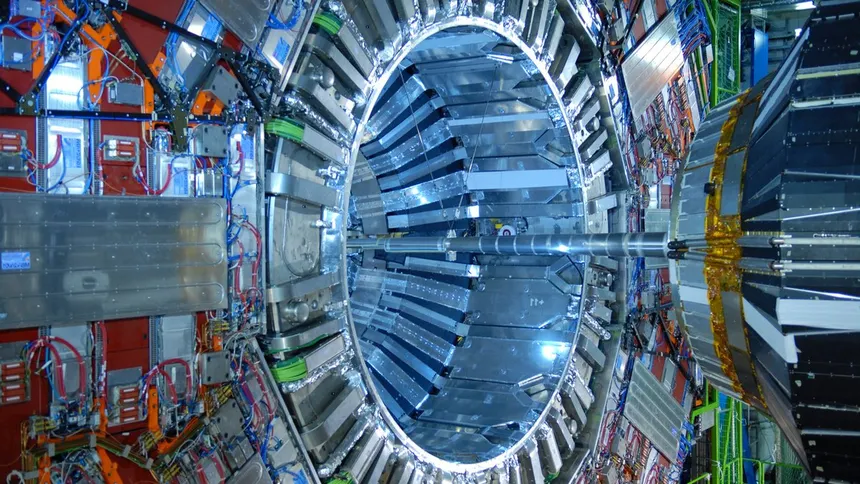
On the border between France and Switzerland, buried a hundred meters underground, CERN's Large Hadron Collider (LHC) smashes beams of protons together at almost the speed of light. These subatomic events generate a truly colossal amount of information: about a petabyte of raw data for every second of operation. Filtering, storing and deciphering this digital tsunami to find events as elusive as the Higgs Boson would be an impossible task for any closed commercial software.
To meet this challenge, the high-energy physics community understood that it needed tools made to measure, transparent and scalable. Thus ROOT was born, an object-oriented software environment developed under an open source license. ROOT is not just a program, but a massive computational ecosystem that enables efficient data storage in modular formats, advanced statistical analysis and multi-dimensional visualization. Every graph, curve and discovery published by LHC researchers in recent decades has passed, at some point in its processing chain, through the guts of ROOT.
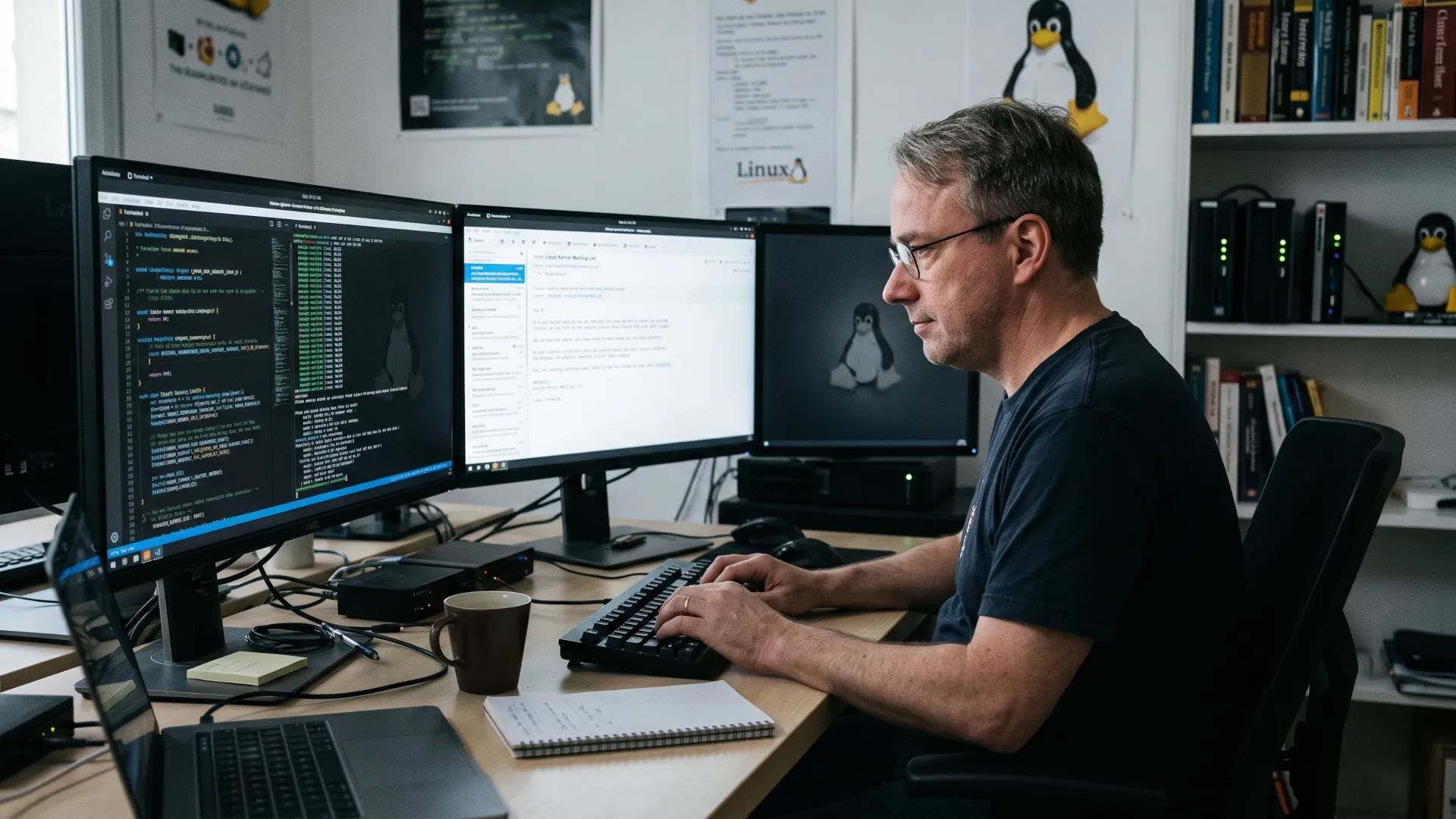
The LHC makes intensive use of free software to run its machinery
Unraveling the secrets of the world
But discovering a particle requires not only analyzing the collision, but also simulating it with absolute mathematical precision. This is where Geant4 (Geometry and Tracking) comes into play, another fundamental pillar of free software in global science. Developed by an international collaboration of scientists, Geant4 is a toolkit that simulates step by step how energetic particles travel as they pass through matter and detectors.
The beauty of this model lies in its cross-cutting nature: the free code of Geant4, originally designed to understand the heart of the atom at CERN, is today used worldwide to plan radiotherapy treatments against cancer in hospitals, design space satellites resistant to cosmic radiation and improve safety in medical nuclear engineering. It is the perfect demonstration of how open source born in pure physics ends up transforming everyday life.
Astronomy and Astrophysics: the James Webb Space Telescope (NASA/ESA)
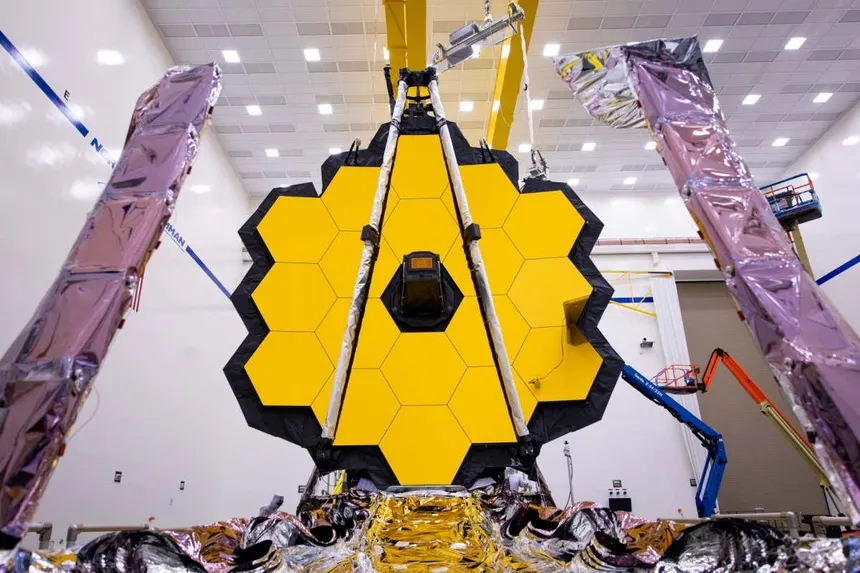
The iconic images that the James Webb Space Telescope (JWST) sends us from its orbit at Lagrange point L2, 1.5 million kilometers from Earth, do not come out of the camera ready to be published. What the JWST initially transmits to the antennas of the Deep Space Network are raw data files full of cosmic noise, instrumental distortions and cosmic rays striking its infrared sensors.
Transforming those cold bits into thermal maps of exoplanets or into the sharpest images of primitive galaxies requires an extremely complex calibration pipeline, and all of it runs on free software.
The backbone of this processing is Python, a language that the astronomy community adopted en masse due to its readability and flexibility. Specifically, the core of the research rests on Astropy, a community-driven, open source project that provides the fundamental tools for modern astronomy. Astropy handles critical tasks such as manipulating files in FITS format (the standard for astronomical data storage), calculating high-precision celestial coordinate transformations, photometry and spectroscopic analysis.
Examining the cosmos
When the Space Telescope Science Institute (STScI) processes JWST data, it uses open source libraries that anyone can download and inspect on GitHub. This completely eliminates the concept of the black box in astrophysics: a scientist in Tokyo, one in Bogotá and another in Munich can run exactly the same algorithm on the same public data, guaranteeing that the analysis of the light from the first stars of the universe is reproducible and transparent.
In addition, this open infrastructure allows seamless integration with other libraries in the free ecosystem, such as NumPy for massive numerical computation, SciPy for scientific algorithms and Matplotlib for visualization. By standardizing software communally, astrophysics has enabled researchers to stop spending time programming data-reading tools from scratch, allowing them to focus on what really matters: discovering the secrets of the deep cosmos.
Molecular Biology and Medicine: AlphaFold (Google DeepMind)
Proteins are the nanomachines of life: they transport oxygen in the blood, fight viruses and digest food. However, to fulfill their function, a chain of amino acids must fold onto itself into an extremely complex three-dimensional structure. For more than half a century, predicting the exact shape a protein would adopt based solely on its genetic sequence was considered one of the holy grails and greatest challenges of molecular biology. Solving a single three-dimensional map required years of grueling laboratory work using ultra-expensive techniques such as X-ray crystallography.
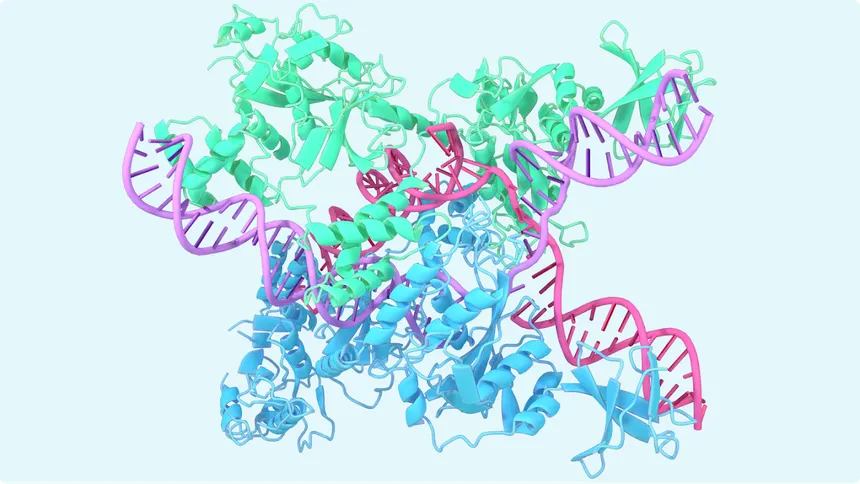
The paradigm changed radically when DeepMind presented AlphaFold, an artificial intelligence system capable of predicting these molecular structures in a matter of minutes and with atomic precision. What was truly revolutionary for global science was not only the technical achievement, but the strategic decision to release AlphaFold's source code under open licenses and make its immense database publicly available in collaboration with the European Molecular Biology Laboratory (EMBL).
By opening the code, the international biomedical community received a collective superpower. Researchers can not only consult predictions already made, but also run the algorithm on their own local servers to model specific mutations or interactions with drugs under development.
Today, laboratories across the planet use this free technology to design synthetic enzymes that devour plastic, understand the mechanisms of antibiotic resistance and accelerate the development of vaccines targeting eradicated diseases or new pandemic threats. The opening of AlphaFold transformed biological research: a 50-year scientific bottleneck dissolved into a global digital library, shared and free for all humanity.
Nuclear Fusion Energy: the ITER Project
In Saint-Paul-lez-Durance, in the south of France, one of the greatest milestones of human engineering is taking shape. Thirty-five nations are collaborating on the construction of ITER (International Thermonuclear Experimental Reactor), a colossal Tokamak-type device designed to demonstrate that nuclear fusion —the same physical process that powers the Sun and the stars— can be replicated on Earth in a stable way to obtain a clean, safe and inexhaustible energy source.
The technical challenge is overwhelming. To achieve fusion, the hydrogen gas inside the reactor must be heated until it becomes plasma at a temperature of 150 million degrees Celsius, ten times hotter than the core of the Sun itself. At that extreme temperature, no solid material in the known universe can contain the plasma without instantly melting. The solution consists of suspending this ionized gas in the air using ultra-powerful magnetic fields. Controlling this artificial sun requires predicting with absolute accuracy the magnetohydrodynamics (the behavior of electrically conducting fluids in magnetic fields) and the thermal flows that impact the walls of the vacuum chamber.
To solve these complex fluid and heat transfer equations, ITER and its associated research centers rely fully on free software solutions, with particular emphasis on OpenFOAM (Open Source Field Operation and Manipulation). This open source toolkit is the global standard for Computational Fluid Dynamics (CFD).
Because it is free software, the project's nuclear physicists can directly modify the solvers of the numerical code to adapt them to the extreme conditions of the plasma, something that closed commercial packages do not allow due to their proprietary restrictions. In addition, advanced simulations of material behavior and reactor cooling are processed on supercomputers using open parallel computing libraries, guaranteeing that scientists from any member country can transparently audit, improve and validate the computational models. The path toward the energy of the future is calculated, line by line, in open source.
The future of science is open
This makes it clear that the paradigm has completely changed. Today, scientific excellence is no longer measured by the secrecy of a laboratory, but by its ability to integrate into global collaboration networks. By removing the economic barriers and industrial secrets of computational tools, free software has shown that human knowledge advances much faster when it is shared without restrictions. In the race to solve the climate, medical and energy crises of our century, open source is not just a help: it is the mandatory path.