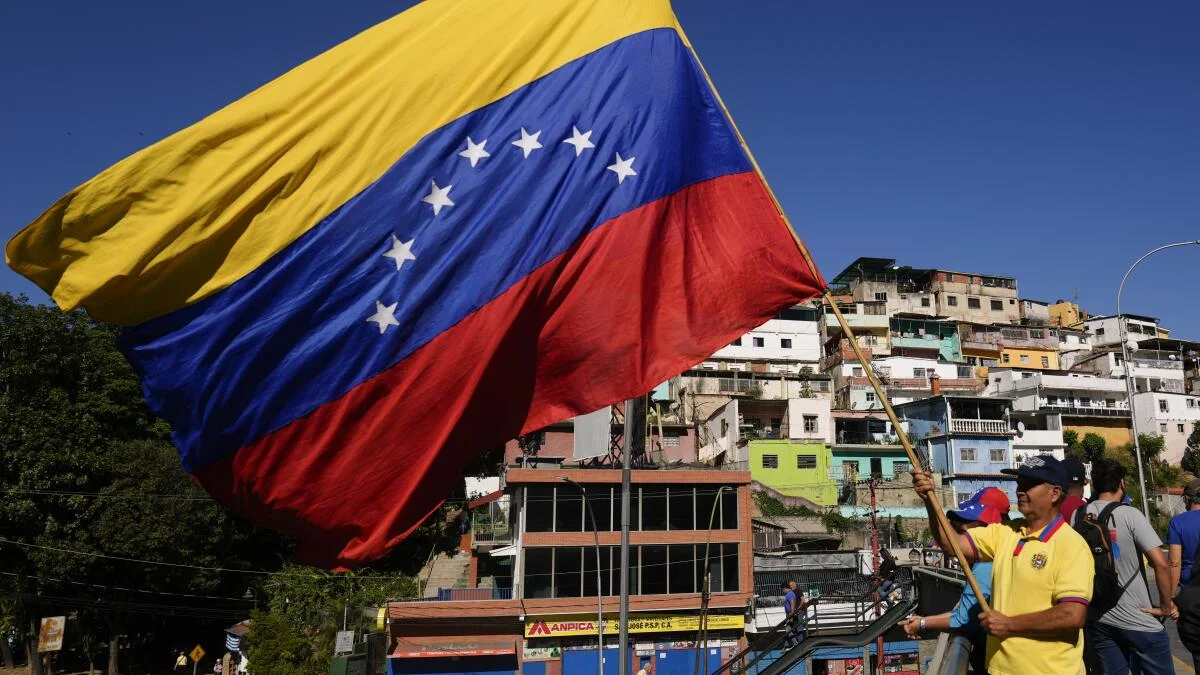
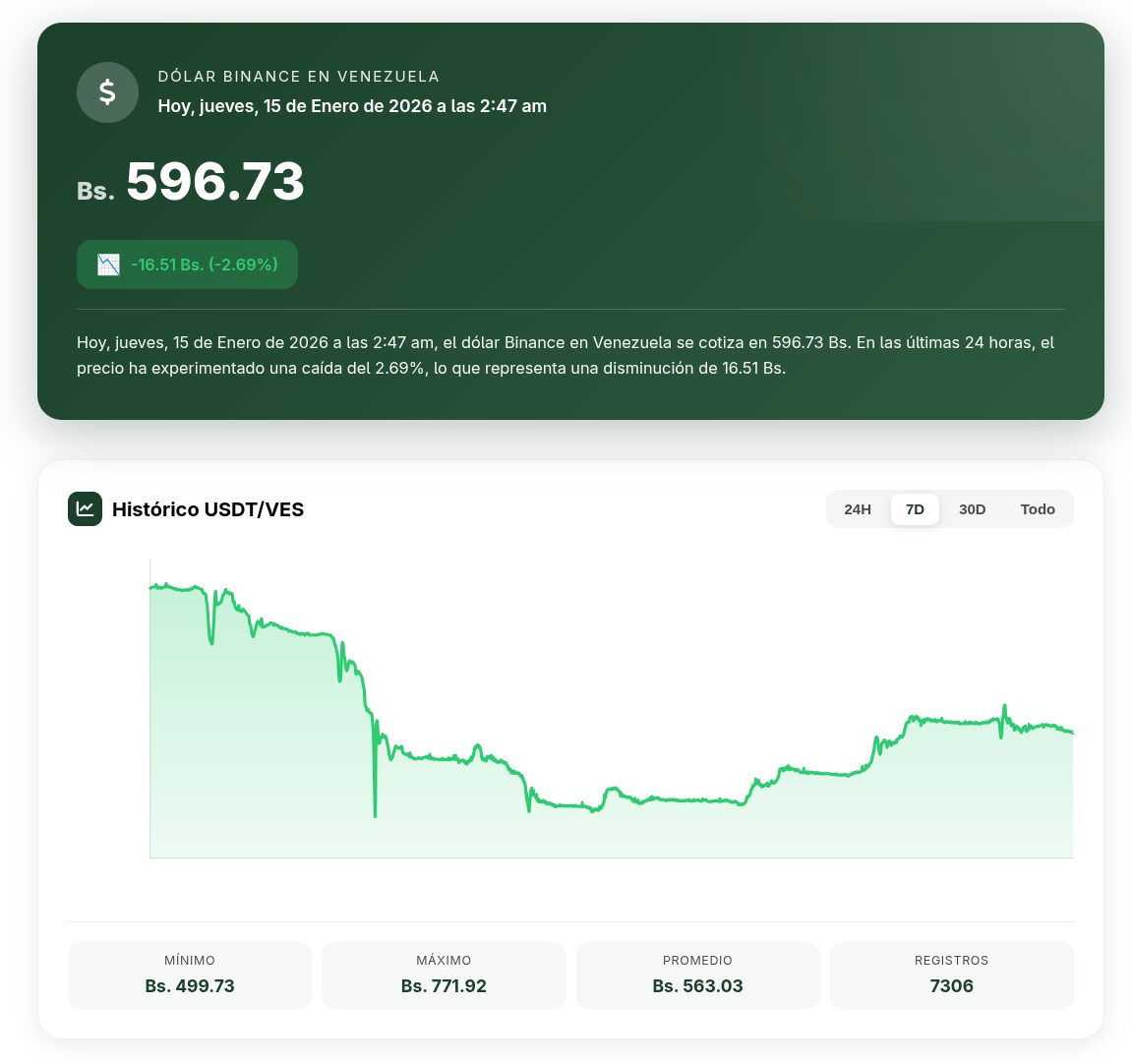
The economic situation in Venezuela continues to deteriorate very rapidly, something that can be seen in how the USDT market fluctuates and keeps advancing in its conquest of the country's dollarized financial sector. Since the capture of Nicolás Maduro by the United States on January 3, and the arrival in the Presidency of his then Vice President, Delcy Rodríguez, the country has been going through a highly volatile market situation. This has led USDT to hit 1000 Bs per USDT, then fall to 500 and rise again to 600 Bs, with a strong upward trend, due to the lack of foreign currency and the BCV's total absence of intervention in a exchange market tightly controlled since 2003.
Added to this situation are events such as Venezuela currently having its oil sales paralyzed and future oil sales being entirely controlled by the United States, which once again opens the window to volatility, as it is unknown what the banking intervention scheme will be or whether that scheme will definitively fall in favor of a free currency market.
CRYPTOCURRENCIES AS AN ALTERNATIVE TO FINANCIAL CONTROL IN VENEZUELA
On the other hand, Venezuela's transitional government, in the hands of Delcy Rodríguez, is preparing to approve a series of laws that further raise fears that Venezuela will return to negative and historic economic spirals that would take the country into a complete reversal of the current economic scheme.
Oil controlled by the United States
And in all of this, the main economic key is oil. US President Donald Trump has said that "Venezuela will not be able to sell oil without authorization from the United States." In fact, he has commented that for now, at least 30 to 50 million barrels of oil will be sent from Venezuela to the United States, as part of an initial understanding agreement between his administration and the one led by Delcy Rodríguez.
However, Trump's statements are not limited to that point. They are joined by the cancellation of oil shipments to China, Russia, Iran and Cuba, as well as the announcement that all sales of Venezuelan crude and the financial flows derived from them will remain under the direct supervision of Marco Rubio, his Secretary of State. At the same time, a restructuring process has been launched for Venezuela's national debt, which already exceeds $170 billion accumulated during the years of Chavista government. That is, although oil extraction continues to operate within the country, financial control of the activity passes, de facto, into the hands of the United States.
Inflation, the great scourge
To put this in context, in 2025 the IMF calculated Venezuela's GDP at $82 billion, so Venezuela's recognizably public debt is 200% of GDP, and other debt issuances have yet to be examined. So, amid this situation, Delcy Rodríguez's government appears to have little room for maneuver. Especially to maintain the exchange control that Chavismo has kept in the country since 2003, and which is the main culprit behind the mega-devaluation of the bolívar, which led to the accumulation of more than 20 billion percent inflation from 1999 to 2025.
WHAT CONSEQUENCES DOES PRINTING BOLÍVARS TO BUY USDT HAVE FOR VENEZUELA
An absolute outrage, but to understand this, let's run some numbers. In 1999, one US dollar was equivalent to about 648 Bs, but by 2025, that same dollar costs 59.4 trillion Bs (without taking into account the redenominations promoted by Chavismo). In fact, the largest fall in this regard was experienced in the 2008-2017 period, when accumulated inflation reached 12.5 billion percent (again, accumulated inflation).
Price controls, the nightmare that looms again
In an inflationary panorama like this, the price and exchange control scheme that Venezuela has maintained since 2003 has only one effect: destroying the entire productive fabric. The data in this case are clear: FEDECAMARAS, the country's main business and industrial chamber, indicates that at least 500,000 companies have closed in Venezuela, and that nearly 80% of the country's entire industrial base is inoperative. This is what is known as Industricide, the systematic elimination and destruction of industries and companies, to take control of spaces by those closest to power.
In fact, since 2011, with the arrival of the Law on Costs and Fair Prices, this activity did nothing but accelerate, with the catastrophic results obtained. Just to get an idea of this, in 1999, Venezuela produced about 130,000 automobiles of different brands and more than 80% of auto parts production was carried out in the country with companies and related industry. By 2025, automotive production is nil. Cars "made in Venezuela" are actually assembled in Venezuela, with pre-assembled kits mostly from China, and even so, assembly does not exceed 35,000 automobiles per year.
This reality in the automotive world is also seen in other industries, where price control took its toll. And everything seems to point to the situation worsening again, since Delcy Rodríguez wants to push price controls again, abandoned since 2018. This through a new Price Control Law, which is already beginning to bring back bitter memories for the population, especially when many markets are once again limiting the purchase of certain foods (e.g., corn flour).
Weak bolívar, strong USDT
Given this panorama, exchange-rate shocks are understandable. The bolívar, which for a time maintained some stability, even close to parity in the official and parallel exchange markets, is now once again showing extreme weakness. One that will become more pronounced over time if the underlying problems are not corrected.
On the one hand, the BCV, with its diminished access to foreign currency, will not have the financial muscle to carry out exchange interventions, which will lead companies to seek options in USDT. So as the limited financial muscle in dollars of banks and companies runs out, pressure on the USDT market will increase and that will lead to a constant rise in price.
HOW TO SAVE WITH STABLECOINS IN VENEZUELA: A PRACTICAL GUIDE TO PROTECT YOUR MONEY
This event has already been seen in the country, since USDT had a strong drop from 1000 Bs/USDT to the 500-550 Bs/USDT range during the first 10 days of January. But now it has returned to the 580-600 Bs/USDT range, and with the forecast of zero exchange interventions by the BCV, it is most likely that by February of this year we will see a strong rise in the exchange rate.
Imports, the great weak point
Given the situation, many businesses are moving ahead with their play, raising the price of goods. For example, an air conditioner that in November 2025 could cost about $500 now costs more than $1000.
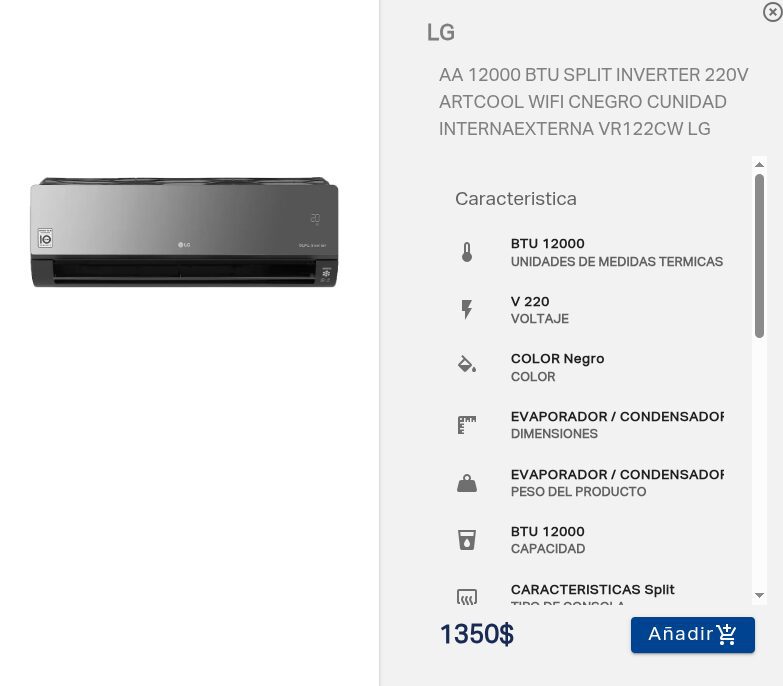
The effect is seen above all in all imported goods, where dollars are essential for their commercialization. But the food chain will also be affected, especially because most food in the country has some component, or all of it, of imported origin. And in that scenario, the rise of USDT will not be a rare event, it will be the rule, something many Venezuelans already sense and are beginning to prepare for.