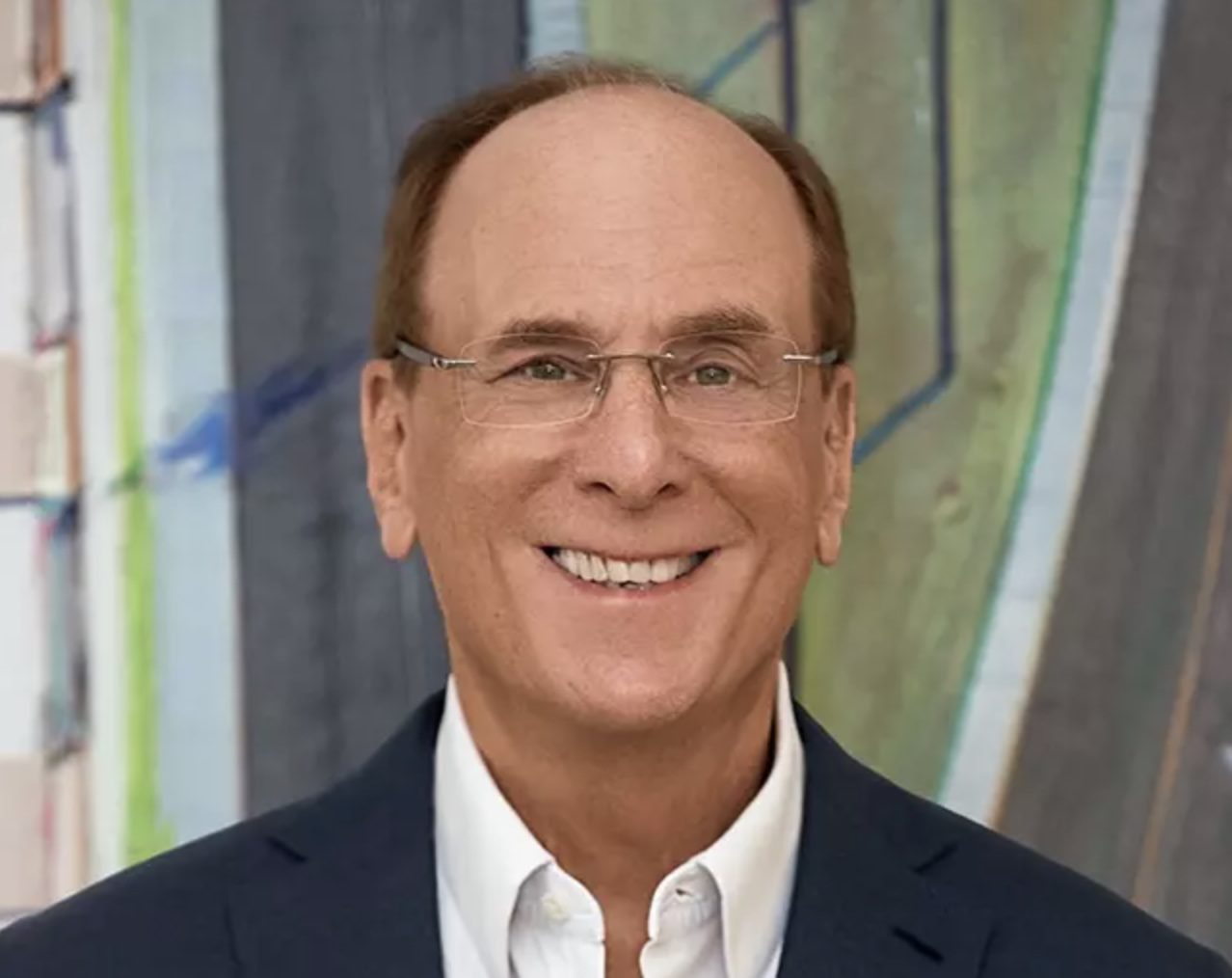
Larry Fink proposes tokenization to curb the inequality brought by AI
For Larry Fink, CEO of BlackRock, the answer to the risk AI poses to social cohesion is tokenization. Fink warns that if AI's productivity boom is concentrated exclusively in corporations and large investors, the wealth gap will become unbridgeable.
In his 2026 annual letter, Fink presents tokenization as the definitive upgrade to the financial plumbing that will allow 21st-century capitalism to stop being an exclusive club and become a tool for mass ownership. Fink presents tokenization as a necessity to correct the inability of the average citizen to capture the wealth generated by assets in the face of eroding wages.
The tokenization of infrastructure
Fink's answer to this scenario is the tokenization of infrastructure. That is, transforming data centers, energy grids and chips into fractionalizable assets. By turning these physical pillars of AI into digital units accessible from a smartphone, tokenization will allow the average citizen to stop being a mere spectator of automation and become a co-owner of the infrastructure that generates it. For Fink, this is not just about financial efficiency, but about the definitive technical tool for AI's benefits to be distributed instantly and massively at the base of the economic pyramid.
Fink grounds his urgency in a figure that illustrates the failure of current financial inclusion. He explains that since 1989, every dollar invested in the U.S. stock market has grown more than 15 times more than the value of a dollar tied to the average wage. This gap, he asserts, has created a society of economic "tenants" who watch wealth concentrate among those who already own assets, while workers depend on incomes that do not scale at the same pace. Tokenization, by allowing real-world assets to be fractionalized, from corporate debt to energy infrastructure, removes the barriers to entry that until now made investment a privilege of the few.
AI and the amplification of inequality
Fink warns that AI has the potential to amplify inequality on an unprecedented scale, since productivity gains will remain with companies and with investors capable of scale. If ownership of these companies and of the infrastructure that sustains AI, such as data centers, is not democratized, the social gap could become unbridgeable.
Finally, Fink advocates a model of national self-sufficiency, where long-term investment replaces dependence on public spending. With debt growing three times faster than GDP, BlackRock's CEO argues that governments can no longer finance the energy, technology and defense transitions on their own.
Capital must come from citizens, but for this to happen, the system must be transparent, cheap and easy to use. Tokenization, by integrating into the digital wallets already used by half the world, promises to make investment as everyday as a payment, Fink says.
Economic survival
In short, Fink refers to tokenization as a matter of economic survival. The goal is to bypass government debt by attracting capital directly from citizens and having private investment facilitated by tokenization technology finance what taxes or debt issuance used to finance.
Covadonga Fernández is founder and director of the newspaper Observatorio Blockchain. She has worked with various companies developing crypto/blockchain projects, such as Singular DTV, a Switzerland-based platform and a pioneer in decentralizing the film industry, which led her to take part in the 2019 San Sebastián Film Festival. That same year she also took part in the Bern International Film Innovation Festival (Switzerland), with a presentation on linguistic plurality in blockchain. In 2022 she took part in the Acción Cultural Española edition with an article on Metaverse and Culture. In 2017 she wrote the chapter on Blockchain and Journalism in the book: «Blockchain: The Industrial Revolution of the Internet», published by Grupo Planeta. A year earlier, in 2016, she created the first Meetup on Blockchain and Journalism. That same year she also created the Blockchain Media site, to track the decentralization process of the cultural and creative industries. In 2020 she co-organized an event on how blockchain could help the cultural and creative industries, where the money received from sponsors was tokenized and speakers received payment in NFT format. Before founding Blockchain Media and Observatorio Blockchain, Covadonga worked at Grupo Z and the newspaper ABC; she was communications director of the Madrid Chamber of Commerce, a journalism professor at Universidad Carlos III de Madrid and chair of Telemadrid. Winner in the Outreach category at the 2024 Financial Innovation Awards and honored by Alastria at the 2025 Blockchain Awards