A paradox that defines the moment. Europe, together with its main ally, the United States, designs and manufactures the hardest part of the chain, the one everyone needs, and then has no industry to buy it. The problem is that this gap doesn't just cost sales. While Brussels looks for ways to create demand, Japan is entering the race at breakneck speed. Canon and Nikon are pushing nanoimprint (NIL) and are already on par with EUV at 7 nm, an achievement that has taken them 15 years of work, and it is serious competition, because NIL is a technology with plenty of room for improvement, but above all, far cheaper and with a much higher production volume.
Meanwhile China is working "wonders" with DUV lithography (less advanced than EUV), advancing in its own EUV development, and at the same time opening its wallet to buy several European intermediate companies and affect AMSL's production chain. All of this has a clear goal: to change the chip landscape by 2030, and everything suggests that is how it will be.
Europe's most valuable company that doesn't sell in Europe
ASML competes in a strange league, that of being the sole supplier of a product no one else knows how to make. The company closed on June 3, 2026 as the most valuable in European history, at $668 billion, above the record Novo Nordisk had set in June 2024, according to Tom's Hardware. In September its market capitalization was around $645 billion, and it was still the largest in the Union, far ahead of SAP, Siemens or LVMH.
The contrast appears when you look at where the money comes from. The big customers for its most expensive machines are TSMC in Taiwan, Samsung and SK Hynix in Korea, and very recently Intel plants in the United States and Elon Musk's Terafab. Europe, by contrast, has not bought a single new tool so far in 2026. Heemskerk is asking the Union to help create demand so that manufacturers have reasons to build here. And all of this is summed up in the EU Chips Act (a name very similar to Donald Trump's Chips Act, with the same goal focused on the United States).
Europe builds the AI highways and lets China make the cars
Europe wants to inject 43 billion euros (from 2024 to 2030) to achieve this, but it already looks insufficient. Why? Let's take one figure to see the levels in this race: Elon Musk's Terafab will invest $120 billion in its plan to develop fabs and chips. One person's project already exceeds the budget of the entire EU's project by 3x. China and Japan? In 2025 alone, China invested more than $55 billion in its chip industry, and Japan injected more than $23 billion.
What is lithography and why does ASML dominate?
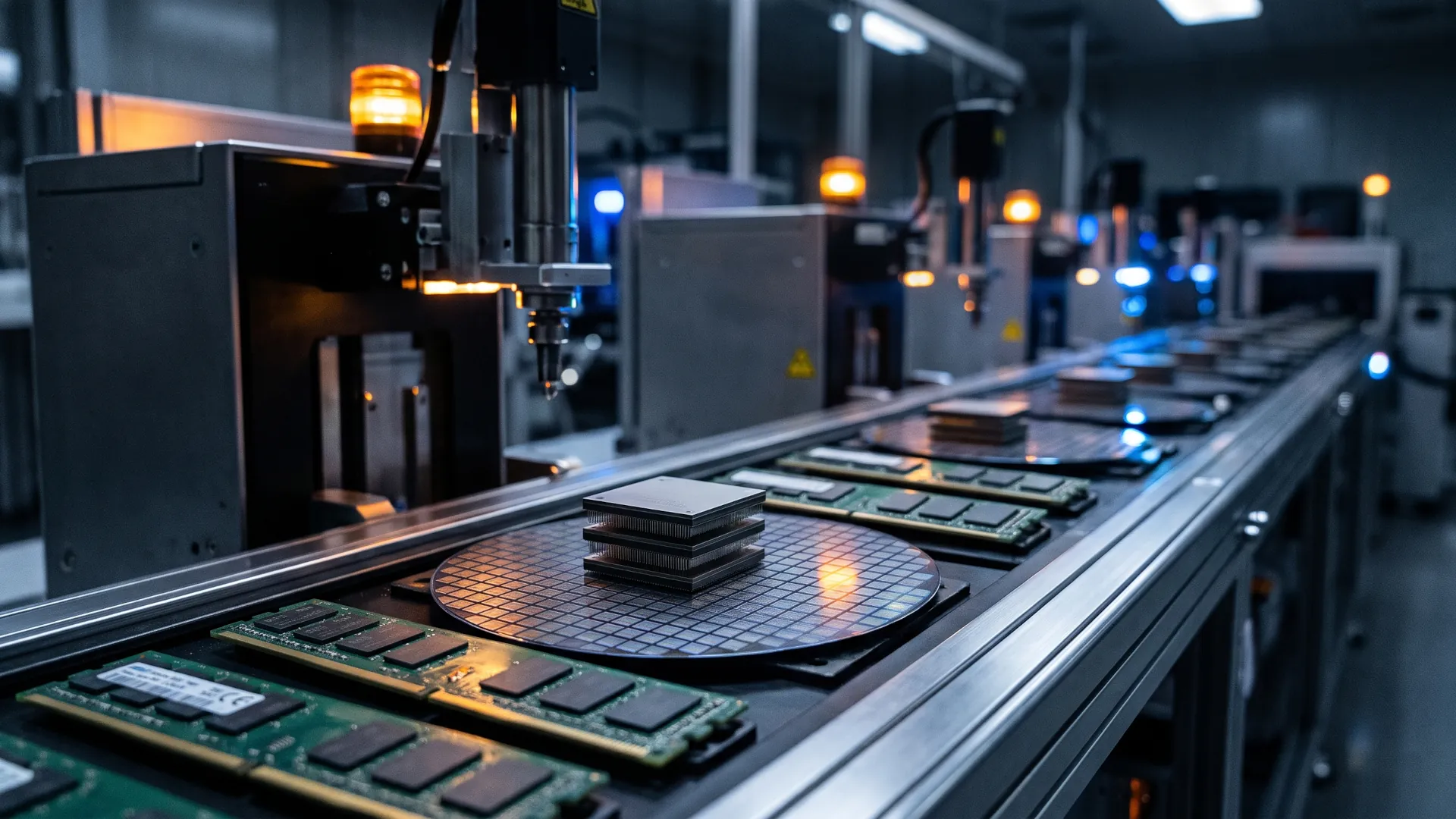
Now, why does ASML have such a privileged position? To see this, let's examine ASML's star machine. Think of a very fine slide projector. Lithography uses light to draw the pattern of a chip onto a silicon wafer, layer upon layer and dozens of times. The shorter the wavelength, the smaller the trace. Extreme ultraviolet, or EUV, works with light at 13.5 nanometers and enables the smallest circuits in existence. Building those machines is so difficult that only one company in the world manages it.
Of course, this is not the work of a single company. ASML's EUV development began with a US strategy in 1997. At the time, the United States launched the EUV LLC Consortium to develop EUV at an industrial level. ASML and Nikon were companies in that working group; Canon was rejected. ASML was the only one to achieve commercial success, but not the only one with the know-how; the other companies were Intel, IBM and Nikon.
In fact, by 2001, Nikon led the market with 39.4%, Canon had 31.2% and ASML was left at 28.8%, according to the reconstruction by Stratrix. A year later the Dutch company was already first with 54.3%. In 2012 it took a decisive step: it sold 23% of its capital to Intel, TSMC and Samsung for 3.85 billion euros, so that its own customers became partners and guardians of the standard.
Why doesn't Europe buy its own machines?
After all, a single EUV machine has more than 100,000 components and depends on a network of more than 5,100 suppliers, as the analysis by the AI Futures Project and The Substraterecalls. Replicating that is not copying a blueprint, it is rebuilding an entire ecosystem with atomic-scale tolerances. Each tool takes up the space of a bus, costs around $150 million and requires the building to be prepared for more than a year before it arrives, according to Reuters.
.
The battle for silicon and its impact on blockchain and AI development
Europe's chip industry is concentrated in mature segments. Germany and the Netherlands stand out in automotive, power and sensors, where older nodes suffice. Leading-edge logic, the kind that requires EUV, moved to Asia two decades ago and has not returned, because moving a cutting-edge fab costs billions and needs customers willing to pay for the best available process. Brussels acknowledges this. The EU Chips Act 2.0 proposal, presented on June 3, 2026, admits that the Union still depends on third parties for advanced manufacturing and adds something new, the so-called Demand Accelerators, to align chip supply with what industry needs. The first Chips Act mobilized more than 43 billion euros and some 46,000 jobs, according to theEuropean Commission
, and even so the impact was insufficient.
Subsidizing factories is not enough if no one buys
Heemskerk's argument is that subsidizing factories is not enough if no one buys what they produce. His proposal is to bring Europe's big chip buyers and the continent's manufacturers together, so that a commitment to buy locally gives the plants a reason to exist. Without that demand, the incentive stays up in the air and the world's most valuable machine keeps traveling by ship.
The irony has names attached. The three shareholders that in 2012 helped finance EUV were Intel, TSMC and Samsung, that is, the same companies that buy the machines today and that have their factories outside the European Union. Europe contributed talent, headquarters and research, but never got a seat at that table. Today's dependence was born, in part, from a decision made fourteen years ago. There is an even more uncomfortable layer. Europe regulates in detail the use of artificial intelligence, as our guide onhow the AI Act affects startups sets out, and at the same time imports almost all the computing power that AI needs. As the Observatorio analysis onwhy Europe will not be sovereign by regulating the technology it does not produce
sums up, the underlying problem is not the rule, but the lack of industrial muscle to sustain it.
Canon and Japan's return through the nanoimprint door
Canon has spent half its life in lithography and has chosen a different path from ASML's. Its technology is called nanoimprint, or NIL, and it works like a stamp. Instead of projecting light through extremely expensive lenses, a template with the pattern etched into it is pressed against a resin on the wafer. The pattern is copied by contact, without complex optics, and that makes the machine and its power consumption cheaper. The flagship system is the FPA-1200NZ2C, which Canon presented on October 13, 2023 as the world's first commercialized NIL tool. The company launched it with an advanced baseline: 14 nanometers. Now it has taken it down to 5 nanometers, and claims that with better masks it could reach 2 nanometers, according to.
Canon's documentation .The commercial rollout has already begun. Canon sent its tool to the Texas Institute for Electronics in September 2024, and Kioxia has been testing the technique for memories for years, according to
IEEE Spectrum
. The roadmap points to high-resolution masks for 3D NAND memory with 20-nanometer lines from 2028. In niches where the pattern repeats a lot, NIL fits better than in a processor full of irregular shapes. Nikon and the return to lithography Expectations should be tempered. An analysis by
SemiAnalysis argues that NIL will not replace EUV in advanced chips and that customers themselves consider it immature for leading-edge production. The reasonable conclusion is that Canon can gain share in memory and packaging, not that it will take ASML's crown in leading-edge logic, but that could change with the next player.Nikon and its new CEO, Yasuhiro Ohmura, announced in May 2026 a return to lithography through low pricing on ArF and DUV equipment, according to
Nikkei Asia
, in addition to its bet on NIL. The company sees firm demand for its NSR-S636E and NSR-S333F systems and is pushing digital lithography for advanced packaging. Japan is back, but with two separate bets, and together they are a direct threat to ASML and Europe.
LineShine returns the supercomputing crown to China and challenges the West China, the thrust that comes through DUV and through EUVHowever, the most visible blow came in July 2026. According to
Reuters , China began low-volume production of its own immersion DUV lithography machines, the step just below EUV. The entity responsible is Shanghai Aishengna Electronic Technology Group, a state-owned company founded in August 2023 with about $1 billion in capital that absorbed teams from the startup Yuliangsheng, linked to Huawei, and from the veteran manufacturer SMEE.The plans are modest in volume and ambitious in direction. Aishengna aims to deliver about five machines in 2026 and around twenty in 2027, with SMIC, Hua Hong and CXMT as the first recipients to validate them on the production line, according to
Tom's Hardware
. For comparison, ASML places around 130 immersion tools in a normal year. The news, even so, wiped about $44 billion off ASML's market capitalization in a single day.
But these are not just headlines, it is an already palpable reality. CXMT's memory production already began in May 2026, and the results are overwhelming. 14 nanometers within reach and 10 nanometers in process, at an industrial level and with high reliability. The only thing that tarnishes CXMT's achievement is that the know-how to make DDR6 memories comes from a proven case of theft and industrial espionage against Samsung.
Much ado about nothing But there is a nuance. Chinese DUV technology prints at 28 nanometers in a single exposure (single-patterning) and reaches 7 nanometers by chaining several passes (quad-patterning), with more complexity and worse yield. And this is where China's big problem lies: the industrial capacity and economic viability of its most advanced nodes is small. On a 28 nm wafer, 100% of its chips are functional and operate to exact specifications. At 7 nm, functional chips drop to 30%, and of those, only 40% operate within expected specifications; the rest either run at lower specifications or go straight to the bin. And in an industry like this, that is burning a lot of money.But in EUV, China's situation is another story. A prototype in Shenzhen generated extreme ultraviolet light in late 2025, but it did not manage to print any wafer, according to tracking by LavX News. The UBS analysis firm places China's EUV maturity at ASML's 2004 level and doubts there will be a commercial product within a decade, although it sees large-scale immersion DUV as possible in two to five years, according to
BigGo
. The bottlenecks remain the light source, the mirrors and the photoresists. Chinese propaganda The three fronts are concrete and are monitored separately. You need a light source capable of generating EUV photons with sufficient power, mirrors so smooth that they deflect that light without absorbing it, and ultrapure photoresists that react precisely.
The Diplomat
recalls that mastering those three fields is what separates a prototype from a factory, and that Chinese progress is not equally fast in each one.
In fact, far from the reality of social media (on Facebook, it is not unusual to see Chinese propaganda talking about great advances in chips), China is at a very early stage, about 15 years behind Europe in EUV. It is even behind Japan and Korea in that sector, but what it cannot achieve through its own research, it does through industrial espionage, or through its wallet.
Why AI, chips and cryptocurrencies are the weapons of the new technological cold war The Chinese purchases in Europe that worry The HagueThe most cited case of the latter is Nexperia, a Dutch manufacturer of basic chips heir to Philips and NXP. Its owner is the Chinese group Wingtech, and in September 2025 the Dutch government intervened in the company under the Goods Availability Act, alleging a risk that assets, funds and technology would be transferred to a foreign entity, according to the
letter to Parliament . China responded with export controls on the subsidiary and the standoff paralyzed part of European automotive supply.The dispute remains open. A Chinese court froze 2.14 billion yuan, about $318 million, in Nexperia assets in August 2026, and Wingtech is claiming 8 billion from the Dutch state in arbitration, according to
Tom's Hardware . The European company has begun looking for alternatives and signed a memorandum with Tata Electronics to manufacture in India. The case shows the extent to which an intermediate company can become a pressure point.But this pattern is not new. The Center for European Reform describes the 2010s as a European garage sale of technology companies to China, with deals such as Silex, Okmetic, LFoundry and Nexperia itself. Since then Germany, Italy, the Netherlands and the United Kingdom have tightened investment screening and have blocked or unwound several sensitive purchases, according to the analysis by
CER
. The door is not closed, but it no longer opens by itself.
ASML and Europe in 2030 Brussels is also preparing a rule to condition certain new investments, those that build plants from scratch, on including technology transfer. It is a direct response to the pattern the CER describes: when companies can no longer be bought, the aim is to control what gets installed. The line is delicate, because Europe needs capital for sectors where it lags and at the same time wants to prevent that capital from taking the knowledge with it..
Belgium provided another episode. BelGaN, the former gallium nitride chip factory in Oudenaarde, was acquired by Chinese investors in 2022 for about 60 million euros and went bankrupt in 2024 with the loss of some 400 jobs. In 2026, the courts detained a researcher for alleged theft of industrial secrets, according to
AI in Europe
.
2030 sounds like a still-distant year, but the date works like a magnet because several predictions converge on it. Chinese sources describe it as the realistic target for printing chips with their EUV prototype. In fact, NVIDIA CEO Jensen Huang said in September 2026 that China could have advanced lithography around 2030, and analyst Dylan Patel placed that year as the one for a fully domestic DUV and a pre-commercial EUV. If those forecasts are right, the decade now beginning would be the first in which the monopoly stops being absolute. ASMLOf course, ASML is not standing still either. China accounts for 42% of its net sales, according to UBS, and the company has strengthened its capacity to produce more than 110 low-NA EUV tools without building new plants. Its advantage rests on more than 5,100 suppliers and two decades of adjustments that no competitor has replicated, and that is why analysts keep high target prices even as they discuss the Chinese threat.
The company is also spreading out its production. According to
Briefs
, ASML is expanding capacity outside the Netherlands while the United States, China and India court it to manufacture on their territory. That move protects it from depending on a single country and, at the same time, dilutes the advantage of having its base in Europe. Geopolitics is pushing a European champion to spread its value around the world.
But experience already tells us that this path can also end up wounding Europe. Intel and AMD manufactured in Europe with edge technology, and since 2014, that is no longer the case. The same can happen with ASML if it follows that strategy, and in the end, the European ASML may end up disappearing in a reshuffle toward Asia or the United States, where there are not only investors with large portfolios, but also a hunger to consume the technology created by the company.
The monopoly that defends itself only until it stops doing so On top of all this, the combination of Chinese and Japanese players may lead ASML to rethink everything. Canon's NIL can eat into packaging and memory, Chinese DUV can cover the mature nodes that Europe does manufacture, and the purchases of intermediate companies can narrow its political room for maneuver. None of those pieces brings ASML down on its own, but together they draw a market with alternatives where today there is only one.The narrative of imminent collapse sells well, but it is worth resisting the temptation. ASML has not lost its technology or its customer base, and it remains the only company capable of printing the chips that train artificial intelligence. What it has lost, and that is new, is the certainty that no one else is close. The difference between a comfortable monopoly and a cornered one is not size, but the number of open fronts.