LineShine returns the supercomputing crown to China and challenges the West
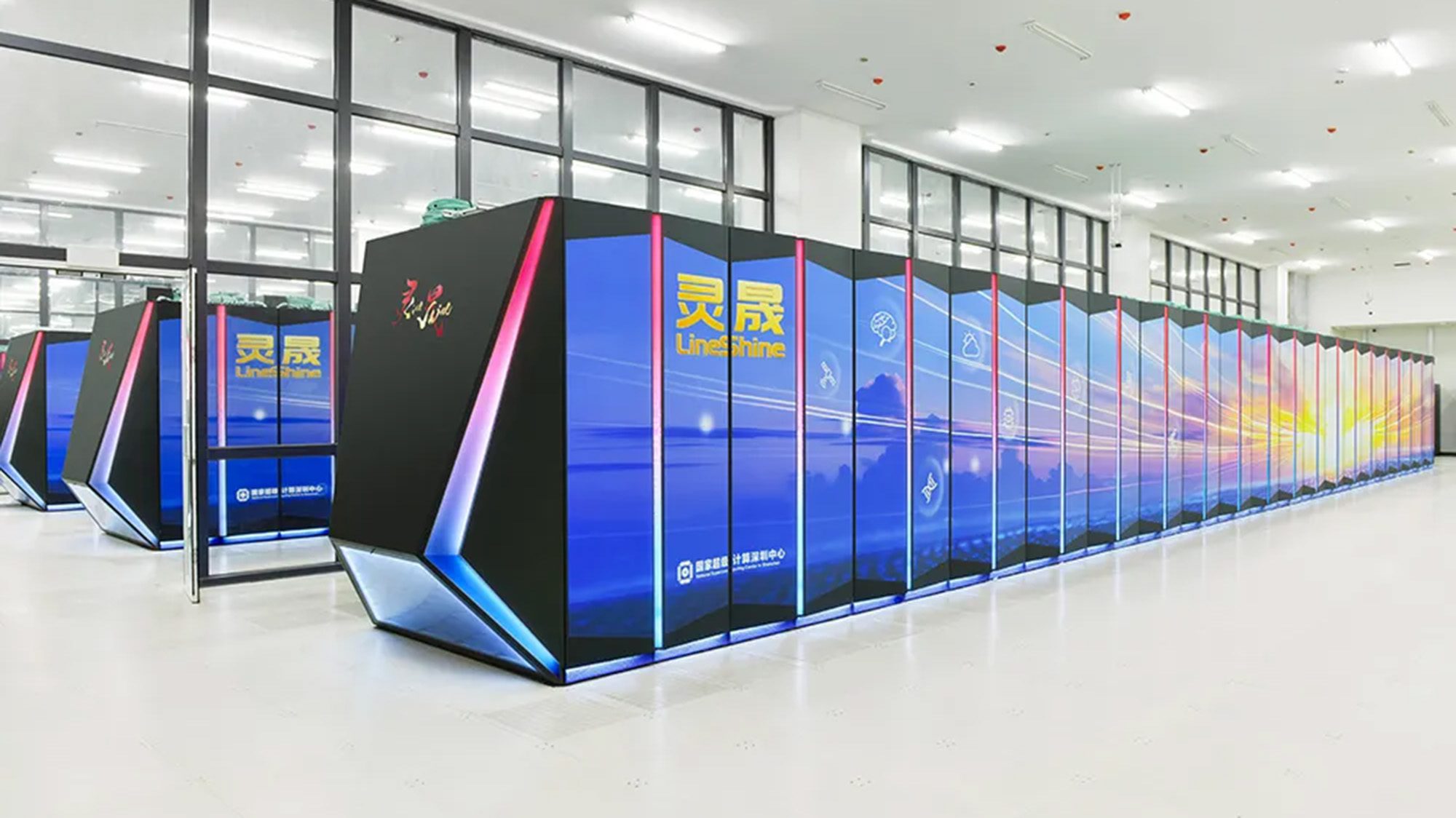
In the depths of the Shenzhen National Supercomputing Center, silence does not exist. It is replaced by a monotonous, electric and colossal hum: the sound of 42.2 megawatts of power flowing through thousands of integrated circuits.
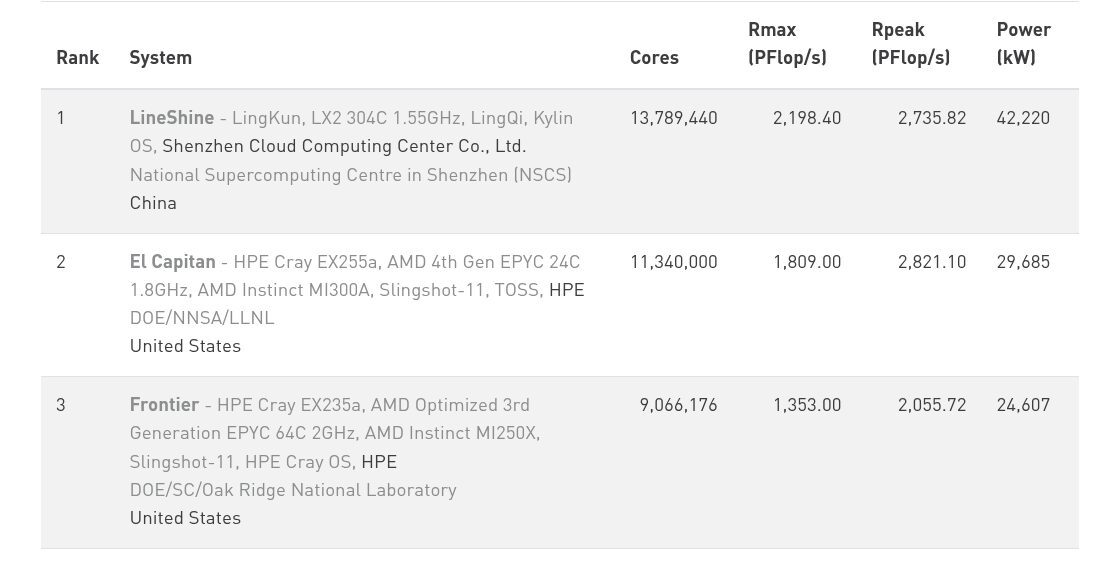
There rests LineShine, a supercomputer that has just shaken the global geopolitical and technological board by officially becoming the fastest machine on the planet. With a colossal power of 2.19 ExaFlops, or in other words, the capacity to execute more than two quintillion calculations per second. LineShine debuted on the prestigious international TOP500 list, dethroning the American titan El Capitan, located in California, at Lawrence Livermore National Laboratory, home to the United States' main nuclear weapons design laboratory.
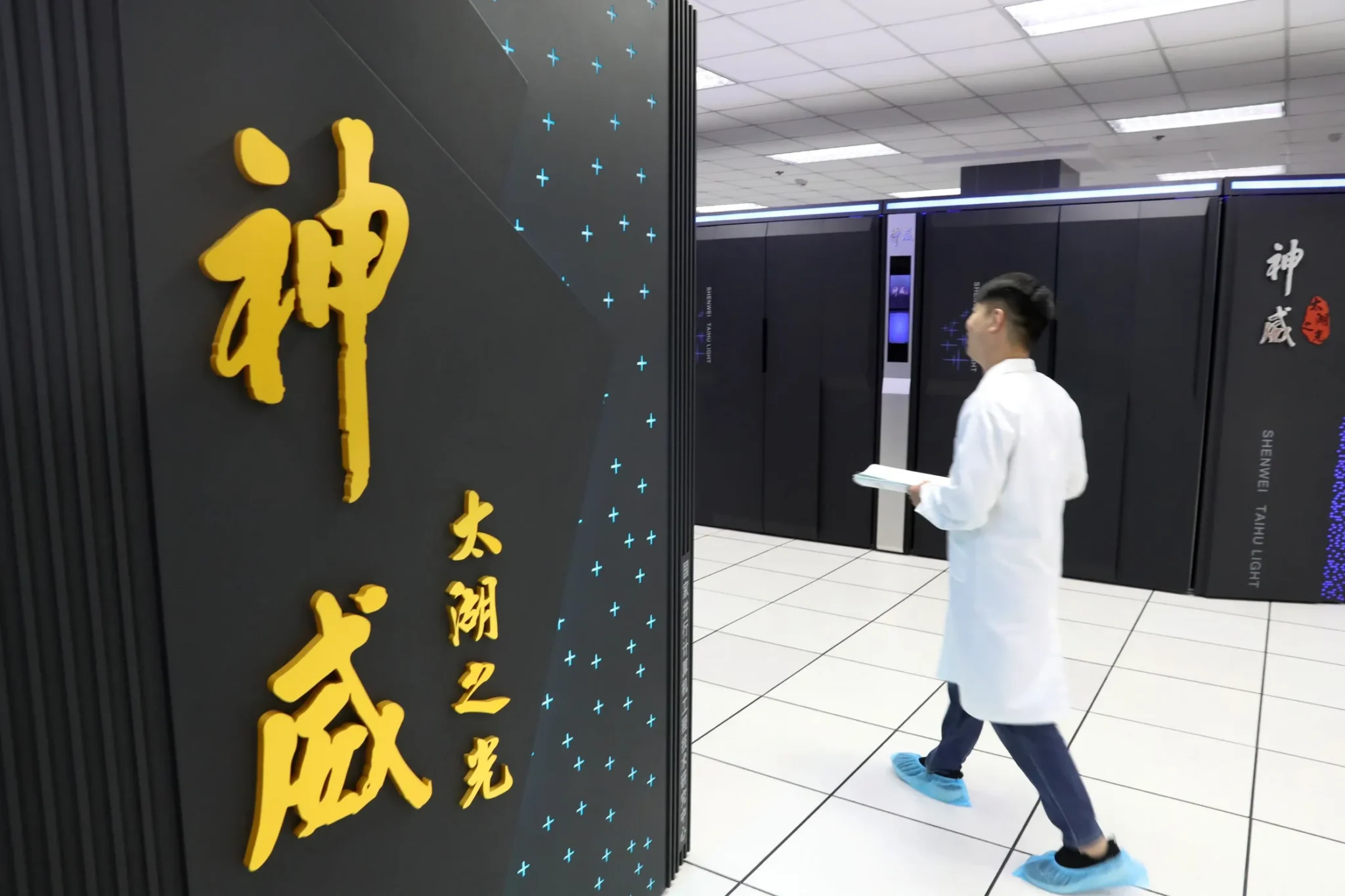
But the Asian machine did not only beat its North American rival; it surpassed it by more than 20% in speed. It had been almost a decade, since the milestone of Sunway TaihuLight in 2017, that Beijing had been unable to display the brightest jewel of global computing, sending a powerful message while at the same time showing its greatest weakness.
The invisible battle for ExaFlops: Why does this competition matter?
To the ordinary citizen, supercomputing may seem a distant mathematical abstraction, but in the high spheres of global power it is the modern equivalent of the space race or the development of atomic energy. Whoever dominates supercomputing dominates the tools to shape the future.
And these "cathedrals of silicon" are not used for ordinary tasks; their power is the invisible engine behind multiple strategic disciplines. Want to examine and design supermaterials? You need a supercomputer. Want to improve your rockets? You need a supercomputer. Want to update and "test" the design of your atomic bombs without the need for real tests? You need a supercomputer, and the more powerful, the better.
On the other hand, supercomputers have become indispensable in fields such as artificial intelligence and neuroscience. LineShine itself is an example of this, since one of the first tasks of this supercomputer is precisely the simulation of the human brain.
Taihu Light, presented in 2017, was the first major supercomputer presented by China
For China, winning this race is not only a matter of national pride; it is a necessity for strategic survival. In a context marked by severe trade restrictions imposed by Washington, both under the Joe Biden administration and under Donald Trump's mandate, Beijing has seen its access to cutting-edge Western chips blocked, especially Nvidia's graphics processing units (GPUs), essential for the development of contemporary artificial intelligence.
By crowning LineShine, China sends a forceful message: its technology industry can thrive, innovate and lead the world even under the strictest sanctions regime. But at the same time, it shows the giant's feet of clay.
To examine and understand the latter, let us look at LineShine and its achievements. First, LineShine achieves an enormous amount of computing power, all thanks to the use of 45,000 ARM LingKun LX2 processors, equipped with 304 cores each and operating under the native Kylin OS operating system (a Linux distribution optimized for the Chinese government).
LineShine uses only conventional microprocessors (CPUs). In the words of Jack Dongarra, one of the top authorities of the TOP500, this design opens a revolutionary and much more efficient path to merging AI with traditional scientific tasks.
Is China really independent of the West?
But this is where China shows its feet of clay. First, the use of KylinOS and therefore of Linux makes it clear that China, despite its enormous advances, still requires Western software for the design and operation of its computer systems. China has a large developer community, and this will very likely change in the coming years, but for now, it is a weakness it still shows to the world.
The second weakness is twofold and perhaps the hardest to overcome: silicon and its technology. The LingKun LX2 processors are built on the basis of ARM, and ARM is a technology that originated in the United Kingdom. It is enough for that technology to be banned for China for the dream of its supercomputers to be highly compromised, and after the presentation of LineShine, it is very likely that such a ban is closer than ever.
Yes, China "designed" the LX2, but to do so it used ARM's blueprints, its language, its software and a whole set of tools that China does not have but the United Kingdom does, and if that country fears that China could "decapitate" its main technology company (something China does very often by copying technology), the export and licensing ban will not be long in coming.
The furnace of technology
The next weak point is chip manufacturing. Yes, China now has lithography machines capable of reaching 14 nm with industrial production volume (90% of wafers fully functional under expected parameters). But the technology for 7 nm, 5 nm and now 3 nm is still out of its reach, and its 14 nm process is much worse than the process used by Samsung (the least advanced in the West). And this has an enormous impact on the development of supercomputers, which can be clearly seen in LineShine.
If we look at the ARM LingKun LX2, they are built at 14 nm under the Chinese development scheme, and the consequence is that they consume a lot of energy, run quite hot and are not as powerful as their Western counterparts. Sounds strange, doesn't it? LineShine is the most powerful supercomputer in the world, but its CPUs are underpowered and run hot, so how did they achieve that feat? By scaling up the numbers and spending energy like never before. Pure muscle, to overcome their weakness.
A look at the numbers and power of the world's three great supercomputers
LineShine has a total of 13,789,440 LX2 cores (developed in 2025, ARM cores) and consumes more than 42.2 MW of power. Its competitor, El Capitan, presented in 2024, has 11,340,000 4th Generation AMD EPYC 24C cores (presented in 2022, x86 cores) and consumes 29.6 MW of power. These are numbers that would make ARM blush and AMD laugh, because ARM is a core designed to consume up to 20 times less energy than its AMD x86 counterpart, and in LineShine, that is not met by any means.
A battle of egos
And that, in the face of the competition, puts China at risk: it is enough for the United States to create another supercomputer with its newest technology (e.g., 5th Generation AMD EPYC) and amass more cores for its next creation to surpass China by up to 50% in power while consuming less energy. China's ego would come to nothing, and surpassing that with its current technology would be extremely difficult.
Thus the final message is clear: China wants to tell the world that it can fight the West on its own, but examining the standard-bearer, LineShine, only reveals the seams of that power and proposition. After all, LineShine is, ultimately, the reflection of 21st-century geopolitics: a monument to Chinese technological resilience that, paradoxically, still breathes through the global standards dictated by the West, and that with all of that, still does not surpass them.