This week the memory industry stopped talking about quarters and started talking about decades. In its third-quarter earnings presentation, held on October 28, SK hynix chief financial officer Kim Woo-hyun placed the supply shortage beyond 2030 and described a market in which supply will not meet demand for at least four more years. It is not a price forecast: it is a forecast about structure.
The figures accompanying that statement explain why the warning deserves to be taken seriously. The manufacturer expects DRAM demand to grow by around 20% next year and NAND demand to grow in the high teens. At the same time it estimates that capital spending by cloud providers will rise by more than 60% and that data center infrastructure for artificial intelligence will grow by more than 40% a year through 2030.
The effect is already on the bill. The average price of an 8-gigabit DDR4 module closed the third quarter at $26, more than four times the $6.3 of the same period in 2025 and 23.8% above the previous quarter. NAND memory multiplied its year-on-year price eightfold to $30.61. These are contract figures, not retail ones, and in Spain they reach the counter with the distributor's margin on top. For anyone who was thinking of waiting for prices to fall before upgrading their equipment, the scenario painted by the Korean manufacturer offers no comfort. The useful question is no longer when RAM will get cheaper, but how much you will need and at what point waiting costs you more than buying.
Why can't supply turn around faster?
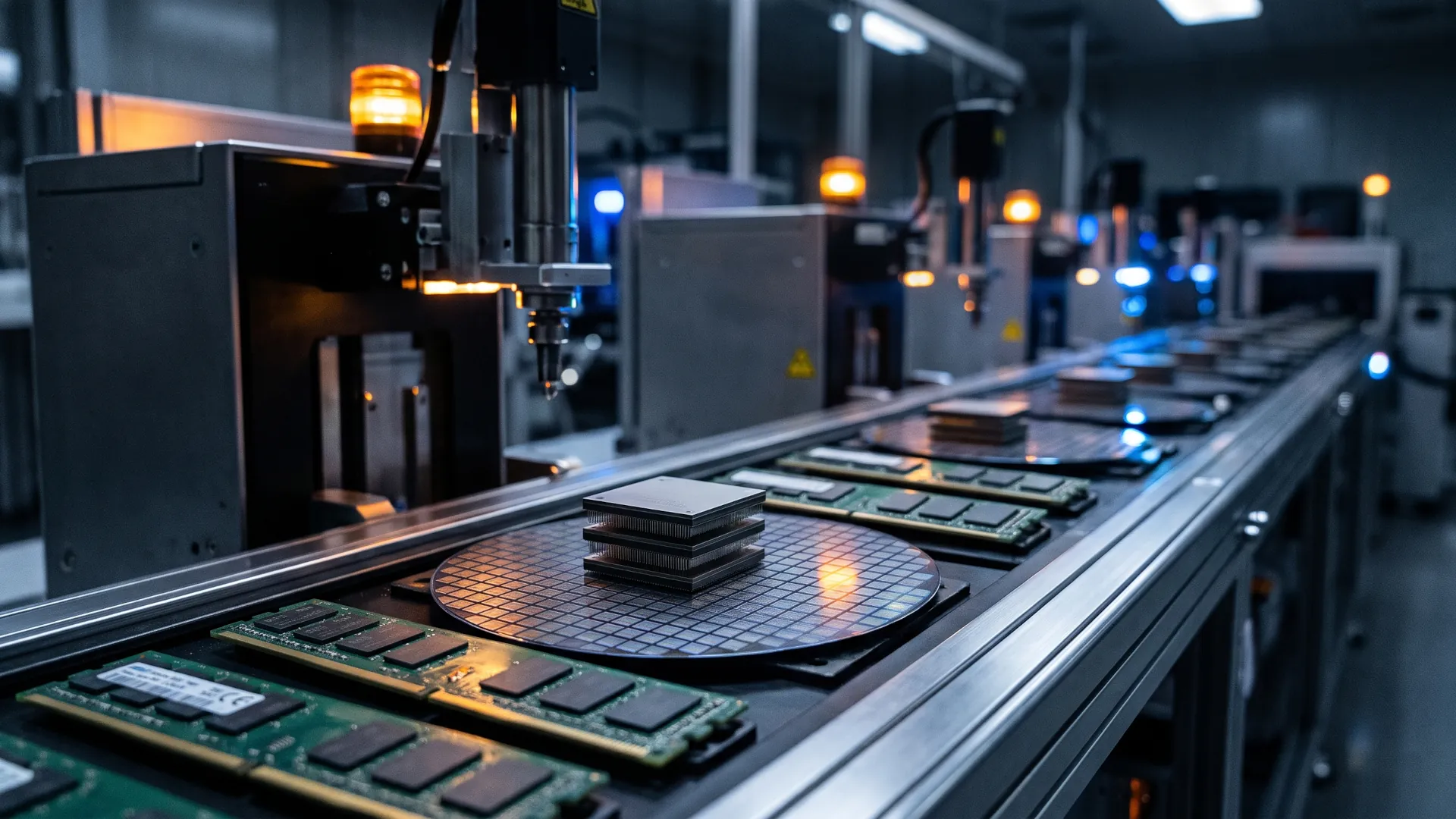
The short answer is that memory is not manufactured in a quarter. A new plant takes between two and three years from the investment decision to volume production, and those already under way have their output already allocated. The 10-nanometer process is expanding, but most of the increase goes to HBM4, the stacked memory for artificial intelligence accelerators, which consumes more wafers per gigabyte than conventional DRAM.
That is where the asymmetry that explains everything lies. A single memory module for an AI server can absorb several times the capacity of a wafer that, three years ago, was devoted to laptops. When the allocation shifts, the price of the least profitable segment rises first because there is no capacity to free up. Manufacturers are not going to stop producing HBM to make 16-gigabyte modules for desktop towers.
The third quarter also left a signal worth reading carefully: the average selling price of DRAM rose by around 20% compared with the previous quarter, and fourth-quarter shipments are expected to grow by a similar mid-twenties percentage. That is, more units and a higher price at the same time, something that only happens when the entire chain is under strain.
The price map you will see in stores
| Product |
Q3 2025 close |
Q3 2026 close |
Change |
| DDR4 8 Gb (contract) |
6,3 $ |
26,0 $ |
x4.1 |
| NAND 128 Gb MLC |
3,8 $ |
30,61 $ |
x8 |
| Quarterly increase DDR4 |
0% |
+23,8% |
in one quarter |
| Q4 DRAM forecast |
no data |
+10 to +18% |
TrendForce |
The quarterly evolution we had been tracking since September is in the analysis of RAM priceswith the 80% rise in the second quarter as the origin of the cycle. The table serves one specific purpose: to make clear that the jump does not come from a one-off price increase by a single manufacturer. It comes from an allocation of capacity that has left mass-market consumers with the leftover capacity, and from data center demand that does not depend on the household user's economic cycle.
There is a consequence that directly affects anyone building a PC. RAM has become the most volatile line item in the budget, ahead of the graphics card. A machine that two years ago was built with 32 gigabytes for 90 euros is today being planned with 16 and a future upgrade that will probably be more expensive.
What does it mean for local AI?
The other front is artificial intelligence on the desktop. Open models that fit on a consumer machine are limited by graphics card memory and by system memory when part of the model is offloaded to the CPU. With prices rising, the calculation of how much VRAM to buy changes radically.
The article on how much VRAM you really need for local AI in 2026 already pointed to a practical threshold of 24 gigabytes to work with 30-billion-parameter models in aggressive quantizations. With DDR4 at these prices, the alternative of expanding to 64 gigabytes of system memory for large models is no longer cheap and now competes with a dedicated graphics card. The calculation of how much VRAM you really need for local AI changes completely when a gigabyte of system memory costs these prices.
The secondary consequence is that software becomes more efficient out of necessity. The Linux kernel has spent months discussing smaller kernel stacks due to memory scarcity, and inference frameworks are prioritizing 4-bit quantizations that were previously considered a compromise. The kernel has spent months discussing smaller stacks due to memory scarcity, a sign that saving is no longer optional. Scarcity drives optimization just as gasoline prices drive the small engine.
The cycle that looks like 2017 and isn't
Anyone who has been in this for a decade will remember the 2017 surge, when DRAM prices doubled in a year and stores limited sales per customer. The pattern repeats, but there are two differences that change the outcome.
The first is the buyer. In 2017 the pull came from phones and cloud servers growing at 20%. Now it comes from a single application, model training and inference, which consumes memory intensively and with margins that justify paying any price. That buyer does not walk away if the economy cools.
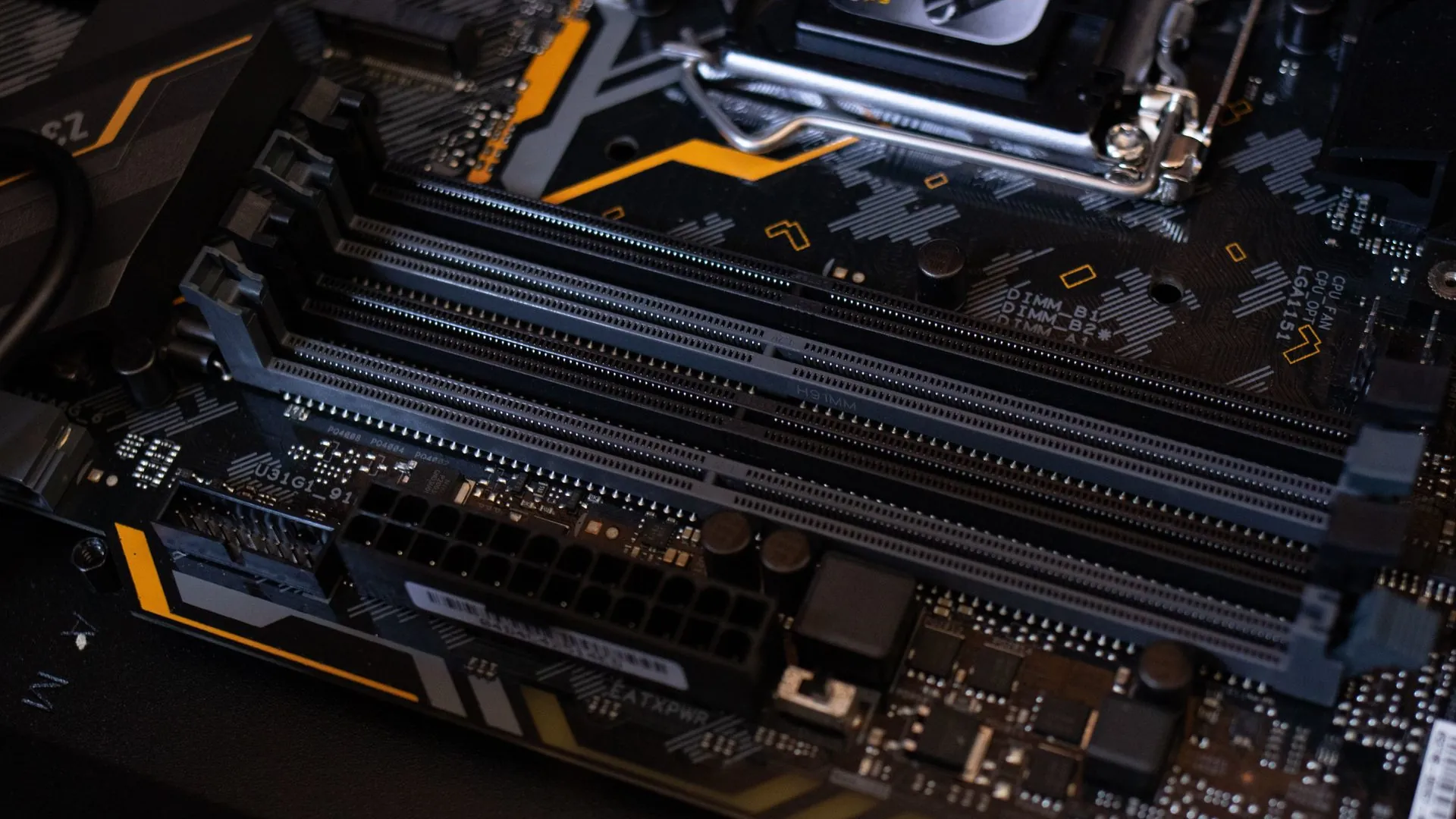
The second is duration. Manufacturers' forecasts talk about 2030, not two quarters. When scarcity is measured in years, it stops being a supply problem and becomes a product design variable. Consoles are designed with less memory, laptops sell soldered RAM as an advantage and motherboards are starting to offer slots no one will use until 2028.
Manufacturers have a perverse incentive not to speed up. Every additional gigabyte of HBM capacity sells at a margin conventional DRAM cannot match, and investment decisions are made with that market in mind. As long as AI keeps growing, mass-market consumers will remain the customer footing the bill.