Open hardware: who controls the chip in your computer?
We live in a world where our most intimate secrets are not kept under lock and key, but etched into microscopic silicon chips. In our pockets, on our desks and in our cars travel billions of transistors that execute orders without us ever being able to question how they do it. And that reality, in an era marked by geopolitical cyberattacks, mass surveillance and catastrophic security failures that paralyze airports and hospitals, leads us to an uncomfortable question that is beginning to float in the air: can we trust a device whose internal architecture is a corporate state secret?
Faced with this digital ecosystem of "black boxes", a silent but steady countercurrent is gaining ground. It is open hardware (or free hardware), a movement that not only seeks to democratize technology, but to become the definitive shield for global privacy. Just as open source software revolutionized the internet, opening up silicon blueprints promises to change the rules of the game in cybersecurity.
The danger of the "black box": Security problems that open hardware can solve
Today's proprietary hardware suffers from an original sin: opacity. When we buy a traditional processor, we are forced to blindly trust the manufacturer. This lack of transparency exposes the world to critical risks, some of them making our entire digital life tremble.
Hardware Backdoors
For example, when a chip is designed behind closed doors (like the processor that runs your smartphone, PC or digital washing machine), a malicious manufacturer or a state intelligence agency (such as the CIA/NSA, MI6 or the Chinese Intelligence Agency) can deliberately alter its structure before sending it to the factory, introducing a spy circuit that is practically imperceptible.
These physical-level "backdoors" give attackers total remote access to confidential data without leaving the slightest trace in operating systems or traditional security programs. Examples of this are many. One of the best known is Intel ME, which comes in almost every computer that uses an Intel processor. Intel ME is a secret operating system capable of running even when your PC is turned off. It can be off, and even so, someone on the other side of the world can turn it on, access your data and have total access to its data.
Faced with this silent threat, the open architecture offers a definitive firewall: by being based on fully auditable and public designs, any engineer or global community can review the silicon's logic schematics down to the millimeter, making any attempt to camouflage a line of code or a spy component a practically impossible mission.
Side-channel and architecture vulnerabilities (such as Spectre and Meltdown)
The tech world trembled when it was discovered that almost all modern processors carried intrinsic design flaws —baptized as Spectre and Meltdown— that allowed attackers to bypass any digital barrier to steal passwords directly from the bowels of the chip's memory, forcing the release of emergency software patches that slowed down computers across the planet.
Open hardware's response to a crisis of this magnitude completely changes the rules of the game: if a structural vulnerability is detected in an open architecture such as RISC-V, the global community of engineers does not have to wait for a corporation's blessing; it can coordinate to design, test and release a physical fix in a matter of days, implementing it immediately in reprogrammable chips (FPGA) or integrating it definitively into the next manufacturing batch.
Obsolescence and lack of support (The danger of orphaned patches)
The risk of technological opacity becomes critical when a corporation goes bankrupt or decides to withdraw technical support for a chip embedded in vital infrastructure, such as power plants or medical devices, leaving that hardware trapped in a kind of insecure obsolescence and exposed to eternal vulnerabilities.
In this scenario, the open model acts as technological life insurance; by not depending on the decisions of a single commercial entity, the silicon's construction blueprints outlive the companies themselves, allowing any team of independent engineers to take on long-term maintenance, audit its security and manufacture fully reliable spare parts regardless of market fluctuations.
Three pillars of change: The corporations leading the era of open silicon
Far from being a utopia relegated to academic laboratories or basement enthusiasts, open hardware has consolidated as a vibrant, competitive industry with incalculable strategic weight. Three global companies demonstrate that radical transparency is not only ethically superior, but constitutes a highly profitable business model capable of challenging the planet's most consolidated tech giants.
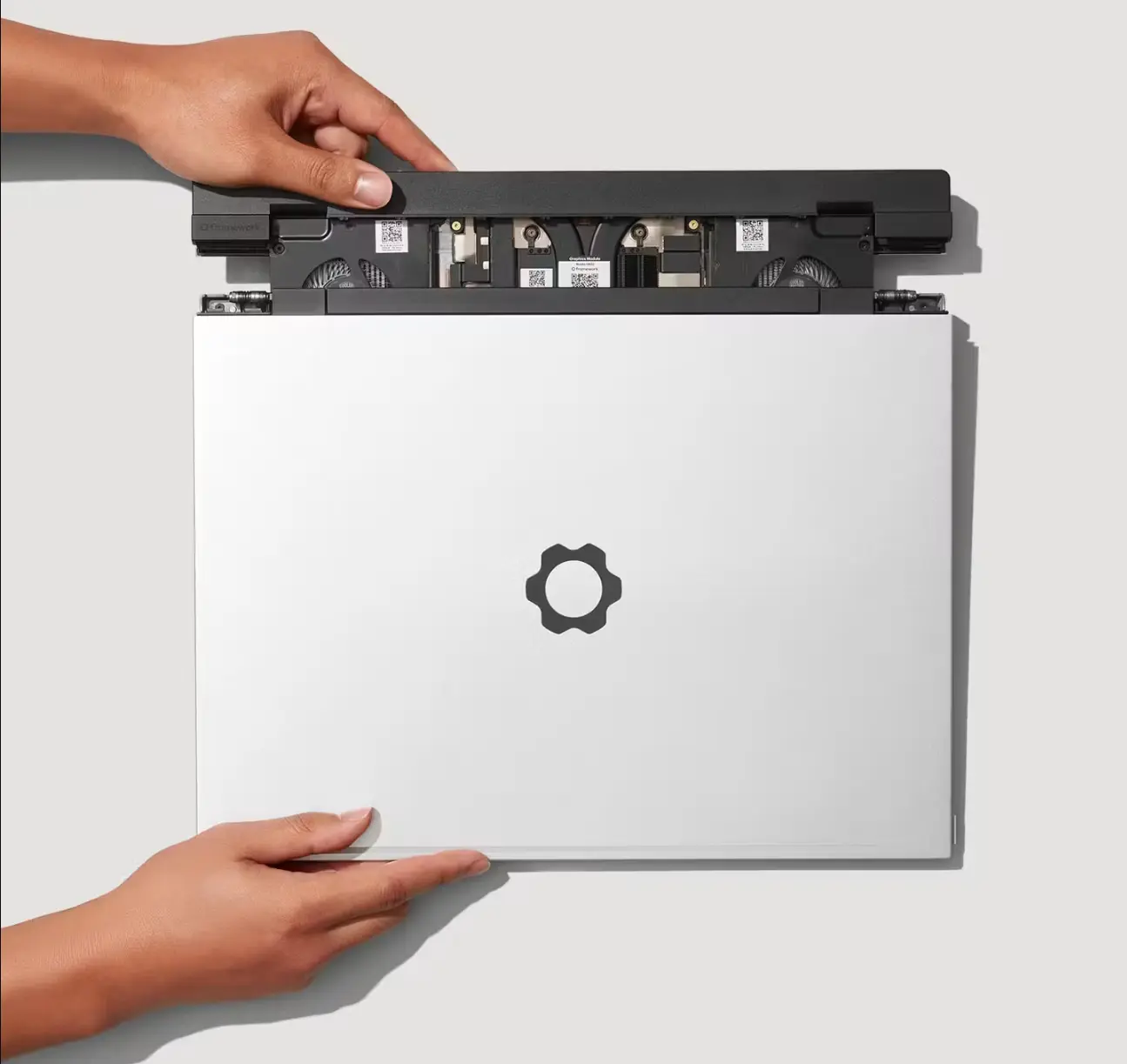
The first major benchmark in consumer electronics is Framework Computer, a firm that has revolutionized the portable computing sector by designing computers that are fully modular, repairable and customizable by the user.
A look at Framework's open laptop
By openly publishing the detailed blueprints of its components and the electronic schematics of its motherboards, Framework not only directly combats planned obsolescence and the accumulation of e-waste, but returns absolute physical control of the device to its owners.
This openness is crucial for security, as it allows companies and activists to carry out complete physical audits of their equipment, ensuring that no intermediary has altered the hardware to compromise their privacy.
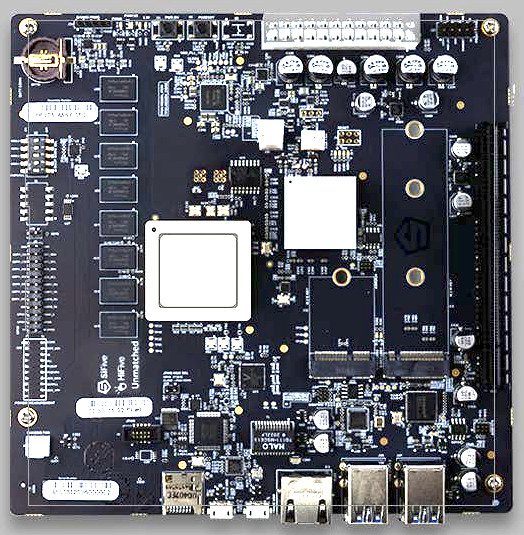
At the heart of semiconductor infrastructure and high-performance computing stands SiFive, the pioneering company in commercializing processors based on RISC-V, the open source instruction set architecture (ISA). SiFive's impact is profoundly geopolitical and strategic: by offering open chip designs, it breaks the historic and restrictive Intel/AMD (x86) duopoly and ARM's costly licenses.
Its existence allows governments, data centers and global corporations to design their own sovereign, custom processors, shielding their infrastructure against international espionage and guaranteeing technological continuity without having to pay million-dollar royalties or depend on the trade blockades of superpowers.
Board of a SiFive RISC-V-based personal computer
Designing an interconnected world
Finally, in the Internet of Things (IoT), education and industrial prototyping ecosystem, Arduino remains the undisputed global standard. Through the creation of development boards and microcontrollers whose hardware schematics are completely open, Arduino has democratized automation on a planetary scale.
Its current relevance goes far beyond school classrooms; today, its transparent, inexpensive and easily replicable technology serves as the basis for building everything from agricultural monitoring systems in developing countries to medical ventilation equipment and critical industrial infrastructure.
By allowing anyone to understand and modify the electronic brain of machines, Arduino ensures that global automation does not depend on closed-source digital black boxes.
Open hardware is not just an alternative for computer enthusiasts; it is a democratic necessity. In a social fabric where elections, finances and human lives depend on encoded electrical impulses, keeping technology's design hidden behind corporate secrecy is a risk we can no longer afford.
Real security is not born from hiding how things work, but from exposing it to public light so that thousands of eyes find its cracks before criminals do. The future of a secure digital infrastructure immune to geopolitical tensions will not be written behind closed doors; it will be printed on silicon with blueprints open to the whole world.