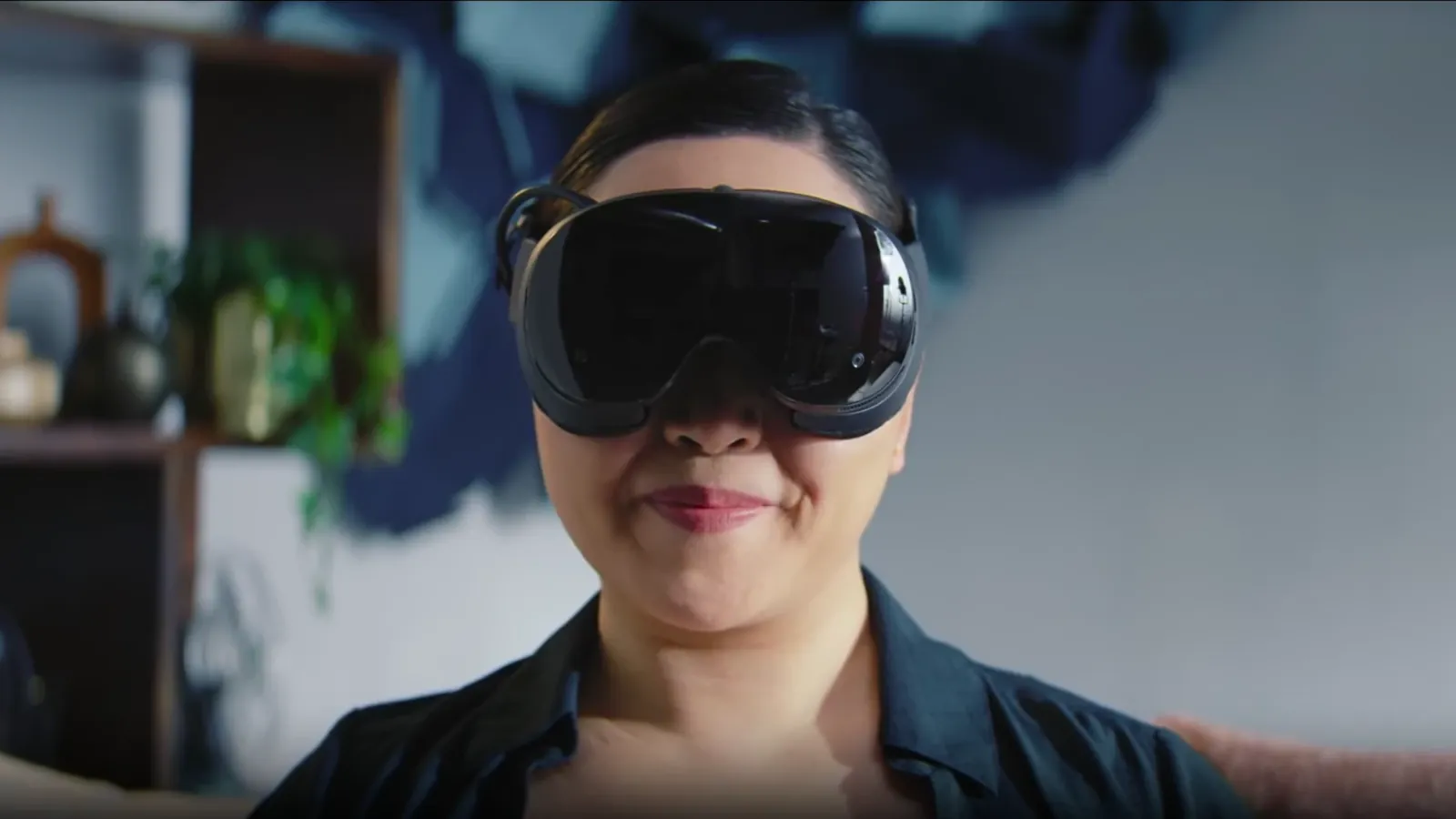
Valve's virtual reality headset will no longer be a device that only works with the kernel Valve compiles for itself. On October 26 it emerged that Linux kernel 7.4 will include support for Steam Frame in the main branch, thanks to a series of patches sent by Neil Armstrong on behalf of the company. Until now the headset worked with the downstream SteamOS builds that Valve has maintained since its launch in September, a route that serves to sell hardware and not to let the rest of the ecosystem touch the device.
The difference between downstream and mainline is the difference between a back door and a front door. In the first case, the support lives in Valve's tree and only those who use its system enjoy it. In the second, any distribution with kernel 7.4 boots the headset without writing a single line of specific code. For the user nothing changes tomorrow; for the ecosystem everything changes in the next cycle.
The move has a second reading that should not be overstated. Valve is not giving its hardware to other platforms out of generosity, but buying peace of mind: if the support is in the common kernel, every update of the branch is maintained by hundreds of developers instead of an internal team. It is the same play it made with Steam Deck, which went from needing its own patches to behaving like just another x86 laptop.
Mainline support arrives
A mainline driver is code that lives in the official kernel tree and is reviewed by the same standard as the rest. When a manufacturer enters there, it accepts two things: that its device is subject to public review and that future changes go through the standard process.
For Steam Frame, the patch arrives within the changes to the system-on-chip branch. That location says a lot about the design: the headset is not a PC with a screen strapped to your head, but a device with its own SoC that needs power, display and sensor management at the kernel level.
The practical result is that the support stops expiring when Valve stops looking. A distribution that updates to 7.4 will have the code even if Valve publishes nothing. And a developer who wants to experiment with the headset will be able to do so without installing SteamOS.
The disc reader detail
The main news comes with an anecdote that explains better than any press release how this industry works. Valve enabled support for optical drives in the Steam Frame kernel configuration after a user complained on the official forum that the headset did not power an external reader and could not read discs. The user wanted to watch movies on trips and install his original copy of a 2006 game.
The reaction is a good reminder that open hardware is not open out of ideology, but out of architecture. In a closed system that request is filed away. In one based on Linux, the same kernel that manages the headset manages a twenty-year-old DVD reader, and enabling it costs one line of configuration.
For the gamer who uses Linux as their main system, that kind of detail is the difference between a device that adapts and one that imposes. And for Valve, it is a cheap way to gain a reputation among the audience that later buys its games.
Virtual reality more closely tied to Linux
Mainline support for a headset seems like a niche topic, and in volume it is. Steam Frame does not aspire to sell like a console, but to fill the gap for those who already have a Steam library and want to try virtual reality without buying a separate PC or marrying an ecosystem.
The matter matters because it consolidates a pattern. Valve has turned Linux into its reference platform for its own hardware and has accepted the cost of doing it well: Proton for games, SteamOS for the experience, and now the kernel for devices. Every piece that enters the common tree reduces its dependence on a small team.
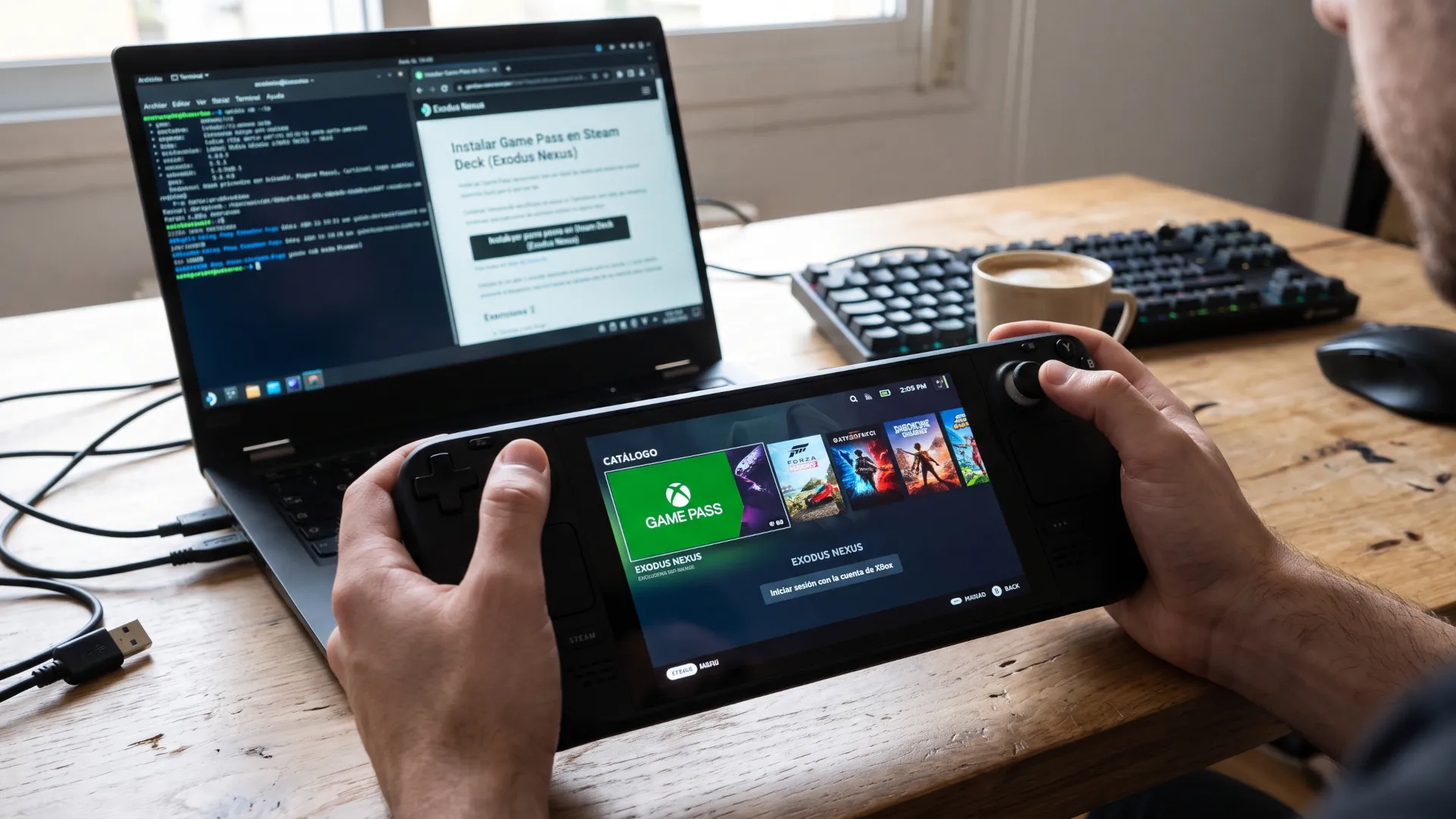
Anyone who follows gaming on Linux is already familiar with this dynamic. We covered it when discussing how Intel proposes XMX for XeSS in Proton, where the bottleneck was not the game, but the path between the graphics controller and the translation stack. The same is true of the viewer: without kernel support, no higher layer can fix it.
| Part |
Before 7.4 |
With 7.4 |
| Viewer support |
Only in the SteamOS kernel |
In the main branch |
| Compatible distributions |
SteamOS and derivatives |
Anyone with 7.4 |
| Maintenance |
Valve team |
Kernel community |
| Experimentation |
Requires SteamOS |
Standard kernel |
What is still unresolved
Kernel support does not amount to a complete experience. Firmware, userspace utilities, desktop environment integration and, above all, a virtual reality stack that can talk to the headset are needed. Having the kernel recognize it is the first step, not the last.
The second unknown is performance. An ARM device with a high-density display and position tracking needs a well-tuned kernel to avoid burning battery on management tasks. Initial patches usually include the bare minimum to boot, and optimization arrives in later versions.
The third is game compatibility. Virtual reality on Linux depends on translation layers that are still immature, and Valve knows it. That is why its strategy has always been the same: secure the hardware in the kernel, build the software layer on top and let time do the rest.
The pattern that keeps repeating in open hardware
In recent months, the kernel has received support for chips that were not even contemplated two years ago: the Apple M4 and A18 Pro with limited boot, Google's Tensor G5, the Snapdragon chips for laptops and now Valve's headset. That accumulation of patches tells a different story from the consumer market.
The story is that the Linux running on servers and the Linux running on small devices have stopped being two worlds. The same tree that manages a data center boots a handheld console, and that convergence is what allows a virtual reality headset to come in through the front door without asking permission.
For the user, the benefit arrives late and in the form of options. Distros such as those that prioritize gaming performance, which we discussed when analyzing Linux 7.3 and the scheduler, will be able to offer the headset without waiting for SteamOS. And that, in the medium term, is what prevents a device from depending on the goodwill of its manufacturer.
A great feature for kernel 7.4
When kernel 7.4 becomes available, the relevant question will not be whether Steam Frame appears on the list of supported devices, but whether support arrives complete or in a minimal version. Initial patches usually bring what is needed to boot and detect the display, and leave fine-grained power and sensor management for later.
Meanwhile, the signal is clear for anyone thinking of buying hardware tied to a proprietary system. A device with support in the kernel is more likely to keep working when its manufacturer loses interest. One that depends on a private patch has an expiration date, even if no one has put it on the box.