Windows 11 26H2 news: the complete list of changes
Five years after its launch and after plenty of hate along the way, Windows 11 has finally surpassed 1 billion monthly active users, but it had probably never had a worse reputation.
On July 31, Pavan Davuluri, president of Windows and devices at Microsoft, published the most explicit update to a strategy that began in March: for the rest of 2026, the operating system will stop chasing AI headlines to focus on what users have been asking for for years.
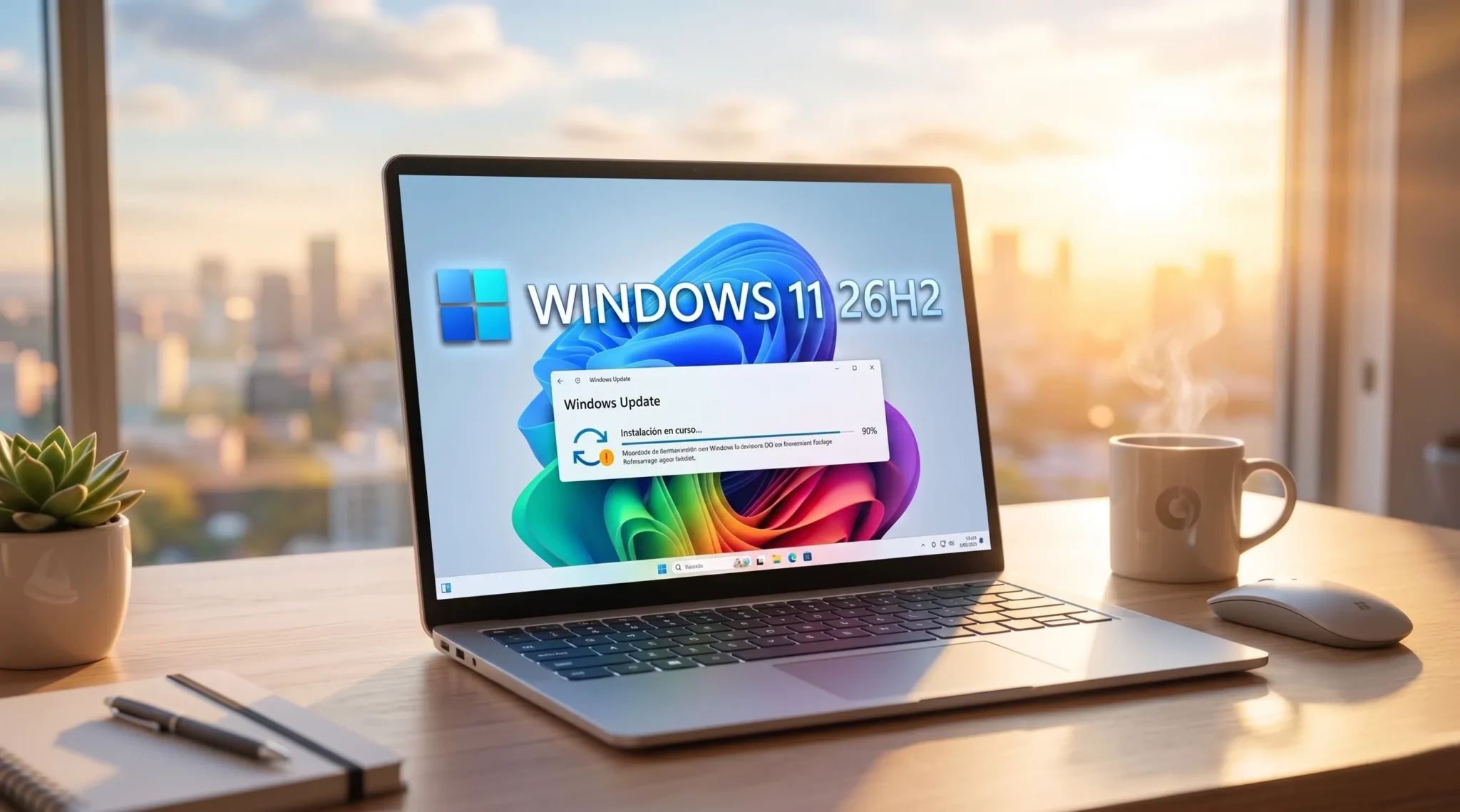
The next major release, 26H2 (2026, Second Half), which will arrive this fall, does not bring artificial intelligence features as its centerpiece. Instead it brings what users have requested: performance and stability improvements and, for the first time in years, a public commitment for Windows to use less RAM on machines with 8 GB.
The decision is a belated admission. In 2025 and early 2026, Windows 11 built up a long track record of updates that broke features, persistent memory leaks, Copilot forced into applications where nobody asked for it and advertising inside the system itself. The criticism even coined the term “Microslop” to describe what many perceived as carelessly delivered software. The beginning of the end for Windows, but perhaps that story will be left behind with the new update.
A decade of Windows, two systems and a breaking point
Windows 11 was unveiled on June 24, 2021, and reached the public on October 5 of that year. Its hardware requirements (TPM 2.0, compatible CPUs, 64-bit only) left millions of machines out and sowed distrust from day one. With the end of support for Windows 10 on October 14, 2025, millions of users had to migrate by force, many to machines with 8 GB of RAM or less, the segment where Windows 11 performs worst.
Usage numbers tell the other half of the story. Windows 11 reached 1 billion monthly active users in the 2025 holiday quarter, announced on January 28, 2026, faster than Windows 10, and Microsoft reports more than 1.6 billion active Windows devices per month. But discontent grew at the same pace.
After all, what good is having a billion users if almost all of them are angry and looking for alternatives. And not for nothing: several benchmarks rated Windows 11 as Microsoft's slowest system in 25 years, quite an achievement given the disaster that Windows ME and Windows Vista, the most detested systems until now, were at the time. Things did not improve when, in April, on Microsoft's fiscal third quarter 2026 earnings call, CEO Satya Nadella acknowledged that Microsoft needs “to win back users” for Windows.
What does 26H2 bring? The promise of giving control back to the user
Amid all this, the 26H2 update, scheduled for September or October 2026, does not redesign the desktop. Instead, it targets three of the system's most used surfaces, with changes users have been asking for since 2021.
The first major change: the taskbar regains something Microsoft removed at launch, the ability to place it at the top, bottom, left or right, and the option to make it smaller, a constant request on ultrawide screens. In addition, the Start menu, one of the most controversial points, gains predefined sizes, lets you show or hide the Pinned, Recent (formerly Recommended) and All sections, and adds a privacy feature that hides the account name and photo during screen sharing.
Another improvement is Windows Search, a feature receiving its biggest overhaul since launch. The home screen stops showing trending topics and promotional content to open directly with recent searches. The engine now prioritizes local results over the web and the store, and these can be disabled separately. Local files are found with just two characters and with misspelled queries.
And the context menu, which in 2021 hid essential functions such as “Copy as path” behind a second click, is reorganized into cleaner submenus. Yes, Windows 26H2 will arrive in the fall, but with these improvements it feels more like spring, especially if you have had to deal with the annoyances corrected here.
Less Copilot: AI retreats, it does not disappear
However, one thing should be clarified: 26H2 is not an “AI-free” version, as is repeated on social media. Microsoft is still trying to sell Copilot and is still integrating artificial intelligence into its ecosystem; what changes is its footprint inside the system. In March it promised to be “more intentional” about where it integrates it and began removing it from applications such as Snipping Tool, Photos, Widgets and Notepad, where it has renamed it “Writing Tools”. In May, the team announced it would continue simplifying AI in the built-in applications.
That retreat has commercial and technical logic. Pushing Copilot into every corner of the system convinced no one: users perceived it as a layer that consumed resources without adding value. Recall, the feature that photographed almost everything seen on screen and that sparked a privacy scandal, still exists but as a voluntary option.
And the video leaked in July 2026 of the experimental Aion project (which, by the way, has its own AI model), an operating system with Copilot as the absolute center of the interface, shows that Microsoft knows where the “all AI” approach could lead: the decision in 2026 is not to go there yet. Nor is the 40 TOPS NPU that was expected for a hypothetical Windows 12, which Microsoft has confirmed it will not release this year.
On the other hand, Davuluri confirmed that memory optimization for “machines with 8 GB and above” will be one of four work areas through the end of 2026, along with initial startup, familiar features and voice. The goal, in his words, is “to reduce Windows' memory footprint to deliver a fast and responsive experience.”
The problem is structural and Microsoft has implicitly admitted it. A machine with 8 GB running Windows 11 uses around 6 GB at idle (just after booting the computer); one with 16 GB approaches 10 GB. Part of the blame lies with WebView2, the Chromium-based engine with which Microsoft built much of the system: each instance is, in practice, a browser tab running in the background. Basically, it strangles system resources and makes everything feel slow and poorly integrated.
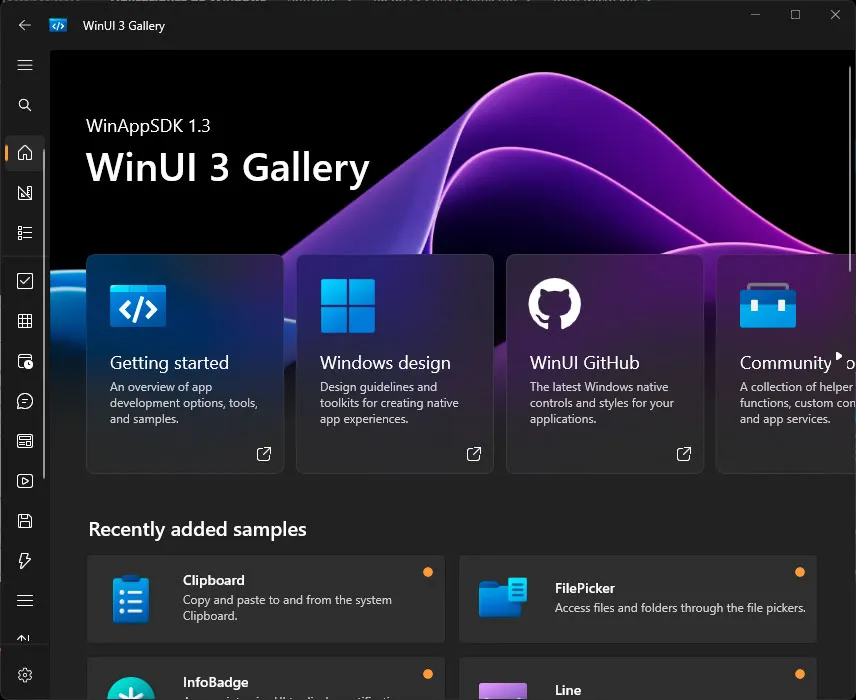
Fixing all this is a strategy that combines several layers. First, the gradual migration to WinUI 3, Microsoft's native framework that does not need a browser engine to draw an interface, has already rebuilt the File properties dialog and will extend to more dialogs and, in the long term, to the Start menu itself. Added to this are a more efficient memory allocator and optimizations in the Chromium and WebView2 components.
WinUI3, Microsoft's great hope
Microsoft has acknowledged, however, that WinUI still consumes more memory than desirable and needs fine-tuning before bringing it to the Start menu: the improvements will come in stages, not in a single patch.
A look at the new graphic elements of Microsoft's WinUI3
But it is the current economic context that reinforces the urgency of these optimizations. The rise in memory prices, caused in part by production being diverted to AI data centers, has made buying machines with more RAM more expensive. The fact that Copilot+ PCs raised the standard to 16 GB turned 8 GB machines into third-class citizens (second-class ones live with 16 GB and first-class ones with 32 GB).
In addition, competition is also pressing: Apple has shown with its optimized Macs, with 8 GB, that an operating system can be fast on modest hardware, and Microsoft has spent months watching how that product compares with the 8 GB versions of the Surface Laptop. In fact, Apple's is on another level, because a Mac Mini or a MacBook with 8 GB of RAM can be considered by many a capable workstation for medium-weight workflows; with Windows that is unthinkable and Microsoft comes off very badly because of it.
The other big battle is updates. In 2025, updates managed by Windows Update caused remote desktop crashes, duplicate Task Managers, a recovery system failure and, in October, a performance drop for NVIDIA GPU users, along with hundreds of problems and machines out of service worldwide.
In fact, the first patch of 2026 was a disaster: shutdown problems that forced an emergency update, a second urgent fix for failures in OneDrive and Dropbox, and enterprise machines that would not boot after the January patch. “Microslop” doing its thing; it even seems Microsoft forgot how to test the software it creates.
Windows 26H2 seeks to address this unpredictability directly. To that end, Microsoft has committed to moving machines to a single monthly restart, allowing updates to be paused for longer, shutting down or restarting the machine without installing pending updates, and skipping updates during initial device setup. While this does not guarantee that updates will not have problems, it does significantly reduce their impact if something goes wrong, and that alone is a gain.
Reasonable skepticism
With all this, the announcement should be viewed with skepticism, and not only because of Microsoft's track record of broken promises. First, the timescale: much of the improvements will arrive in the fall of 2026 and memory optimization extends to the end of the year, so 8 GB machines will see improvements in stages, not a single solution.
Second, the AI cutback is not a renunciation: Microsoft has only decided that now is not the time, and both the Aion leak and the Solara project, announced at Build 2026, show that AI as the center of the system remains on the roadmap.
Third, the financial context: on the July 29 earnings call, Nadella reiterated the focus on “quality and fundamentals”, but also confirmed that Windows OEM revenue will fall by double digits. A more stable system is, in part, a bet to stem the flight to Linux and macOS.
Drop by drop?
Microsoft says the improvements will begin rolling out widely this fall, first in the Windows Insider channel and then through monthly updates. 26H2, scheduled between September and October, will serve as a container for many of these changes, although features such as the movable taskbar could arrive earlier in version 25H2. For most, the wisest recommendation is to wait for each monthly patch to stabilize before installing it.
But if one thing is clear, it is that Windows 26H2 will not save Windows 11's reputation on its own, but that does not change the fact that it is the first version in five years presented by apologizing for what it does wrong instead of selling what it does new. For the millions of users of 8 GB machines, that is already a tangible change, even if it arrives a year late.