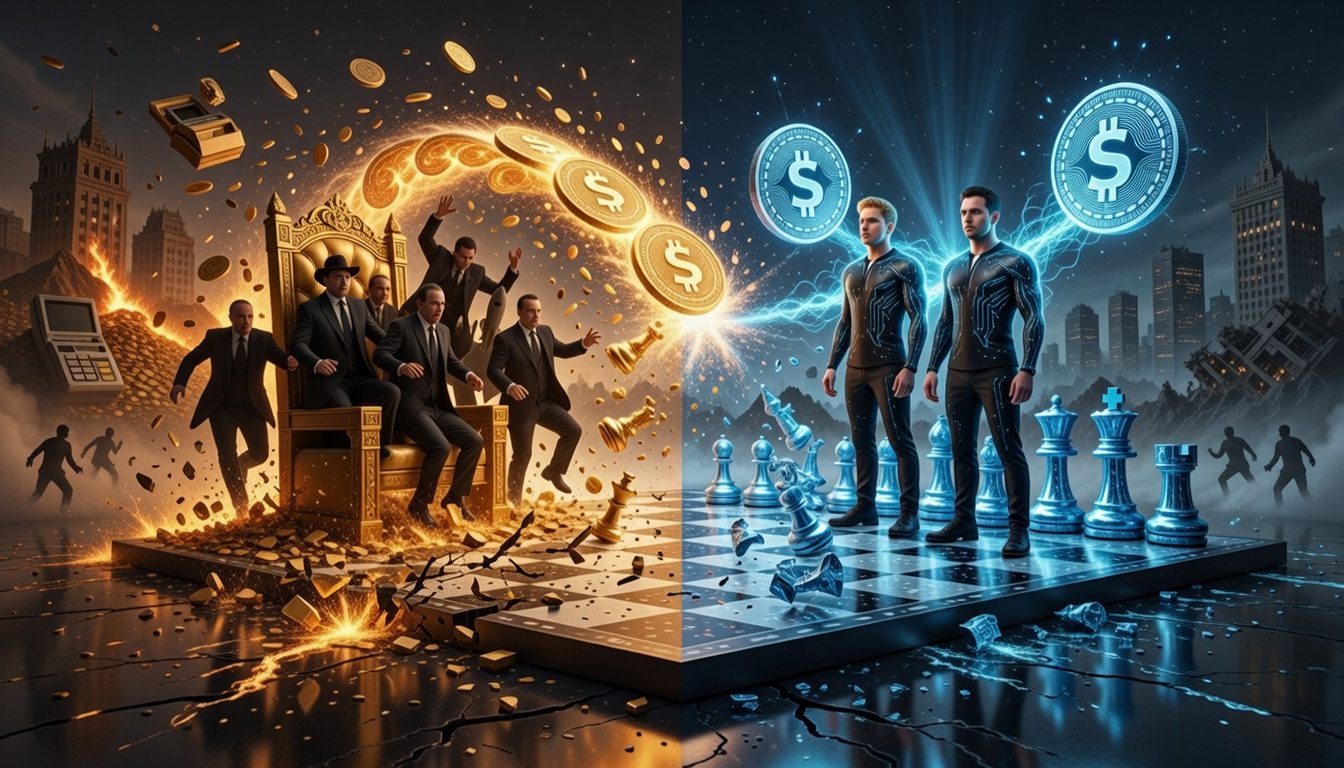
The history of technology is ruthless with those who stop innovating. For decades, PayPal was synonymous with paying on the internet, but in 2026 the landscape has changed radically and Stripe is devouring its future. These days, rumors of a possible purchase of PayPal by Stripe keep growing. If this happens, we will be witnessing the symbolic funeral of Web 1.0; PayPal taught us that you could pay without banknotes, but Stripe is teaching us that money can be pure code.
PayPal Mafia and Stripe
To understand this overtaking, we must travel back to the origin. In 1998, PayPal was born as Confinity with the idea of democratizing money. Its great success was its integration with eBay, becoming the consumer standard under the leadership of names that are legends today: Elon Musk, Peter Thiel, Max Levchin, known as the "PayPal Mafia". However, after the sale to eBay in 2002 for 1.5 billion dollars, the company settled into its monopoly and its infrastructure aged, becoming complex and bureaucratic.
Meanwhile, in 2010, Irish brothers Patrick and John Collison launched Stripe with seven lines of code to accept payments. The Irishmen did not focus on the buyer, they focused on the programmer. That developer-first mentality allowed them to capture the attention of Uber, Shopify and Amazon, becoming the operating system of global commerce while PayPal was increasingly perceived as an old tool.
The most striking fact of this 2026 is that while PayPal struggles to maintain its relevance, Stripe has reached astronomical figures as a private company. With a valuation of 159 billion dollars, Stripe can afford the luxury of a total or partial purchase of a PayPal that today is worth about 47 billion, 8 times less than in its best times.
The Kodak mirror
As happened to Kodak, PayPal has some of the symptoms that sank the emblematic photography company. The main one is clinging to past success. Just as Kodak ignored digital to protect its film business, PayPal has been so focused on its payment button and on maintaining high fees that it has neglected the invisible infrastructure of the internet.
Stripe wants to buy PayPal but the real bargain was the acquisition of Bridge
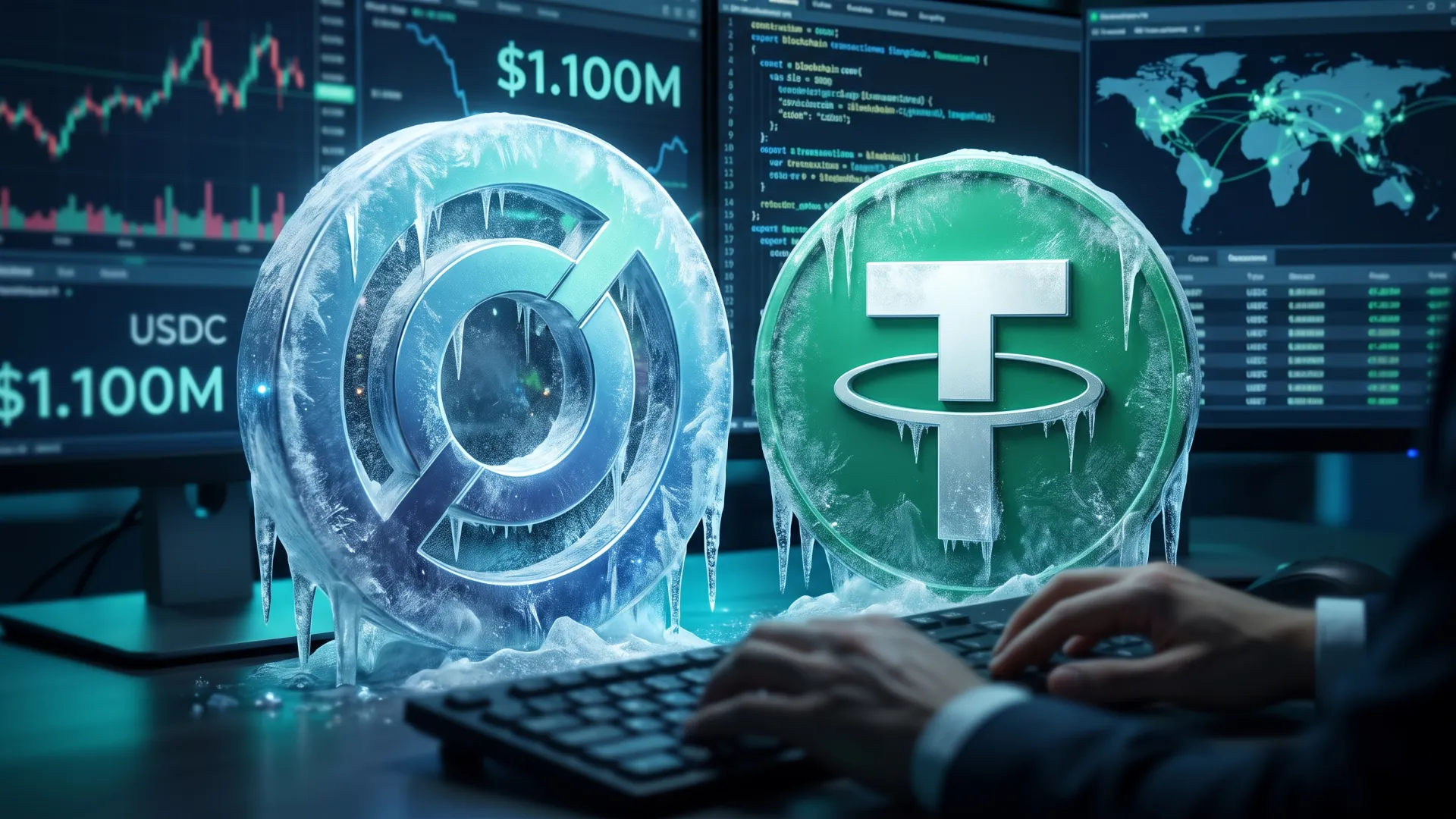
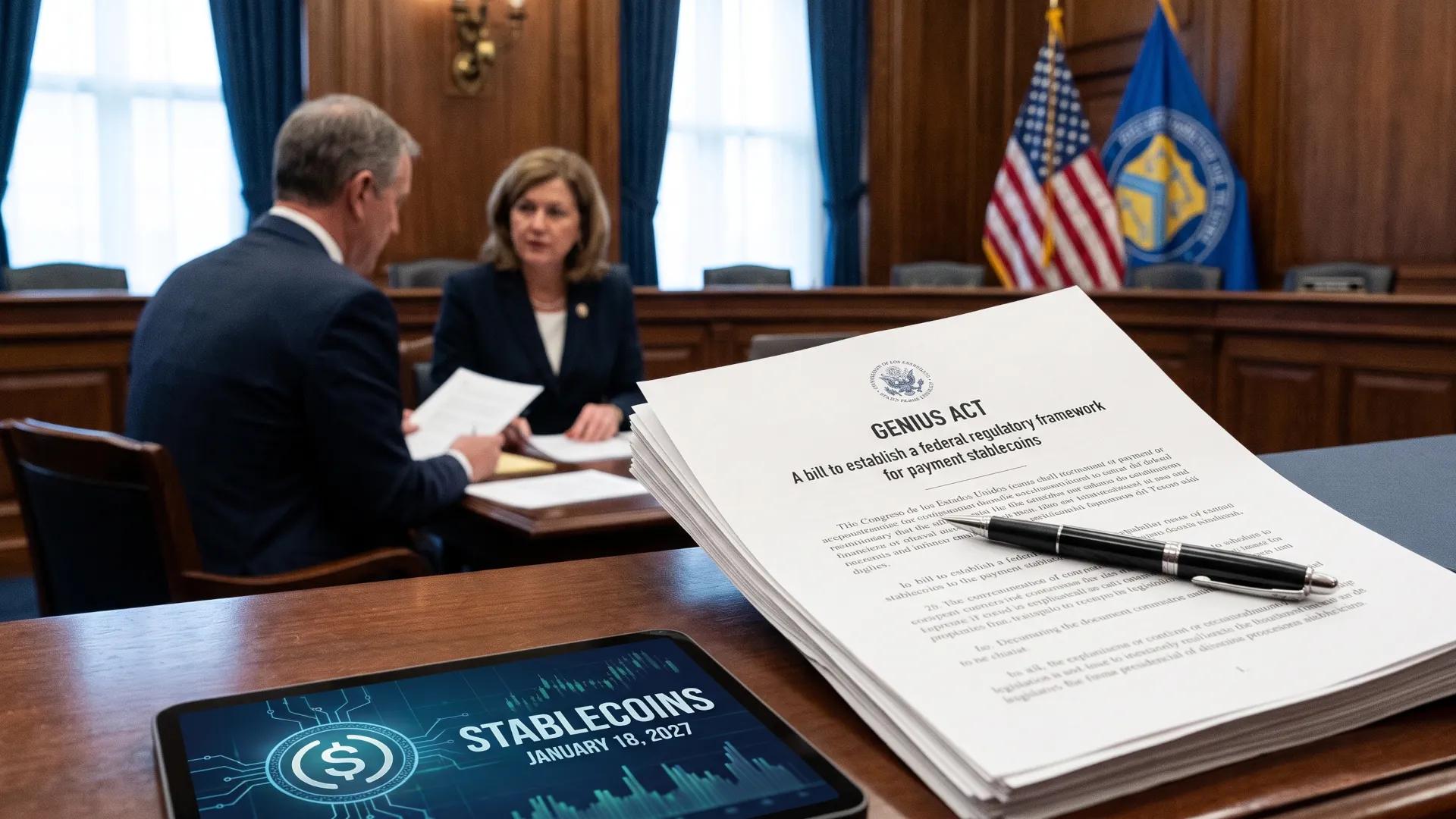
PayPal's competitive advantage weakened even further after Stripe's purchase of Bridge for 1.1 billion dollars a little over a year ago. In addition, a Stripe subsidiary received this same month of February 2026 the approval of the Office of the Comptroller of the Currency (OCC) to operate as a National Trust Bank. In this way, Stripe can now also custody digital assets, issue stablecoins and manage reserves under federal supervision. It has bypassed the intermediaries, becoming the very infrastructure on which money runs.
Until now, PayPal boasted about PYUSD, its stablecoin launched in 2023 to dominate Web3 payments. However, PayPal has always depended on external partners, such as Paxos, for its issuance and custody. Stripe, by becoming a national bank, can bypass all intermediaries. While PayPal tries to get users to adopt its currency on a foreign network, Stripe has become the very infrastructure on which money runs. It now has the legal capacity to settle transactions in real time using its own stablecoin, with operating costs that PayPal, weighed down by its old structure, simply cannot match.
Musk's old idea
On the other hand, it is fascinating that while today Stripe moves forward to become a banking entity, the idea that Elon Musk proposed with X.com 27 years ago returns to the scene. In March 1999, Musk founded X.com with the goal of creating a complete online bank. But he was not alone in Palo Alto. His great competitor was Confinity, a startup founded in 1998 by Peter Thiel, Max Levchin and Luke Nosek.
However, while Musk wanted to revolutionize banking as a whole, Confinity focused on cryptography and payments between Palm Pilot devices, which were the grandparents of today's smartphones. BlackBerry was the mother. Before the iPhone or Android existed, if you were an executive or a technology enthusiast in 1997, you carried a Palm Pilot. It was a handheld device, the size of a deck of cards, used to carry your calendar, contacts, notes and to-do list.
It had a touch screen, but you had to use a small plastic stylus. They did not have Wi-Fi or mobile data natively at first, but the Palm Pilots had an infrared port at the top. If you brought two devices together, they could talk to each other. What Peter Thiel and Max Levchin achieved was to design software to transfer money from one Palm to another via infrared. In 1999, that was the closest thing to financial black magic. All of this is collected in the book: The Founders, by Jimmy Soni
The background
Although it was incredible technology, it had a problem and that is that it only worked if you had the other person in front of you. Musk, with his vision of X.com, realized that the real market was not in the infrared of an expensive device that only four geeks in Silicon Valley had, but in email, which everyone already used on their computer. That is why, after the merger, the Palm Pilot idea was discarded and they focused on what we know today as PayPal.
After a war that nearly bled both companies dry, they decided to merge in 2000. However, living together was impossible. First, the Confinity team detested the name X.com because, according to surveys, users associated it with porn.
Thus, while Musk was on a honeymoon, Thiel and Levchin removed him as CEO. After regaining control, the Confinity team decided to abandon Musk's idea of a universal bank to focus exclusively on Confinity's star product, which was email payments. That is how the company came to be called PayPal. Musk never forgot that failure and years later he bought back the X.com domain from PayPal. Thus, what was once buried by Thiel and his team for being unprofessional is today the brand of the social network X, which Musk wants to turn into an app for everything.
Stripe's checkmate
If Stripe finally decides to swallow PayPal, it will do so to get its hands on three key pieces. Stripe is the invisible engine that moves internet payments, but it lacks a direct interface with the end consumer. By absorbing PayPal, it would gain at a stroke the trust and access to more than 400 million active wallets. It would go from being a tool for programmers to being the financial application in the pocket of half the world.
The Irish brothers' company is watching above all Venmo, owned by PayPal, and the undisputed standard of social payments in the US. Integrating Venmo would allow it not only to process commercial payments, but to dominate transfers between individuals, laying the foundations to create the definitive neobank.
The purchase would also include Braintree, the architecture that PayPal acquired in 2013 for 800 million dollars, to try to stop Stripe's meteoric rise. At that time, Stripe was already winning the war thanks to its technical simplicity, and PayPal needed a modern and flexible tool to compete in the same league.
Venmo and Braintree
With the acquisition of Braintree, PayPal got Venmo as a bonus. Braintree is the invisible engine behind Uber, Airbnb or Skyscanner. These companies do not use the PayPal button, they use Braintree's technology. Therefore, absorbing it, in addition to eliminating a competitor, allows Stripe to take over the cash flow of some of the largest platforms in the world.
In this crisis scenario, PayPal has fired its last shot and has drawn on the strategic talent of the Spaniard Enrique Lores. The former CEO of HP, a veteran hardened in the management of technology giants in transition, will officially take command on March 1.