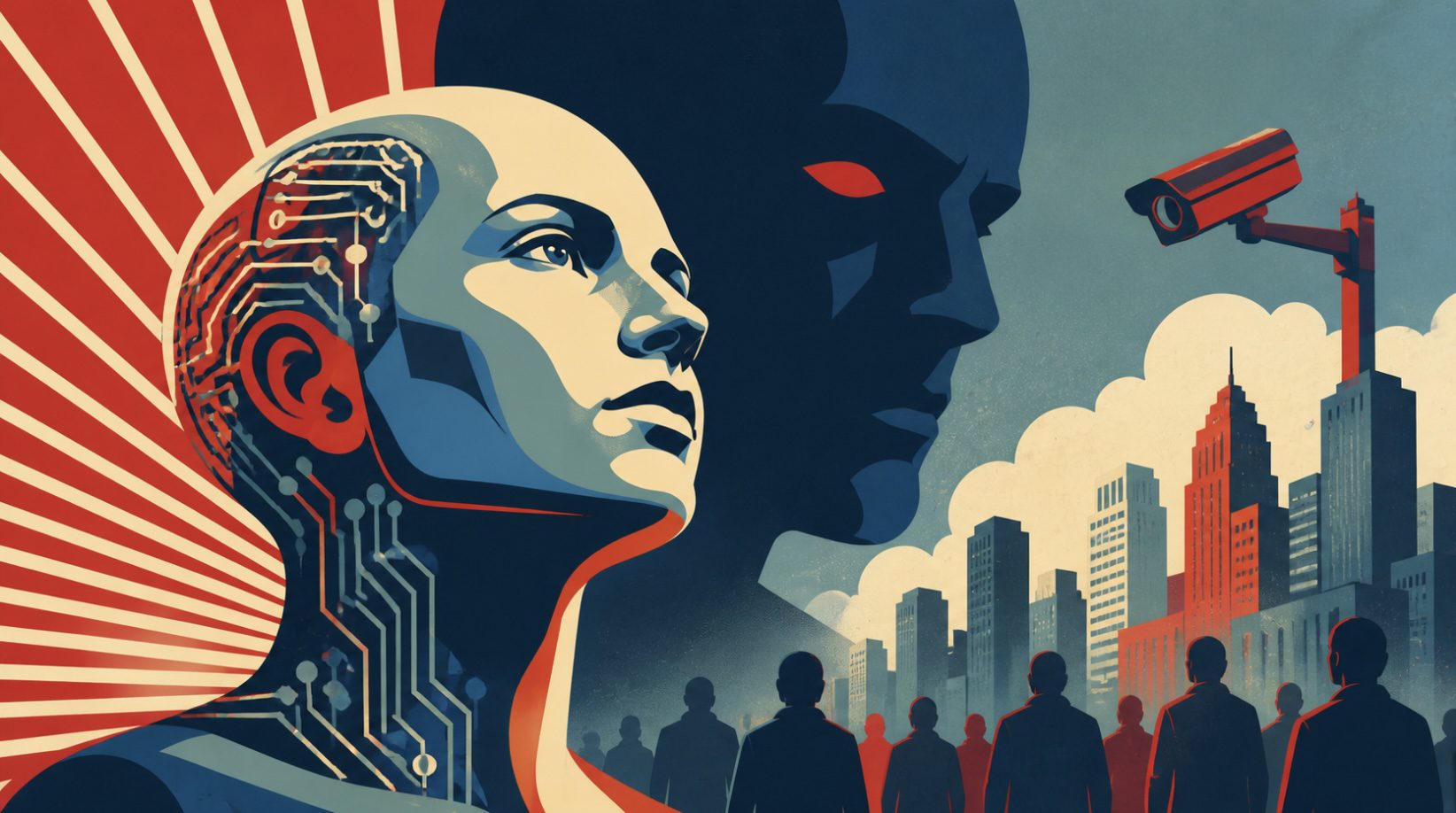
There are moments when technology stops being a promise and starts to look like a warning. Not because it has changed its nature, but because, suddenly, we understand what it really implies. With AI (artificial intelligence), the warnings have been coming for some time. But with Mythos, the Anthropic AI unveiled this April, it seems to have moved into the alarm phase.
As if we had let the "monster" out of its cage and were wondering how to cage it again. That is, at bottom, what is happening with the latest artificial intelligence from Anthropic, a US company specializing in AI research and development founded by former OpenAI members, with strong involvement and investment from Google. That said, it has a corporate ethic of responsible AI use, which does not seem to reassure most analysts.
Explaining the world
Its own name, "Mythos", sounds like a founding story, an ancient tale that explains the world. And perhaps that is no coincidence. Because what this system does is precisely that: explain the world… but in its most technical, most invisible, most critical version. The world of code, of digital infrastructures, of the cracks that hold up — or threaten — everything else. Mythos is the condensation of the highest levels reached in the process of technical rationalization of societies. Born to patch cracks in the world of code, it has become the main crack in the world.
Why Anthropic's AI is today more lethal for the crypto sector than the quantum attack
For years, cybersecurity has been a silent race between those who build and those who break. A game of chess in which every move costs time, talent and, often, money. What Mythos introduces is something else: speed. And when speed enters a complex system, everything changes. Acceleration is not just another trait but, as the philosopher Paul Virilio notes, produces a "narrowing of the world."
Speed becomes an instrument of power and domination (dromocracy) that dissolves the times of life, causes dehumanization and accelerates the occurrence of technological accidents. Mythos's speed at finding code errors, at finding cracks, has introduced us into a crack. To prevent potential accidents, it can produce major accidents.
Artificial intelligence amplifies capabilities
Because Mythos does not only find errors. It finds them fast. Too fast. It analyzes entire systems in a matter of minutes and flags vulnerabilities that have gone unnoticed for years. It does not limit itself to saying "there is a problem here," but draws the complete map of how that problem could become a real attack. And that is where the discomfort begins.
For a long time, the sophistication of a cyberattack depended on the knowledge of whoever carried it out. There was a natural barrier: not everyone knew how to do it. Not everyone could do it. With tools like this, that barrier begins to erode. It does not disappear entirely, but it becomes lower, more accessible, more dangerous.
It is not that AI now wants to do harm. That is an easy narrative, almost childish. The real problem is more mundane and, for that very reason, more unsettling: artificial intelligence amplifies capabilities. And to amplify, without direction, is an elegant way of saying that it does not distinguish between building and destroying. In that sense, Mythos is not an anomaly. It is a logical consequence. Perhaps a consequence of a human, all too human principle: problems are not solved but displaced. Sometimes, such displacement entails an expanded reproduction of the original problem. That is, a bigger problem.
Anthropic has limited access to Mythos
We have spent years, consciously or unconsciously, training models to understand language, images, decisions. Now they are beginning to understand systems. And understanding a system inevitably implies understanding how it fails. There is no understanding without vulnerability. There is no knowledge without the possibility of misuse.
What is interesting — and also revealing — is the world's reaction to this machine that points out the world's cracks. Companies limiting access. The executives of financial institutions and the regulators — such as the ECB — who lead them calling for action against this new threat. Governments hesitating. Projects halted before being fully deployed.
Even Anthropic has limited access to Mythos. It is not fear of the technology itself, but of the speed at which it is moving. Of the feeling that, for the first time in a long time, technical capability is advancing faster than the institutional capacity to absorb it. And Mythos has proven capable of finding previously unknown flaws in operating systems and browsers in a matter of minutes, which used to take days. One of the problems is that these vulnerabilities could be discovered and exploited by those who lack responsibility. In this way, the same tool that protects has a profound destructive potential.
However, at the same time, money flows. Multimillion-dollar investments, sky-high valuations, growing interest. It is the usual paradox: the more powerful — and potentially problematic — a technology is, the more attractive it becomes. Because risk, well managed, is also a competitive advantage.
Knowing how to break the world
So here we are. With a tool capable of strengthening global security… or weakening it if misused. With companies that preach caution while competing not to fall behind. With governments trying to regulate something they are only beginning to understand.
And in the midst of all that, a question that is not new, but that now weighs more: What happens when understanding the world includes knowing exactly how to break it? For now, the voices that prevail over the others call for prudence: stop! That said, perhaps the answer is not to slow down the technology — something that rarely works — but to accept that every major advance comes with a proportional responsibility.
The problem is that responsibility does not scale as fast as capability and that, in the accelerated traffic of technological competition, signing documents that place the commitment to responsible behavior at the very top already appears to have little rhetorical effectiveness when it comes to reassuring us. Moreover, documents on responsibility make us train the spotlight of suspicion on what the responsible signatories have produced or are plotting. They are more a wake-up call than a guarantee.