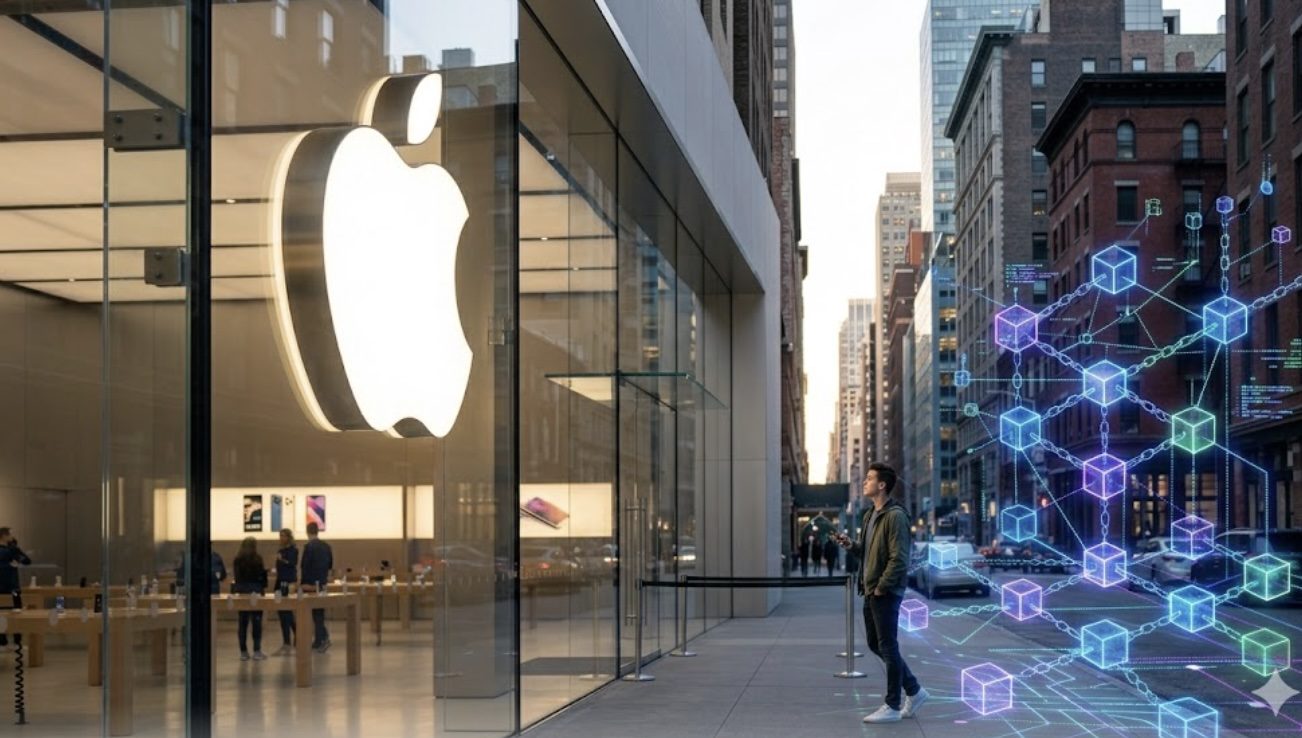
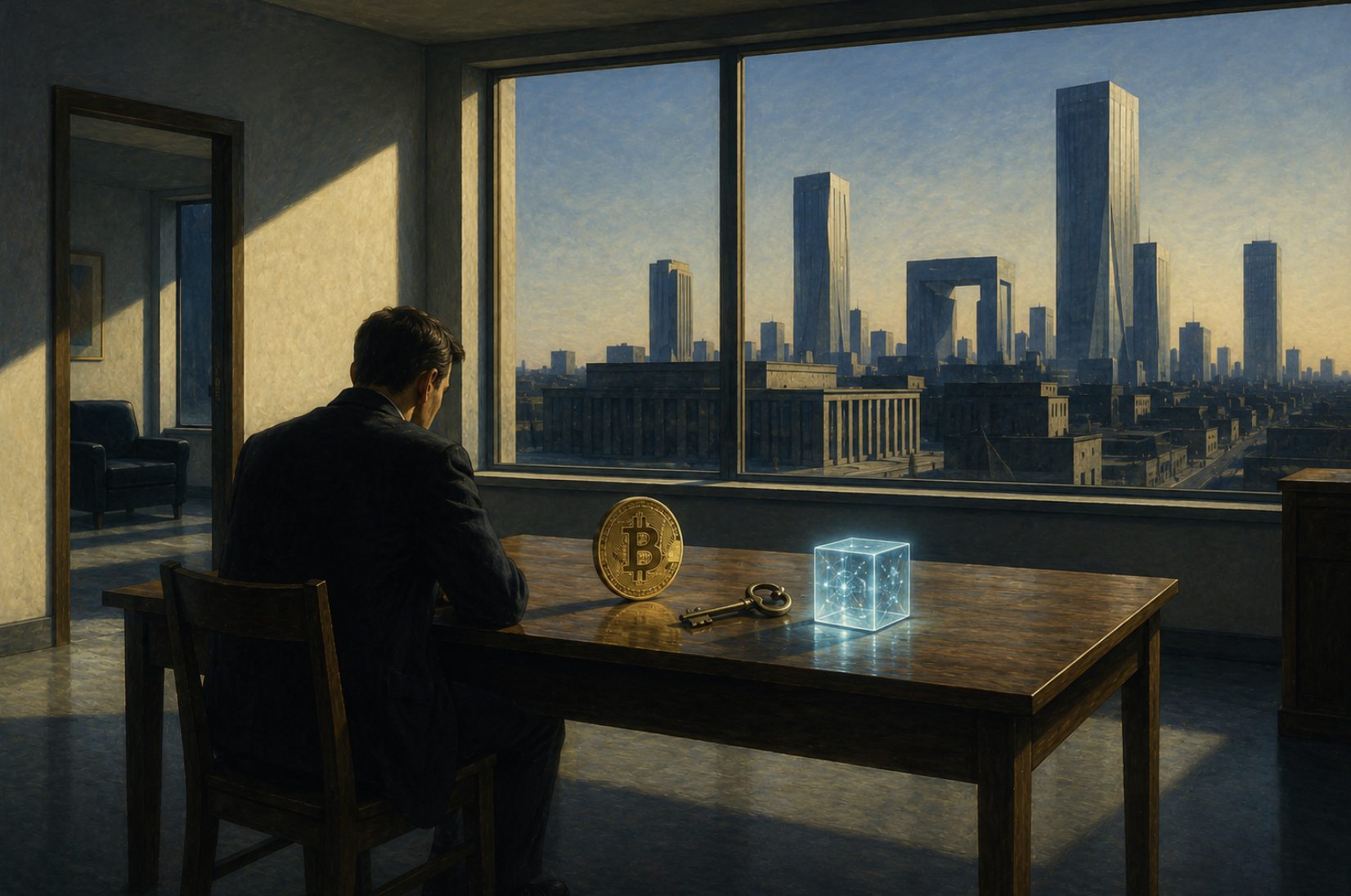
Apple was born in 1976. Steve Jobs' company, a symbol of the innovative technocratic youth, turns 50, and those years are already starting to add up. That blend of hippie culture, groundbreaking pop design and a commitment to style in the language of binary code makes up a clearly distinctive model, half a century after its birth.
Apple and Blockchain
And yet, disruptive in its forms, products and even its marketing campaigns, it is organizationally, and in the way it operates, the very example of centralization. It imposes a take-it-or-leave-it rule on its customers. Even when you walk into its stores, it feels as if you are not the one who decided to enter the Apple space, but rather that you should feel lucky to have the chance to be chosen as a customer. Even though you pay, and not a little, it is as if they were doing you the favor of granting you the distinction of being admitted.
Cryptocurrency payments on Apple's horizon after landmark ruling
As if it were a closed club. That is how many of its users feel, like members of an exclusive club where there are only people like them, by the millions. Apple condenses the logic of closure. In its products. In the way it acts. For this and many other reasons, its relationship with Blockchain has always been distant. As if the two technological bets were opposing worlds. They are poles apart.
A universe unto itself
Apple is more than a company or a brand. It is a kind of technological and consumer identity. It is the one that has clearly bet on distinction, and that requires barriers (Goblot) and competences (Bourdieu). Apple is the name that marks a position for its users and consumers in the sphere of consumption in general and technological consumption in particular. A name that is a universe unto itself and that we imaginatively connect with a lifestyle. Its advertising campaigns are exemplary, constituting a specific and hegemonic discourse in the mature, hyper-digitalized consumer society. In this society, it has imposed a differentiated model. And yet, it is a model opposed to the one proposed by blockchain technology.
In Apple's 50 years of existence, the potential relationship with Blockchain is limited to the last 18 years. Blockchain was born in 2008. While one walks toward post-youth maturity, the other will come of age next October. No matter how many creams it applies, the first already sounds repetitive, while the second is still a promise. Their difference goes beyond belonging to different technological generations. Even beyond the fact that they operate in very different fields of technology: devices versus infrastructure. It is a question of ethos, of behaviors and identity. It is a question of proposing life models.
Tense relations
Over these last 18 years, roughly the age of Blockchain, the relationship between the two has been very limited and, broadly speaking, quite tense. In the first eight years, until 2016, Apple viewed Bitcoin and Blockchain technology with caution or even skepticism. Its "contacts" were limited to a few applications related to the crypto ecosystem on its App Store. Apps that frequently suffered significant restrictions in their operation, and Apple even took it upon itself to remove crypto wallet apps, citing regulatory and security reasons.
The following period, between 2017 and 2020, with demand for tools built on blockchain technology in full expansion, Apple allowed wallet and even tradingapps. For example, the relationship between Apple and Coinbase was established, leading the latter to offer its iOS through the App Store. A tense relationship that in a way condenses the difficult relationship between the Cupertino company and the Blockchain ecosystem. A relationship in which Coinbase appears as the tenant of landlord Apple, which controls the tenant's comings and goings in the building through its devices, in addition to having to comply with its strict payment and content rules.
30% fees
A landlord that imposes luxury-premises prices. It applied 30% fees on transactions, on payments. Something that makes many transactions impractical. If we continue to take Coinbase as an example, in 2022 it had to disable NFT (non-fungible token) transfers in its wallet app because Apple wanted a share of the "gas fees" (blockchain transaction fees), which is technically unfeasible. Beyond its commercial greed, it is a question of model. Yes, Apple allowed NFT-related apps, but by imposing conditions that are hard to accept.
It is a conflict between models. Apple is a closed ecosystem that operates on the basis of centralized control, where its App Store functions as a kind of doorman for its supposedly luxury building. We return to: "I am the one who decides who gets in and who doesn't." For its part, access to Blockchain requires no permissions. Its logic is that of decentralization, even with the nuances that could be made regarding some of its concrete implementations. While Apple establishes itself as a hierarchical chain of control, blockchain technology does so on the basis of distributed trust. Important differences that, far from having been created with age and the passage of time, come from their respective origins. One could say they come from their respective identities, from their techno-cultural DNAs.
Opposite worlds
Today, Apple represents the technological world opposite to blockchain technology. Even some of its competitors, such as Microsoft or Google, have explored blockchain in a more open way. But the trait of openness does not seem to be in Apple's character. Let us hope that with age its tendency toward closure will fade. Including closure to blockchain technology. There is still hope for an intergenerational technological pact, since hope is the last thing to be lost.