The volume of illicit transactions reached a historic record of 154 billion dollars in 2025, which means an increase of 162% compared to the previous year. Unlike previous periods, where isolated actors or professional networks predominated, the current landscape is dominated by the massive activity of nation-states that use crypto infrastructure to evade international sanctions and finance state operations on a global scale.
CRYPTOCURRENCIES AS AN ALTERNATIVE TO FINANCIAL CONTROL IN VENEZUELA
Nation-states, the main drivers of illegality
Data from a recent Chainalysis report reveal that state actors such as Russia, North Korea and Iran are the main drivers of this escalation. The launch of the Russian stablecoin A7A5, backed by the ruble, facilitated on its own more than 93.3 billion dollars in illicit transactions in less than a year, serving as a key tool to circumvent financial blockades.
For its part, the North Korean group Lazarus carried out the largest theft in history against the Bybit exchange, contributing to a state haul of 2 billion dollars in 2025 alone. This sovereign participation has caused a 694% increase in the value received by sanctioned entities, consolidating cryptocurrencies as a strategic resource for evading international controls.
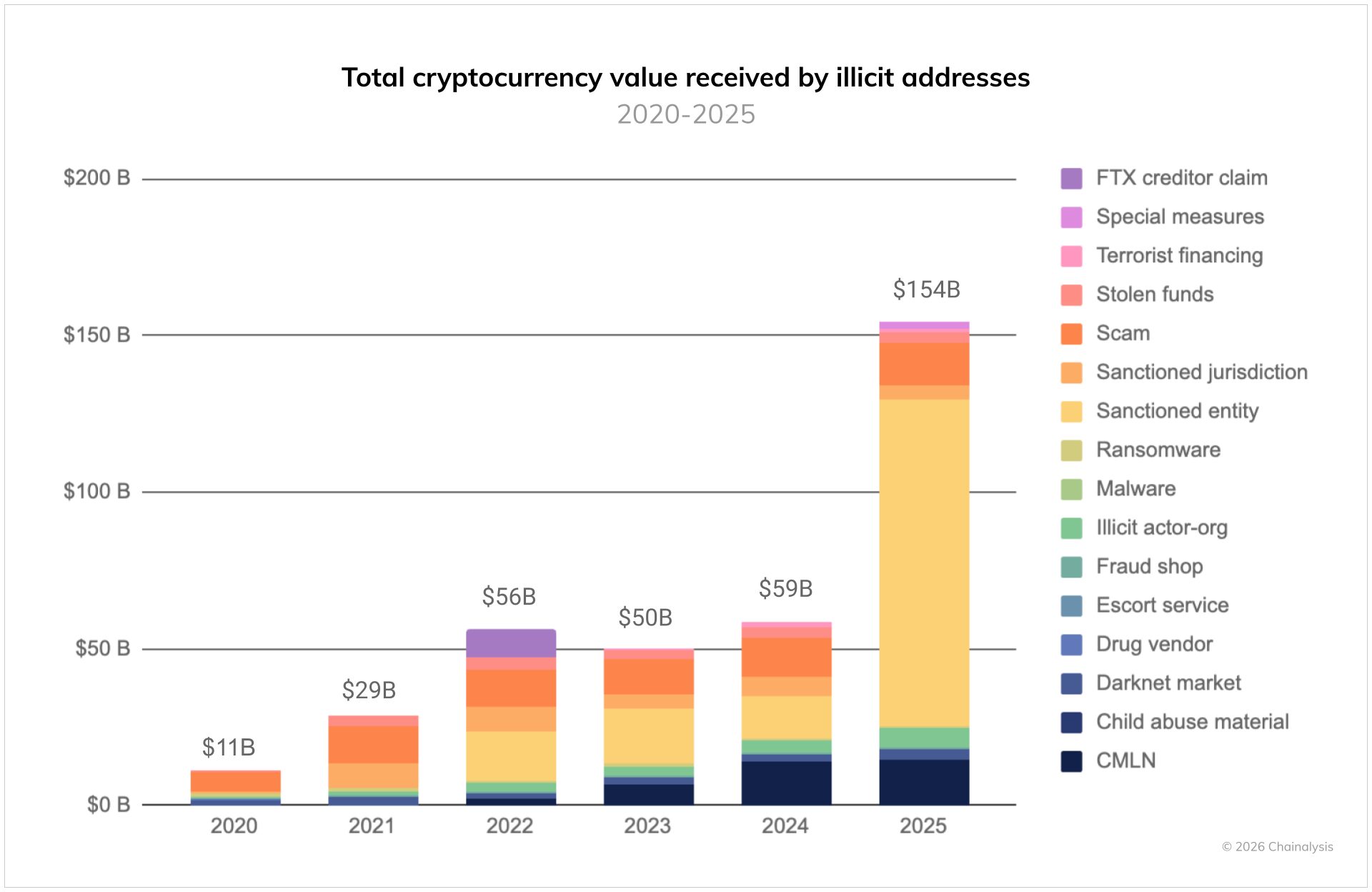
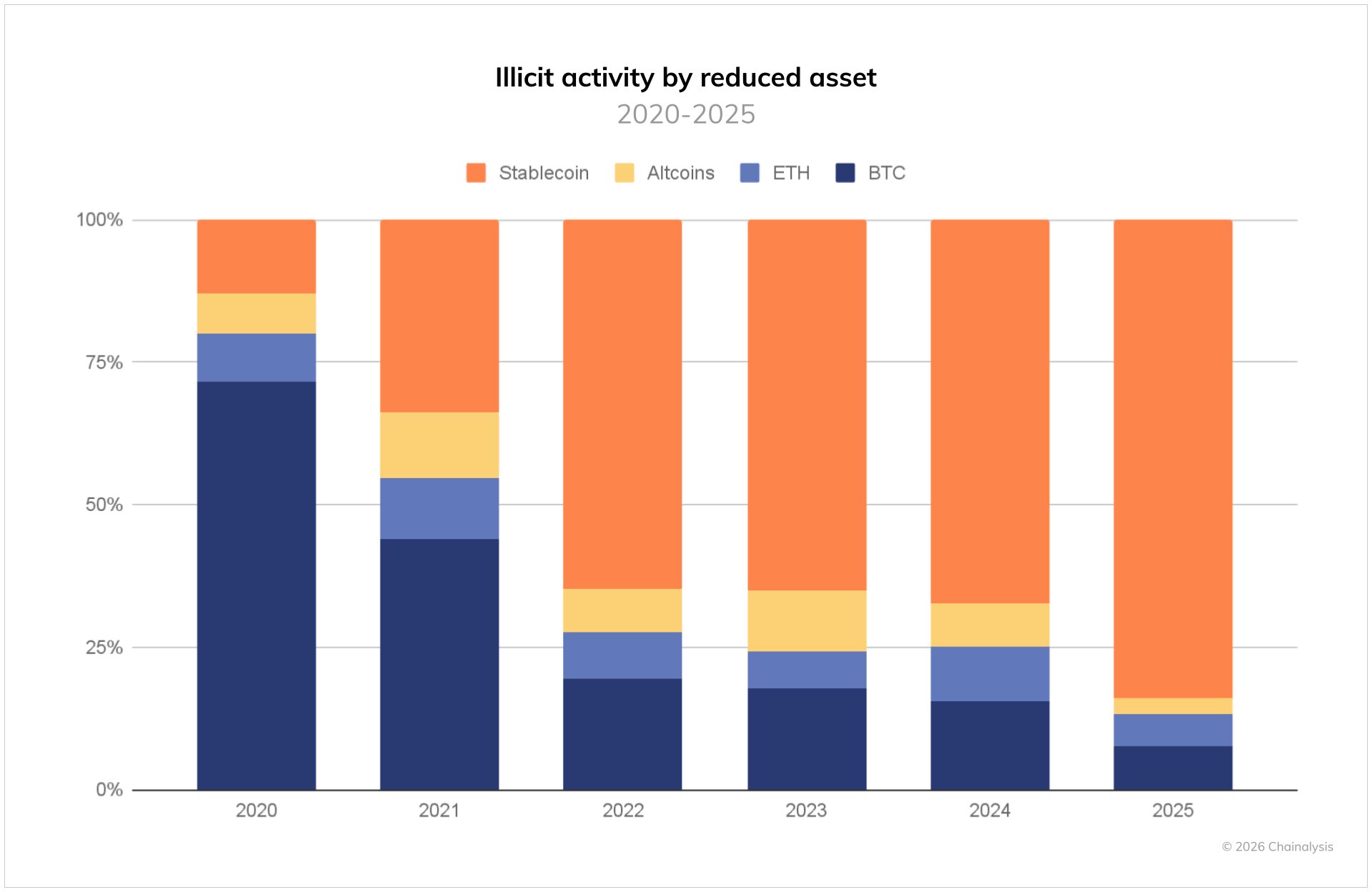
The success of this state offensive rests on a radical change in the assets used: stablecoins now represent 84% of all illicit volume, displacing Bitcoin due to their low volatility and ease for cross-border transfers. At the same time, money laundering networks, particularly from China, have professionalized "laundering as a service," allowing these nation-states to hide their tracks with alarming operational effectiveness.
This new paradigm not only threatens the integrity of the digital financial system, but also links blockchain activity to physical violence and geopolitical instability, raising risks to national security and consumer protection to levels never seen before.
STABLECOINS ALREADY MOVE 33 TRILLION AND USDC OVERTAKES USDT IN VOLUME
Stablecoins, the preferred medium
For their part, stablecoins have become the dominant asset for illicit activities, significantly displacing Bitcoin. In 2025, stablecoins represented 84% of all illicit transaction volume, while Bitcoin fell to approximately 7%.
Their critical role is due to several practical advantages that illicit actors and nation-states exploit, such as low volatility and high utility, since they facilitate the safekeeping of value without the fluctuations of other cryptocurrencies. In addition, stablecoins facilitate cross-border transfers, allowing large sums of money to be moved across borders quickly.
Another major point in their favor is the enormous liquidity and global access of stablecoins. An example of this can be seen in North Korean hackers, who prioritize stablecoins such as USDT and USDC, due to their high liquidity and ease of access on global exchanges. Of course, they run the risk of funds being frozen if detected, but hackers usually make rapid movements of funds to throw off trackers and end up in mixed cryptocurrency schemes that make tracing them harder over time.
Professionalization of crime
The increase in nation-state activity and the professionalization of crime on the blockchain represent systemic risks that threaten the global stability of the crypto ecosystem. This trend not only jeopardizes national security through massive sanctions evasion, but also complicates consumer protection against highly sophisticated attacks. As sovereign actors integrate with existing illicit supply chains, the complexity for government agencies rises drastically, transforming the sector into a geopolitical conflict board where market integrity is constantly undermined.
At the human level, criminality has transcended the digital realm to manifest itself in an alarming increase in physical violence. The so-called "physical coercion attacks," which tend to spike along with the price of assets, demonstrate a direct connection between on-chain activity and real danger to users. This threat is amplified by a resilient, "full-stack" criminal infrastructure designed specifically to withstand sanctions and legal crackdowns, allowing both ordinary criminals and state groups to operate with almost unstoppable impunity.
10 THINGS THAT WILL TRANSFORM THE INTERNET IN 2026 (2): BLOCKCHAIN AS INVISIBLE INFRASTRUCTURE
Finally, the magnitude of illicit capital, which has recorded transactions of 154 billion dollars, imposes unprecedented regulatory pressure on legitimate companies. And, if this scheme of professionalized criminality persists, the sector risks degrading its legitimacy, turning an innovative financial infrastructure into a tool of insecurity and systematic violence.