For decades, consumer computing has been subject to a reality that seemed immovable: if you want to play games or use high-performance software without complications, you have to use Windows. While Apple kept its creative niche and Linux remained the sanctuary of system administrators and open source enthusiasts, that simple reality kept 90% of general computing in Microsoft's hands.
However, in the offices of Bellevue, Washington, a company has spent more than a decade quietly mapping out a mass migration. A plan to leave Windows behind for good. That company is none other than Valve Corporation, the giant behind the gaming platform Steam, and it doesn't just want to change the rules of the game; it is building the foundations to make consumer hardware independent of Microsoft's ecosystem. And as this company has accustomed us to: Steam wins even without doing anything, because the timing couldn't be better, in the midst of Windows' ever-growing enshittification.
Of course, to this we must add the recent revelation of the official prices of the new Steam Machine, which starts at $1,049 for its base 512 GB model and scales up to $1,428 for its 2 TB version with the revamped Steam Controller. Something that has sparked a fierce debate in global forums. For the superficial analyst, the device looks like an excessively expensive PC compared with a PlayStation 5 or an Xbox Series X. But looking at the Steam Machine only as a traditional console is to ignore Valve's true master plan. To deal Windows the final blow that pushes it into irrelevance.
Proton: The spearhead that brought down the wall
To understand how Valve has managed to place itself in this position of strength, it is essential to go back to the birth of its greatest technical triumph: Proton. Originally launched in 2018 as part of the Steam Play initiative, Proton is not an emulator, but a compatibility layer based on Wine and powered by cutting-edge graphics translation technologies such as DXVK (which translates Direct3D 11 and 12 to the open source Vulkan API). Its initial purpose is simple but titanic: to allow video games designed exclusively for Windows to run natively on Linux-based operating systems without loss of performance.
The impact of this software has been revolutionary. What began as an experiment with a modest list of compatible titles has today become a force of technological nature. Thanks to collaborative development and the proliferation of community forks such as Proton GE (GloriousEggroll), the compatibility rate borders on perfection across thousands of applications.
Why Copilot is turning Windows into an unbearable maze
An unexpected ally
This evolution has turned Proton into an unexpected ally not only for gamers, but also for companies and professionals looking to migrate their infrastructures to open environments. Those business environments or workstations that were once chained to Windows because of a single legacy tool or application now find in Proton and its parallel developments an invisible but robust bridge, capable of running complex productivity and rendering software with astonishing stability.
But perhaps Proton's greatest success is demonstrating how terrible Windows has become as a gaming and work platform. Proton is not perfect; it works on the basis of reverse engineering Windows, something extremely difficult and tedious. Even so, software that works on Proton usually does so with better performance than its native use on Windows; we are talking about games that on the same machine you cannot play on Windows, or you do so with low performance, but on Linux + Proton they can run up to 50% faster, and that is a huge achievement.
Steam Machine: The catalyst for structural change?
It is at this point of technical maturity that the new 2026 Steam Machine enters the scene. In its announcement, Valve explained that the device's price reflects the complex state of the global manufacturing sector and the direct costs of current technology components, moving away from the subsidy strategy that Sony or Microsoft apply to their consoles. And it is that Valve does not need to sell its hardware at a loss because its true profit lies in the consolidation of its distribution platform and, more crucially still, in the definitive validation of SteamOS as a first-rate desktop operating system.
How Linux became the engine of 5G and global networks
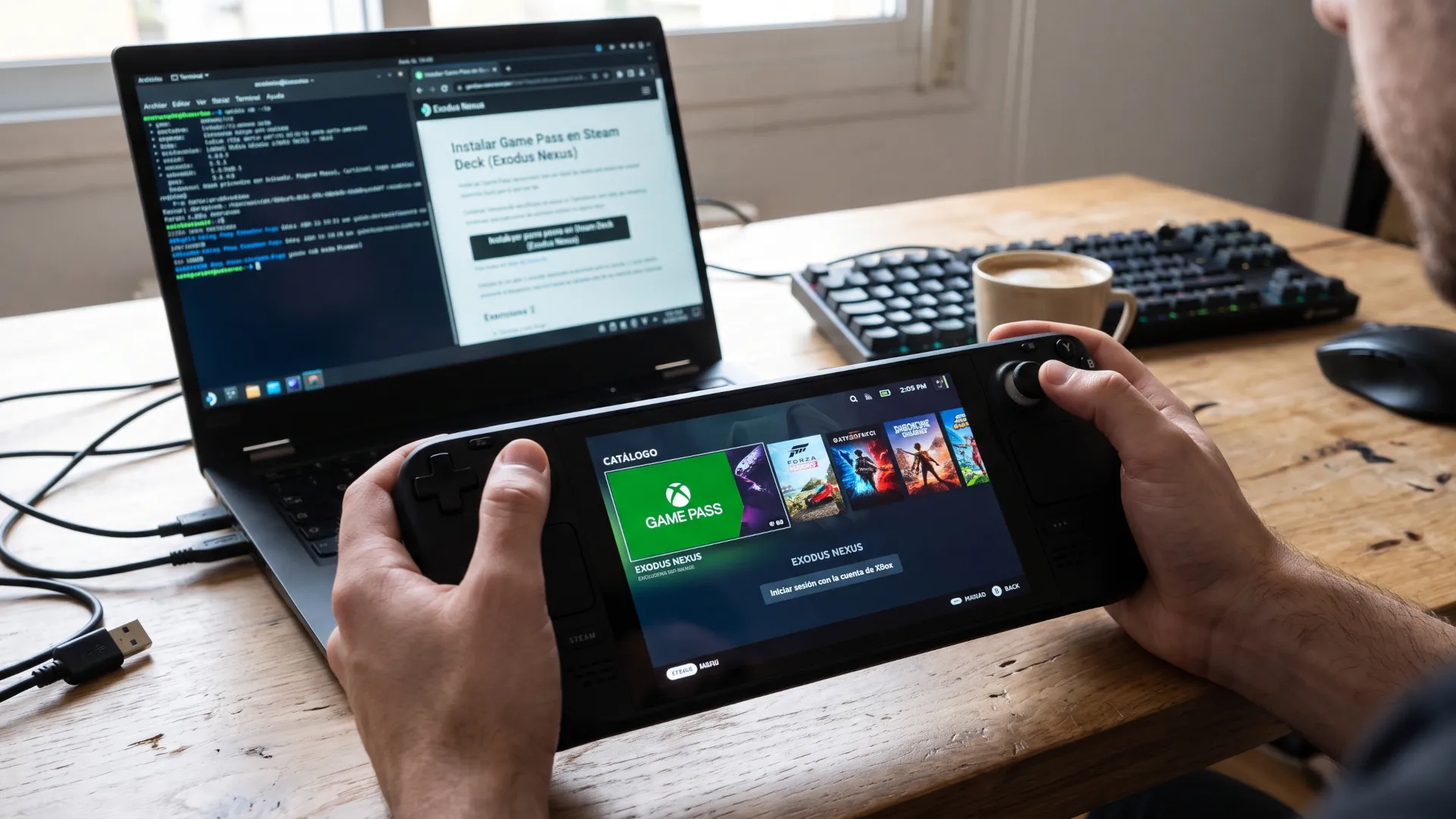
In that way, the Steam Machine acts as the ultimate Trojan horse. By packaging a high-end computer in a format accessible for the living room, Valve directly introduces a Linux system into the homes of the general public. The user does not have to learn to compile code or configure graphics drivers; the experience is transparent, fluid and purely commercial.
However, behind the interface optimized for large screens lies a complete desktop environment ready to be unlocked. By normalizing Linux through gaming — the sector traditionally most hostile to open source systems —, Valve is eroding the psychological barrier that kept the average consumer tied to Windows' design and monetization decisions.
OpenAI lands in Madrid: the creator of ChatGPT is already looking for talent in Spain
The outcome of this strategic move could completely redefine the balance of power in global computing over the next decade. The political and market implications are binary:
- The success scenario: If the Steam Machine manages to consolidate a market standard despite its premium price, native software development for Linux will experience unprecedented growth. Independent developers and major studios will no longer see Windows as the mandatory default platform. This will trigger a domino effect in general productivity software, forcing other technology giants to offer first-class support on open distributions, definitively breaking the monopoly of desktop operating systems.
- The failure scenario: If the high manufacturing cost restricts the Steam Machine to an exclusive niche of enthusiasts, Microsoft will maintain its hegemony over the average user. However, even in this scenario, the ecosystem has already won. The technology developed under Proton's wing is irreversible; the code is free, community ties have been strengthened and the viability of Linux as a high-performance platform is no longer a utopian theory, but a fact confirmed daily by millions of users.
Patience and long-term strategy
In any case, Valve has demonstrated an unusual strategic patience in the modern technology industry. While others seek immediate profit through subscription services and closed ecosystems, Gabe Newell's firm (Daddy Gabe or Big Gabe, as gamers know him) has played the long game: funding and perfecting free software until the alternative was as solid as the standard.
And with that in mind, the 2026 Steam Machine is not just a machine for running expensive games; it is the statement of intent of a company that aspires to a future in which the freedom to choose your own operating system ceases to be an act of technical resistance and simply becomes the norm.