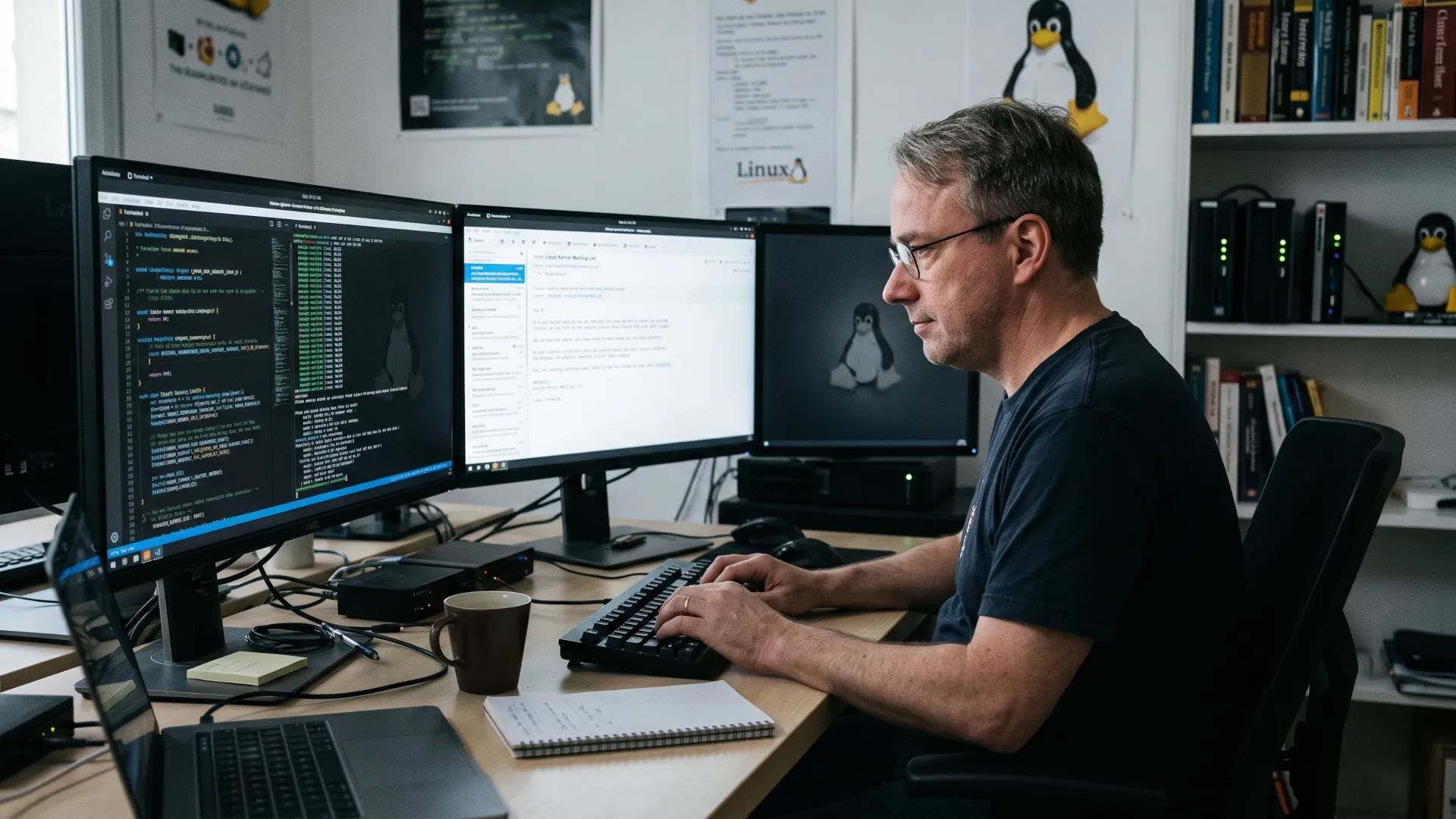
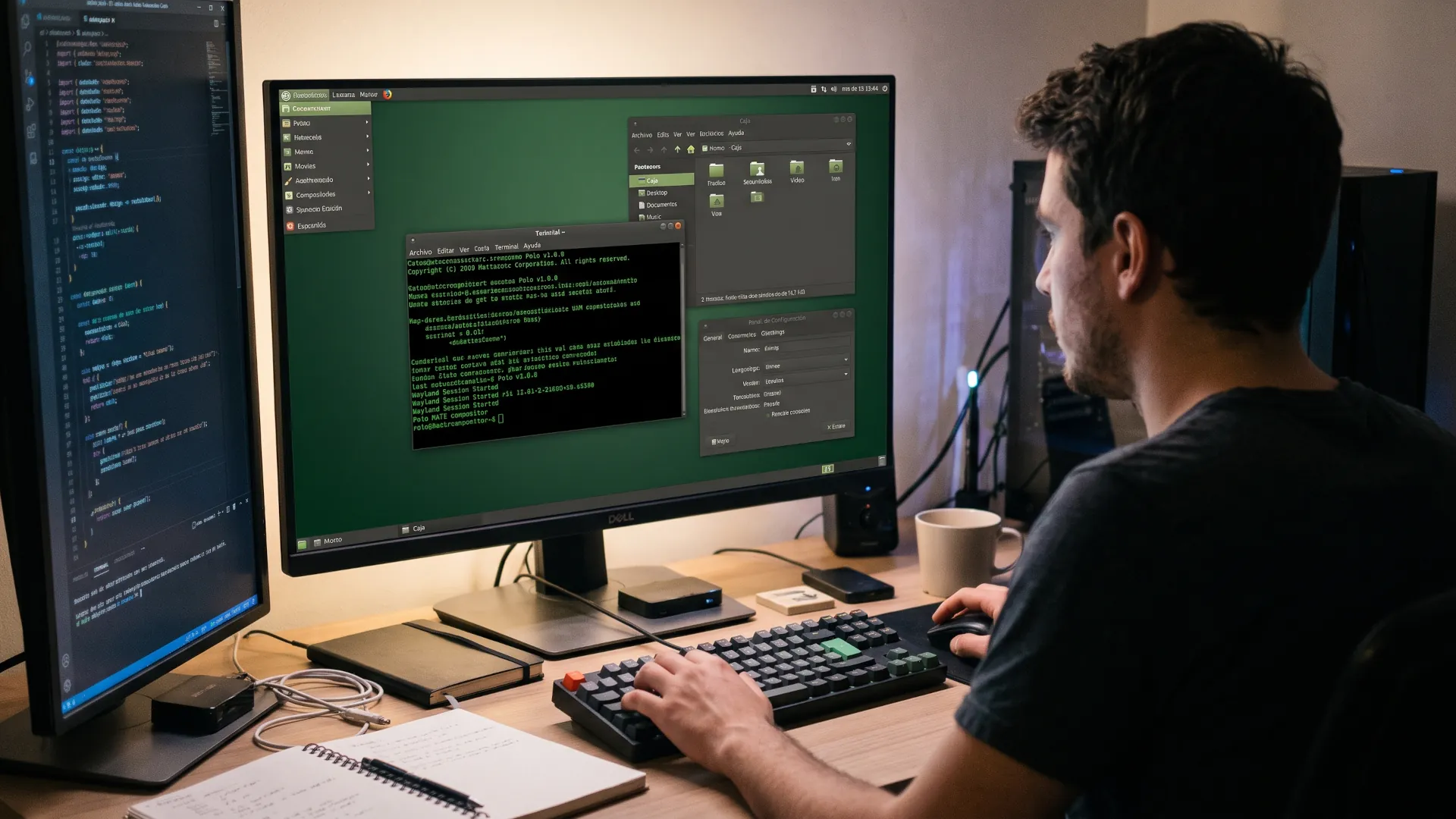
We show you the 5 AI development environments that dominate modern software. There was a time when writing code was an almost artisanal act, a silent dialogue between the developer's mind and a rigid syntax. Today, that line has blurred. We are entering the era of augmented development, where tools do not merely react to our keystrokes but anticipate our thoughts.
Now, the modern IDE has ceased to be a passive canvas and become a neural command center. And in this evolutionary race, only the fittest survive: platforms capable of jumping effortlessly between Linux, Windows and macOS, ready for any architecture and designed with artificial intelligence embedded in their own DNA. Welcome to the revolution of the shared screen, where code is written four-handed between human and silicon.
Visual Studio Code (VS Code): The undisputed king of the lightweight ecosystem
What began as a bold attempt by Microsoft to create a lightweight text editor has transformed into the absolute epicenter of modern development and the industry standard of our era. And in that way, VS Code has become the most widely used code editor globally, and it is not hard to understand why: it has everything you need.
Its great secret lies not in being a heavy giant, but in its chameleonic nature: a clean, agile canvas that, through a massive ecosystem of extensions, can transform into whatever the programmer needs in a matter of seconds. This flexibility has made it the natural home of modern web development, for both frontend and backend, comfortably mastering TypeScript, JavaScript and Python environments and the rapid creation of automation scripts.
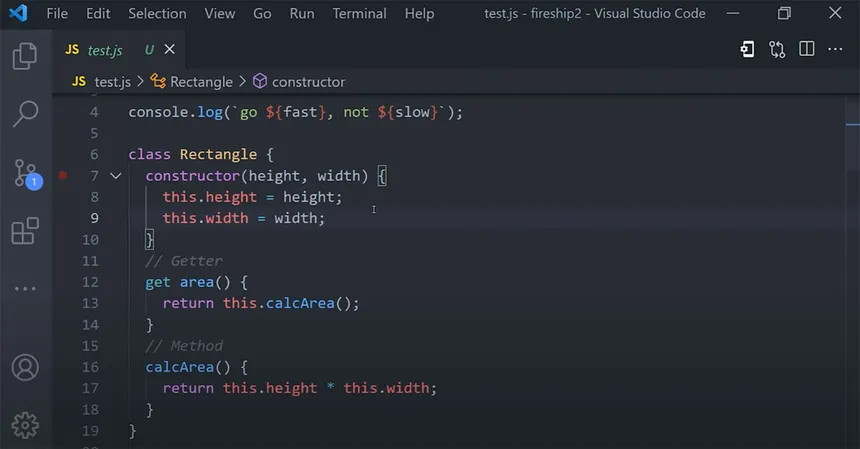
Its true evolutionary leap came when it became the laboratory where GitHub Copilot showed the world the potential of virtual assistance. What began as a subtle text autocomplete has matured into a fully integrated copilot; an assistant that generates entire functions from scratch, writes unit tests in seconds and refactors complex architectures by holding a direct dialogue in natural language through its side chat.
At the end of the day, VS Code achieves the holy grail of technical software by keeping memory resource consumption highly contained without sacrificing even an ounce of the robustness, speed and power that today's production pace demands.
The British Government turns tokenization into state policy
IntelliJ IDEA: The heavy artillery designed for enterprise environments
If VS Code is an agile scalpel, IntelliJ IDEA is a tank of absolute precision. The JetBrains suite has established itself as the preferred environment for developers facing massive architectures and strongly typed languages, authoritatively mastering development in Java, Kotlin, the Android ecosystem and large-scale corporate backends.
Unlike tools that require endless configuration, this IDE comes armored from the factory with a static analysis engine and automated refactoring tools that simply have no rival on the market, allowing millions of lines of code to be restructured with astonishing safety.
This deep understanding of software structure is precisely what powers its evolution toward artificial intelligence with JetBrains AI Assistant. Far from being a simple cosmetic addition, this assistant connects directly to the IDE's core to understand the global context of gigantic projects; a symbiosis that allows it not only to suggest isolated lines of code but also to guide navigation through complex codebases and detect critical bugs long before the compiler wakes up. It is the definitive tool for industrial development where the margin of error must equal zero.
Cursor: The newcomer to the neighborhood
Cursor does not carry the legacy of past decades; it was born with the sole mission of dissolving the boundary between the programmer and artificial intelligence, placing the latter directly in the driver's seat. Conceived as a modern, optimized derivative built on the foundations of VS Code, this environment has become the secret weapon for agile development, ultra-fast prototyping and polyglot programming.
Its proposal breaks the traditional paradigm by demonstrating that code editing no longer has to be limited to a blinking cursor in a single file, an evolutionary shift that has been definitively consolidated after its acquisition by SpaceXAI, Elon Musk's technology division, injecting unprecedented financial and technical muscle into the platform.
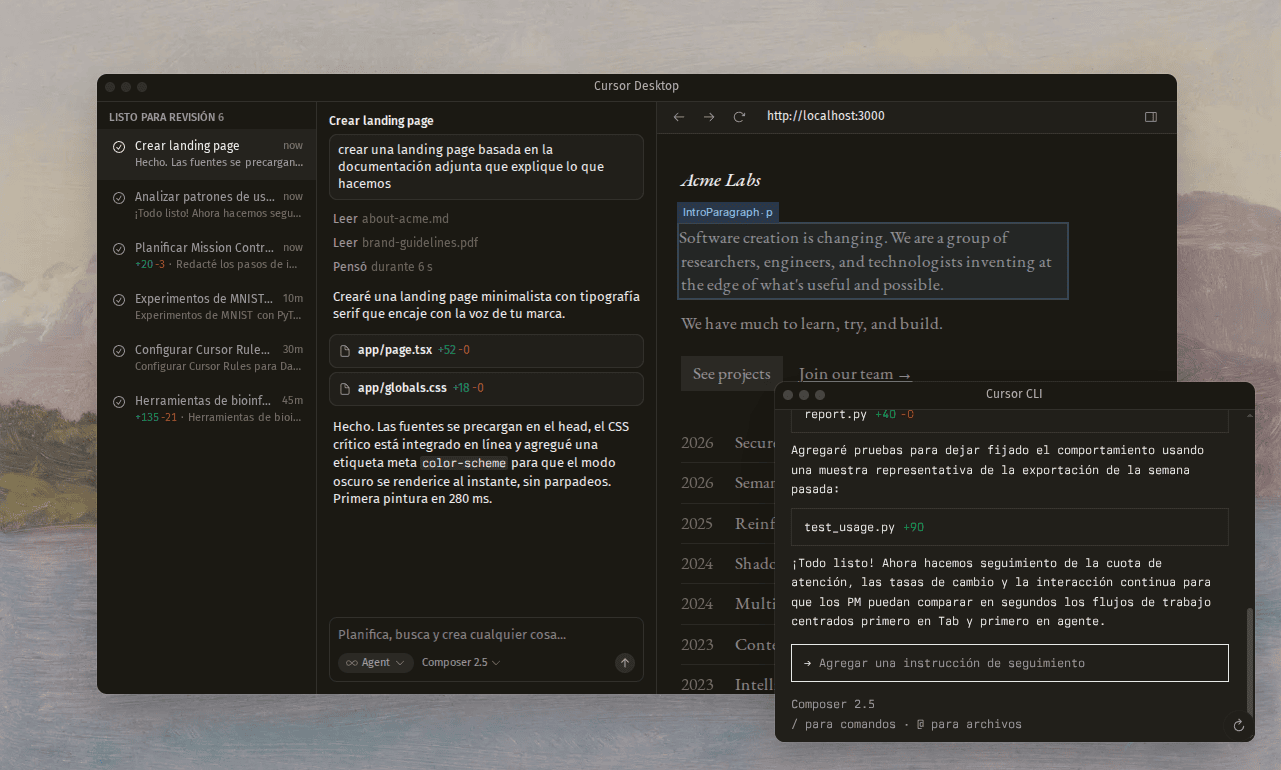
Cursor's true differentiator is that it is built in direct symbiosis with the most advanced language models on the planet. After leaving behind its exclusive reliance on third parties, the environment now deploys its full power through revolutionary features such as Composer 2.5 and the native integration of Grok 4.5.
This architecture allows it to perform feats such as accurately predicting the developer's next move, editing and restructuring multiple files in parallel through complex instructions, and self-generating entire modules with ultra-precise understanding of the project's global context.
Windows: The hidden Microsoft feature that tracks you even with a VPN
PyCharm: The cradle of AI
Sharing the same robust DNA as IntelliJ but sculpted with millimetric precision for a different ecosystem, PyCharm has established itself as the mandatory environment for those who shape the algorithms and architectures that drive today's world.
It is the definitive ecosystem for Python development, Data Science, Machine Learning and the construction of robust APIs through modern frameworks such as Django or FastAPI. Its great value in the industry lies in completely eliminating initial technical friction: it offers impeccable native integration with database management tools, control of virtual environments such as Anaconda or Poetry and debugging terminals that save engineering teams hundreds of hours of manual configuration.
In the era of massive data analysis, its differentiator is the way it intertwines artificial intelligence with scientific workflows. PyCharm has transformed work with interactive notebooks (Jupyter Notebooks) by integrating assistants capable of interpreting complex data matrices on the fly. AI in this environment not only suggests clean syntax but can also optimize SQL queries in real time, generate predictive graphical visualizations based on DataFrames and document convoluted mathematical algorithms without breaking the data scientist's workflow. It is the perfect combination of mathematical power and agile development.
Neovim and Emacs: The sanctuary of efficiency
For those developers seeking absolute control and surgical speed without ever lifting their hands from the keyboard, the Olympus of development is not made up of conventional applications but of environments born in the terminal: Neovim and Emacs. Neovim, the modern evolution of the classic Vim, stands as the king of pure performance and tactile speed, strongly focused on systems programming, development in C, C++, Rust and advanced automation.
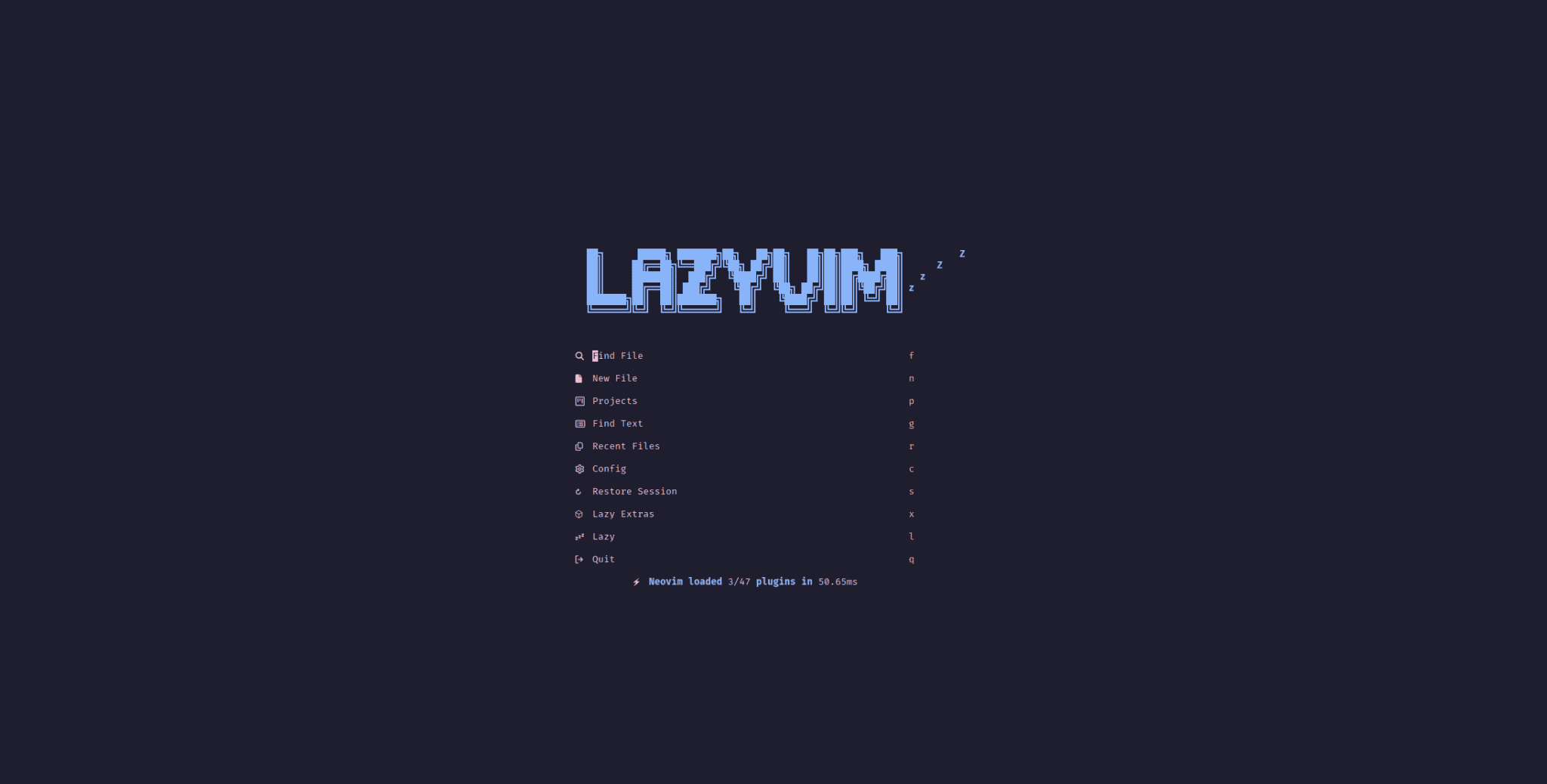
For its part, Emacs transcends the definition of a simple editor to become an operating ecosystem in itself; an infinitely malleable platform that, through contemporary distributions, offers unmatched robustness in project management and interactive code editing. Both worlds shun traditional heavy software, offering ultra-powerful experiences where resource consumption is ridiculously low compared to modern graphical interfaces.
Why open robotics is the most lucrative business of the next decade
Far from being left behind in the technology race, Neovim's asynchronous Lua-based architecture and Emacs's legendary Lisp malleability allow them to embrace artificial intelligence with surprising lightness. Programmers can connect their workflows to advanced extensions to integrate the Language Server Protocol (LSP), dynamic cloud-assistance plugins or deploy local clients through Ollama, interacting with cutting-edge language models directly from their editing buffers.
The result is a purist, fluid and deeply personalized development experience, where the classic philosophy of manual efficiency merges organically with the computational assistance of tomorrow in an environment as fast as a blink of the terminal.