Yesterday, June 15, 2026, the GNU Compiler Collection (GCC) Steering Committee announced officially the approval to incorporate a native WebAssembly (WASM) backend into its free software compilation suite.
This historic decision ends nearly a decade of technological dominance by the LLVM/Clang infrastructure in WebAssembly code generation. By validating the direction of this technical contribution, the free software community opens the door to a robust alternative that promises to reshape both the optimization of high-performance applications in web browsers and the internal execution infrastructure for smart contracts for cryptoassets and decentralized platforms.
The WebAssembly paradigm: speed, security and portability
WebAssembly is a portable and compact binary instruction format designed for a stack-based virtual machine. The main goal of its development, backed by an industry consortium that includes giants such as Google, Microsoft, Apple and Mozilla, is to enable the execution of applications written in high-level languages at near-native speed in conventional web browsers.
Unlike JavaScript, which requires complex analysis and just-in-time (JIT) compilation phases, WebAssembly modules are decoded and validated at dramatically higher speeds. This feature substantially optimizes the initial load experience of complex applications, especially on mobile devices with limited resources.
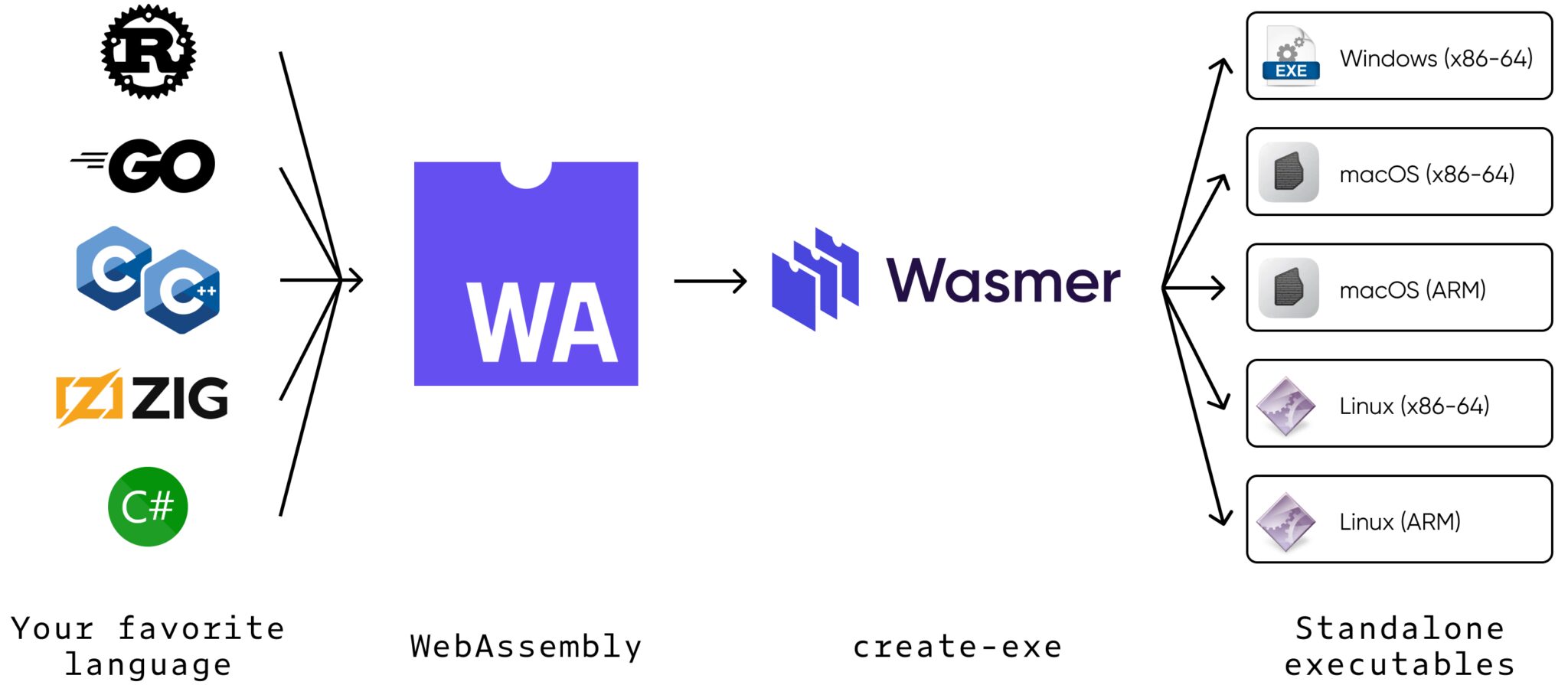
A look at everything WASM has to offer
This execution environment operates under a strict isolation model (sandbox) and a linear memory security system that prevents unauthorized access to the user's operating system. In addition to its massive adoption in the traditional web for graphics processing, computer-aided design tools and multimedia playback, WebAssembly has rapidly expanded into edge computing and decentralized execution environments.
The format stands out for its ability to enable the reuse of legacy code, reducing migration times and eliminating dependence on specific infrastructures.
The technical architecture of the WebAssembly backend in GCC
The development of the WebAssembly backend for GCC is at an early stage, but functional, having demonstrated its ability to interact with key system tools.
To compile programs using this new infrastructure, developers rely on a specific toolchain that includes the wasi-libc system library, the project's wasm-ld linker LLVM and an optimized fork of the WebAssembly binary toolkit (WABT) that supports text linking annotations (WAT)
The role of WebAssembly in the Blockchain ecosystem
To all this, the rise of cryptoassets has driven the search for alternative execution engines that overcome the limitations of the traditional Ethereum Virtual Machine, paving the way for the massive integration of WebAssembly.
The Ethereum ecosystem: from the ewasm proposal to the layer 2 revolution
Initially, the Ethereum development community considered fully migrating its execution layer to an optimized variant of WebAssembly known as "ewasm" (Ethereum-flavored WebAssembly). This proposal promised to solve the sequential processing limitations of the EVM through a deterministically bounded system that injected gas metering mechanisms directly into the WebAssembly binary bytecode.
However, performance evaluations revealed that ewasm implementations introduced delays due to the overhead of dynamic gas calculation and costly context switches in layer 1 network clients. This prompted a shift in strategy toward optimizing the EVM format (EOF) on the mainnet.
Despite this change in Ethereum's base layer, Layer 2 (L2) scalability protocols have strongly adopted WebAssembly. The most advanced example of this model is Arbitrum Stylus, a MultiVM infrastructure that executes smart contracts written in Rust, C and C++ in parallel and fully integrated with the standard EVM.
To achieve this, Stylus uses an execution engine based on an optimized fork of Wasmer, managing to reduce gas fees thanks to a computational performance gain of up to 70 times. Additionally, the protocol introduces the concept of "ink" as an ultra-precise unit of computation where 1 unit of EVM gas equals 10,000 units of WebAssembly ink, allowing minimal costs to be charged for each opcode executed.
To prevent denial-of-service (DoS) attacks through spam, Stylus implements a one-time activation fee of approximately 14 million units of Ethereum gas the first time a contract in WASM format is compiled and natively linked on the network's validator nodes.
The versatility of this MultiVM environment has made it easier for external developers to create innovative language extensions. In 2026, Rather Labs publicly released its Move-to-Stylus compiler, which allows contracts written in the modular Move language to be translated directly into WebAssembly binary modules executable under the same unified security model of the Arbitrum network.
Solana's execution model and the Solang compiler
Unlike the EVM-based design, the Solana network uses a parallel multithreaded execution model called Sealevel. Solana's native bytecode format is based on SBF (Solana Bytecode Format), a specialized derivative of the Berkeley Packet Filter (BPF) architecture. Solana uses a strict account model in which program logic and data state are physically segregated; accounts that store data are associated with 32-byte public key addresses and their persistence depends on a financial deposit called rent in lamports.
To integrate the development experience accumulated in Solidity with Solana's model, the Hyperledger project promotes the open source Solang compiler. This compiler uses the LLVM optimization engine to compile Solidity source files to WebAssembly or directly to SBF code executable on Solana.
This technological bridge allows cryptoasset programmers to reuse traditional Solidity syntax on Solana's Sealevel infrastructure. However, migration requires critical adaptations: the concepts of gas and global network instructions are not directly applicable on Solana, where charges are based exclusively on compute units consumed under a strict priority limit and allocated storage.
Compiler diversity and security
On the other hand, security in cryptoasset networks depends on the immutability of smart contracts once they have been confirmed by validator consensus. This irreversibility means that any logic flaw introduced by the compiler can immediately lead to a massive loss of stored digital assets and tokens with no possibility of a traditional emergency patch.
Historically, the WebAssembly ecosystem has relied almost exclusively on the wasm-opt optimizer from the Binaryen toolkit. However, security research has shown that advanced code optimization phases are recurring sources of logic flaws.
Now, with the incorporation of GCC as an alternative compilation path for WebAssembly, a methodological diversity fundamental to software security in Web3 is introduced. With two bytecode generation engines (LLVM and GCC), smart contract and cryptoasset protocol developers can carry out cross-compilation and verification processes (differential testing).
If the resulting bytecode shows unexplained semantic or size discrepancies, it is possible to identify flaws before its permanent deployment on the blockchain. Likewise, advanced semantic vulnerability detection tools such as BinVulDet can leverage the intermediate code translation flows generated by GCC to build deep learning models capable of identifying suspicious patterns and memory inconsistencies with greater precision in WebAssembly binaries.