The capture of Venezuelan President Nicolás Maduro by the United States in Caracas on January 3 has added a new dimension of risk to the Venezuelan economy. This event has intensified pressure on structural problems that have long led Venezuelans to seek alternatives to protect their money and make their everyday payments.
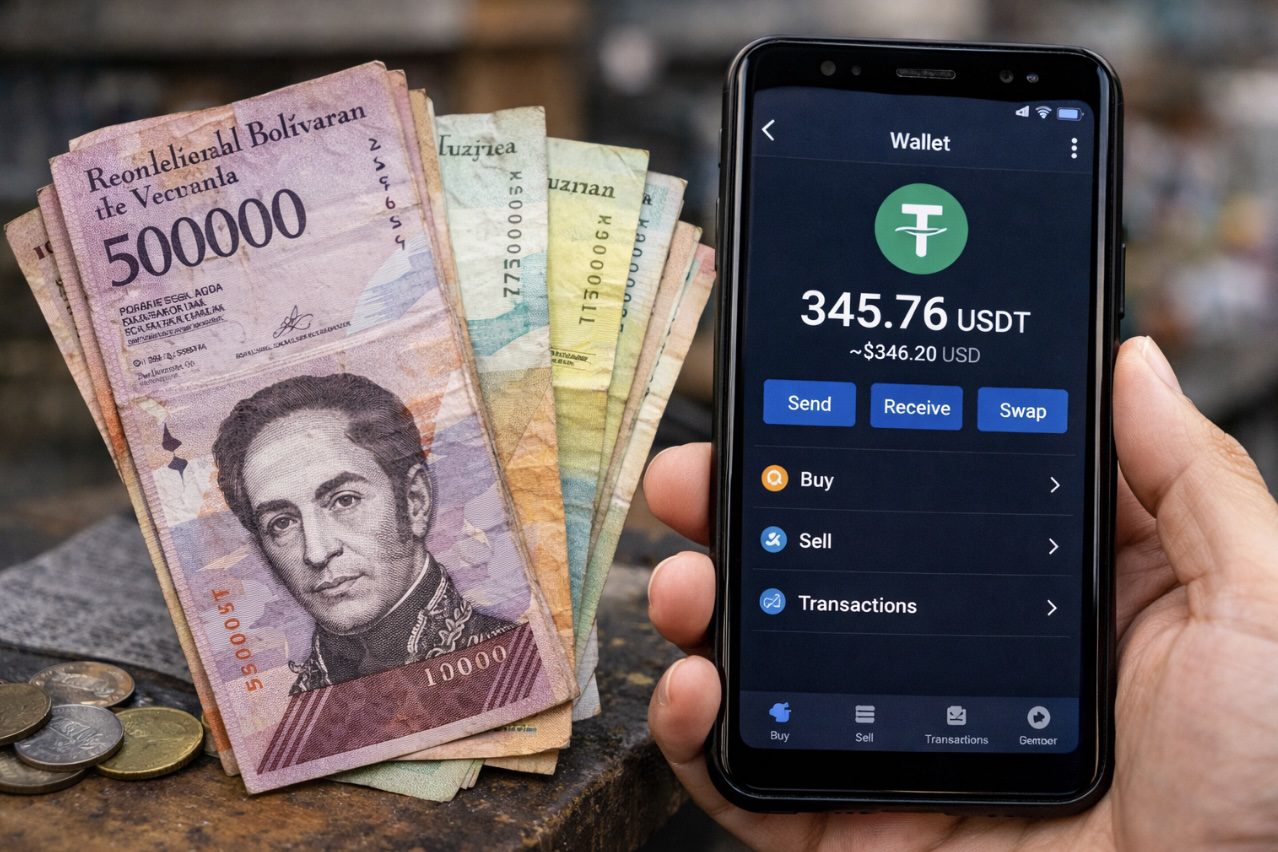
The impact of what happened has translated into greater pressure on the bolívar and an acceleration in the use of digital dollars, known as stablecoins, as a mechanism for preserving value. In Venezuela, citizens' trust in the local currency is extremely low, as a result of decades of devaluation, chronic inflation and exchange control policies. This situation has pushed the population to seek practical ways to manage their money without losing purchasing power or being exposed to sudden devaluations.
In this context, stablecoins such as USDT have become the most accessible tools for preserving value, making payments, exchanging money and maintaining a certain personal financial stability.
Weakness of the bolívar
Since the end of the 20th century, Venezuela has suffered a systematic loss of value in its currency. The bolívar has undergone multiple currency redenominations to remove zeros. From 2008 to today, 14 zeros have been removed from the currency, reflecting an absolute loss of purchasing power and of confidence in the currency as a means of saving. This constant degradation of the currency has led many people to prefer protecting their savings in digital dollars stored in personal wallets or cryptocurrency exchanges.
The price of the USDT stablecoin soars in Venezuela amid the economic crisis
How much is USDT worth in bolívares today?
In Venezuela, the price of USDT is not set by the government or by an official rate. It is determined in P2P markets where buyers and sellers exchange bolívares for USDT, according to real supply and demand. Currently, P2P market data show that one USDT is exchanged at approximately between 300 and 350 bolívares, with daily variations depending on liquidity, the payment method or the banking available in each transaction. This range is a practical reference for what citizens pay or receive when they buy or sell USDT in these markets, and it is more representative of reality than any official exchange rate separated from the market.
How a P2P market works
A P2P (person-to-person) market is a website where people buy and sell USDT directly with each other, using bolívares as the means of payment. Several platforms offer this service with automatic custody mechanisms. On them, one person offers to sell USDT at a specific price in bolívares. Another person accepts the offer and pays in bolívares, by transfer or mobile payment. The platform keeps the USDT locked until receipt of the payment is confirmed. Once confirmed, the USDT is released to the buyer. This system protects both sides of the transaction and is standard in markets such as those of large exchanges with integrated P2P.
A stablecoin is a type of cryptoasset whose value is designed to remain stable around one US dollar. Unlike other cryptocurrencies, which fluctuate widely, stablecoins are used mainly to store value, as a digital means of payment and as a price reference in markets with fragile currencies such as the bolívar. In Venezuela, stablecoins allow people to move and preserve value without being exposed to the constant loss caused by inflation of the bolívar.
The guide
This guide is intended to explain how you can start using stablecoins safely and practically in Venezuela and how they can help you better manage your money in the face of exchange-rate pressures. The guide focuses on USDT, because it is the most widely used stablecoin in Venezuela, both for buying and selling bolívares and for making payments or receiving remittances. Most P2P markets and exchange platforms that people use in their daily lives have high USDT liquidity.
When a merchant or supplier speaks of the digital dollar or of prices in dollars within digital tools, in most cases they are referring to USDT. Although USDC or other stablecoins also exist and can be useful, they do not have the same penetration or the same practical liquidity in Venezuela as USDT. This has made USDT the fundamental tool for preserving value and carrying out everyday transactions. It is for this operational reason that this guide is focused on USDT.
Step-by-step guide to get started
Step 1. Install a digital wallet. A wallet is an application where you can store your USDT. It is not a bank, and the money you keep there is your direct responsibility.
Examples of trusted wallets: Trust Wallet, MetaMask or Coinbase Wallet. When you create the wallet you will receive a series of 12 or 24 secret words. Those words are the key to your money. You must write them down on paper, keep them in a safe place, not take photos, not send them by message, not share them with anyone. If you lose those words, you lose access to your money.
Step 2. Buy USDT with bolívares. You can buy USDT using bolívares on a P2P market. Register on a platform with a good reputation, go to the P2P section, choose the offer that suits you and follow the instructions to pay in bolívares. It is advisable to start with a small amount to familiarize yourself.
Step 3. Send the USDT to your personal wallet. Once purchased, send your USDT from the P2P market or exchange to your personal wallet. This gives you direct control over your funds.
Step 4. Organize your money Mentally divide your resources for daily use, savings and an emergency reserve. Never put all your resources in one place. With USDT in Venezuela you can protect your money against bolívar inflation, collect payments or remittances, pay in businesses that accept digital dollars, send money to other people, pay international services or convert back to bolívares when you need to.
Basic security rules: never share your secret words with anyone. Always use custody mechanisms (escrow) on P2P markets. Be wary of promises of guaranteed profits. Split large transactions into smaller parts. Use only official and well-known applications.