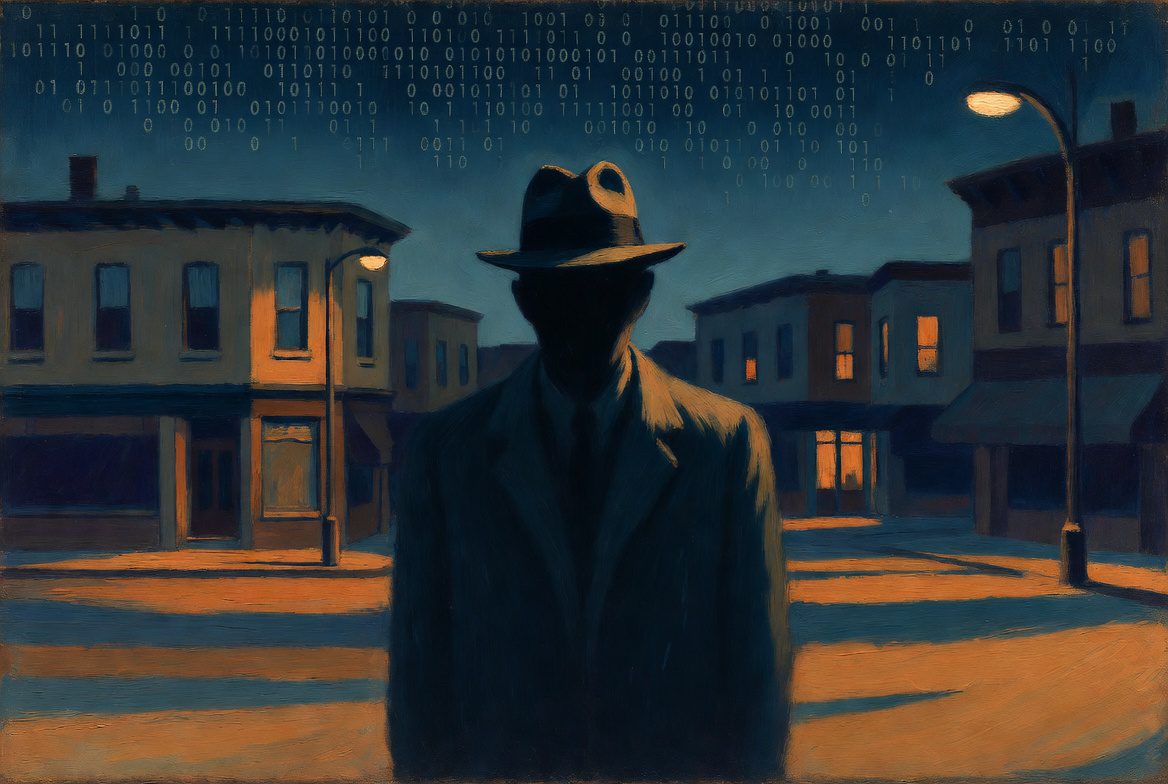
Almost eighteen years after its conception, it is still unknown who the creator of Bitcoin was. The signatory of the document that gave birth to the cryptocurrency, Satoshi Nakamoto, is a name without a name. That is, without reference to a specific person. Apparently, then, since there is no Satoshi Nakamoto who has claimed authorship of Bitcoin, it is a pseudonym. And with it, perhaps not only was blockchain technology set in motion, but also the culture of the pseudo.
A culture of permanent conjecture opened up. A culture in which even identities seem uncertain. With the paradox that links it to a technology intended to provide security. Security in transactions, in what one owns, in the exact moment in which processes find themselves. Security is given to everything, with the exception of who it was that formulated this technology of the security of everything.
Main suspects
The conjectures about the main suspects behind the pseudonym are many. Adam Back, current CEO of Blockstream, heads one of the most recent lists of suspects. The British cryptographer was singled out as Nakamoto a few days ago by The New York Times. He has denied it; but he is one of those who has accumulated the most evidence, based mainly on analysis of his writing style and behavior online. In addition to having the necessary knowledge, he invented Hashcash, a system that Bitcoin uses as the basis for its proof of work , and was directly cited in Bitcoin's whitepaper .
The American programmer and cryptographer Hal Finney was the first person to receive a Bitcoin transaction issued by Nakamoto. He died in 2014, after having denied being Nakamoto himself. Here the evidence is of various kinds, in addition to his being that first recipient. On the one hand, his cryptographic experience, his proximity to the project from the beginning and his being an active member of the cypherpunk.
movement.
A man named Dorian Nakamoto
On the other hand, he was a neighbor of a man named Dorian Nakamoto. Of course, the latter cannot be considered definitive proof, but it seems like a big coincidence, and it is as if he were saying something like: look for me, it's easy, and you will find me. To add spice to this trail, it should be noted that Dorian Nakamoto's real name is Satoshi Nakamoto, a computer engineer by profession.
This has led to the idea that he could even be Satoshi Nakamoto himself, the creator of Bitcoin. That someone named Satoshi Nakamoto is Satoshi Nakamoto carries considerable weight from the standpoint of common sense. But it must be acknowledged that he does not appear among the main suspects and, above all, that the pseudonym would cease to be a pseudonym. Still, sometimes the best way to hide something is to show it, to make it obvious.
Another regular on the list of suspects of being Nakamoto is Nick Szabo, also a cryptographer and creator of Bit Gold, a digital currency that was a precursor to Bitcoin. His approaches to digital money are also another piece of evidence for attributing the content of the pseudonym to him. Still, like the others, he has denied being Satoshi.
Those who have not denied being Satoshi
Not everyone has denied being Satoshi. There has even been someone who has claimed to be him in a vehement and repetitive manner. That is the case of the Australian computer scientist Craig Steven Wright. However, he has lost several legal battles in pursuit of such a claim, having been accused of presenting false documents and submitting technical evidence barely endorsed by experts. In any case, his main credibility problem has been within the crypto community itself. And it is that the very fact of claiming authorship of Bitcoin seems to go against crypto culture, which has made the creator of the cryptocurrency's lack of a named identity one of its hallmarks. Another paradox: non-identity is what identifies us. For this reason, whoever claims Nakamoto's identity is hardly accepted in that community.
The list of suspects continues. Len Sassaman, a cypherpunk cryptographer who died in 2011, whose work on networks and cryptography coincided in time with the disappearance of Satoshi Nakamoto. Wei Dai, a computer engineer known for creating "b-money," another precursor to Bitcoin, cited in Satoshi's white paper. The possibility is even considered that what is being covered up with the pseudonym is a shared authorship by several people. A several that admits different combinations: Szabo and Finney, Finney and Back, etc.
In 2010
The shared authorship argument is one of the most powerful. This avoids the problem of who goes first as author. A frequent problem in the signing of publications, especially scientific ones, but also of other kinds. Using a pseudonym to resolve a problem of authorship among cryptographers. Had this been the case, the original commitment has been faithfully maintained. However, this hypothesis runs up against the lack of evidence of group coordination and the stylistic coherence of the initial code, more easily attributable to a single author.
It has even circulated that it could be a broader collective. It has even been conjectured that Satoshi is the CIA, a spy organization willing to claim, always in a diffuse and indirect way, the leading role in the most important events in the history of the last fifty years. There is no self-respecting conspiracy that does not have the CIA as a reference. Of course, if all of them were true, we would be dealing with one of the most productive organizations.
Why has the identity of the creator—or creators—of Bitcoin not become known after so many years? From the start, Satoshi took careful measures to hide his identity: he used encrypted emails, anonymous networks and never revealed verifiable personal data.
Furthermore, Satoshi stopped communicating publicly around 2010. Since then there have been no verifiable confirmations. This does not seem accidental, but rather a conscious decision aligned with the philosophy of Bitcoin: eliminating intermediaries and central figures. With the anonymous pseudonym of its creator, the image is generated that Bitcoin belongs to no one. The anonymous pseudonym is a philosophical and political statement.
Reasons also appear that can be considered more pragmatic in nature than philosophical or related to community identity. It would be a matter of avoiding the creator's exposure to potential legal prosecution in different countries or, at least, of avoiding government pressure. It must be taken into account that Bitcoin challenges state regulations and directly confronts traditional financial systems.
The culture of the pseudo
In this same pragmatic order, one cannot set aside the fact that Satoshi, the creator of Bitcoin, holds a significant amount of bitcoins. It is estimated that he owns around one million BTC which, of course, have never moved. If his identity were made public, he would face physical risks, such as kidnappings or extortion. In anonymity, he gives up fame in exchange for peace of mind. He even gives up this not insignificant amount of money, since moving the funds could give him away. Beyond the technical, philosophical, cultural, political or pragmatic argumentation, the pseudonym Satoshi Nakamoto