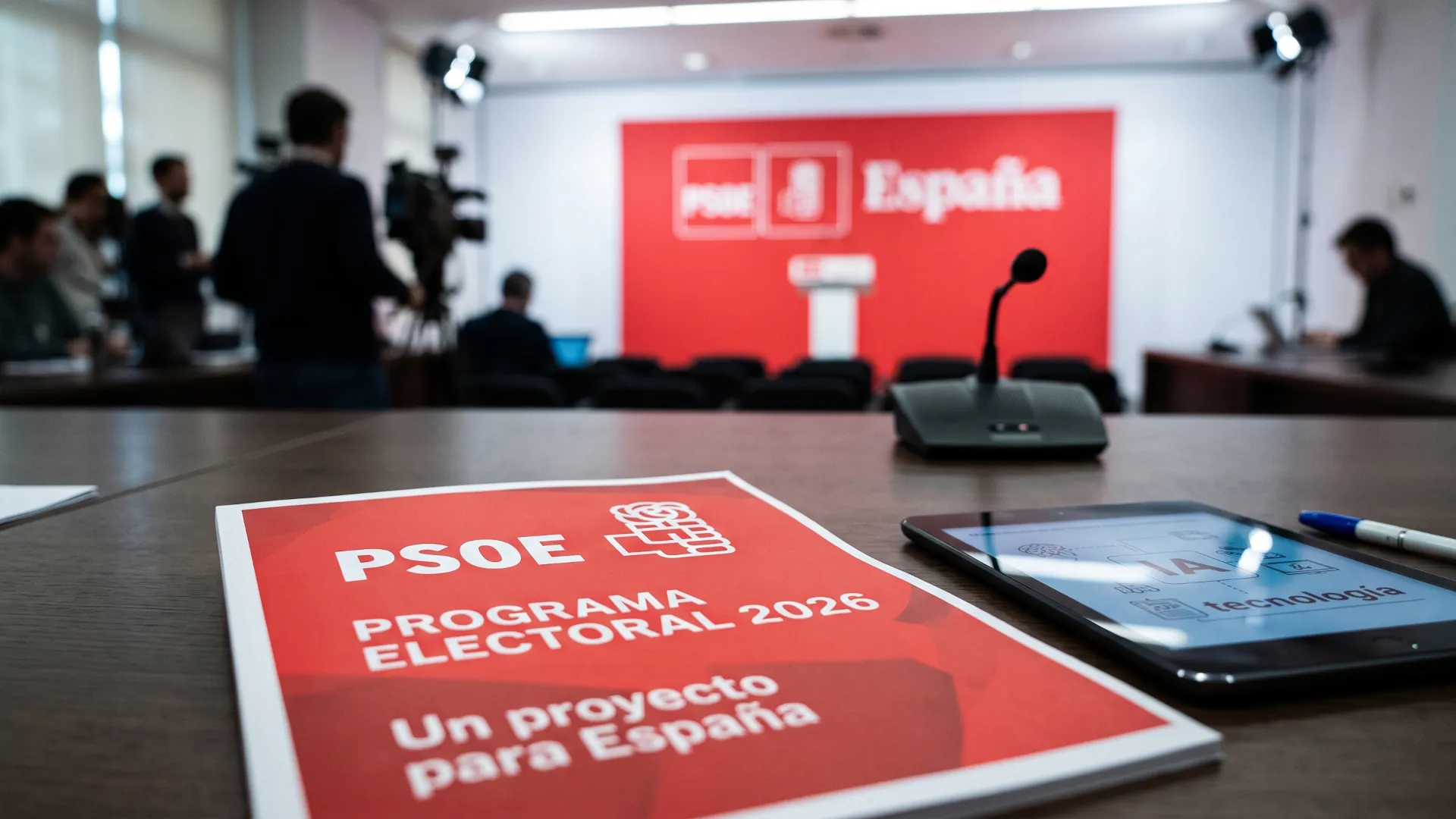
The PSOE leaves cryptoassets out of its election manifesto and devotes several measures to artificial intelligence, from expanding the AI Voucher to labeling content that is generated or manipulated. The document, which brings together 500 commitments across 114 pages for the 29 November elections, also does not mention stablecoins, tokenization, MiCA or the digital euro. Among the pending reforms the manifesto omits is DAC8, the European directive that will allow the Tax Agency to receive information on cryptoasset transactions by tax residents in Spain that providers report in other EU countries.
DAC8
The deadline for transposing the directive into Spanish law expired on 31 December 2025. The European Commission opened an infringement procedure over the delay and the national bill was left unapproved when the Cortes were dissolved in October. The PSOE does not say when it will resume the reform. The first exchange of information between European tax administrations has a deadline of 30 September 2027 and will cover transactions carried out in 2026.
There is another measure in the PSOE's official manifesto that could affect people who invest in cryptocurrencies. Commitment 130 proposes raising the marginal rate for the bracket above 300,000 euros from 30% to 35% and keeping the first two brackets. The gains an individual makes from selling cryptocurrencies are included in the savings tax base. If the reform applies to that entire scale, the new rate could reach the portion of the savings taxable base above 300,000 euros, including those gains. Whether the threshold is reached is determined by the taxpayer's total savings tax base.
What exactly does it propose on artificial intelligence?
On page 97, commitment 406 proposes passing a law for the proper use and governance of AI. It includes human oversight of decisions affecting citizens, mandatory labeling of content generated or manipulated with AI, a ban on deepfakes without consent and protection of creators' rights. The manifesto mentions penalties of up to 35 million euros, although it does not detail which infringements would receive each penalty or who would have to label in each case.
The Government already presented an organic law bill on this matter in May. For the reader, the practical difference lies in knowing when a notice should appear alongside an image, a video or a text. For a news outlet or an agency, what matters is who is responsible for that notice and in which cases the European exception applies for texts subject to human review or editorial control. The scope of the proposal will become clear once there is a text detailing how it fits with the European obligations already in force.
Two tax proposals
The manifesto also includes two tax proposals. Commitment 131 proposes increasing taxation of big tech and the AI sector with measures that complement the current Google tax. Commitment 458 proposes opening an international debate on a specific levy on tokens, the units of information processed by AI models. The PSOE leaves undefined what exactly would be taxed, at what rate and who would pay the eventual tax.
In the economic section, commitments 14 to 16 set out an AI strategy for science, the goal of making Spain a European technological power and measures to extend the use of these tools. For researchers, the manifesto plans to facilitate access to computing capacity, data and talent. For SMEs and the self-employed, it proposes expanding the AI Voucher, the NEURONA Network and support programs. It also proposes a public service for access to advanced AI tools, with training and personalized support so that citizens can learn to use them.
AI labeling
Article 50 of the European AI Regulation has applied since 2 August 2026. It distinguishes between technical marking, machine-readable, which providers must incorporate in the cases envisaged, and the notice to the public that falls to those who use AI in certain cases, such as deepfakes or certain texts intended to inform on matters of public interest. For those texts, the regulation provides for an exception when there is human review or editorial control and a natural or legal person assumes responsibility for the publication. The PSOE manifesto addresses the Digital Services Regulation separately, in commitment 408 on the conduct of platforms and the powers of the CNMC.
The difficulty begins when content leaves the place where it was published. A screenshot can remove the metadata from the original image. A video that is cropped, compressed or re-edited can lose certain provenance signals. For someone who receives that video forwarded by messaging app, the question is how to know where it came from and whether someone manipulated it. The manifesto proposes labeling, but leaves open how compliance will be verified and what possibilities there will be to verify the origin of content after it circulates.
Taxation raises a different question. For a self-employed person or an SME that pays to use an AI model, the effect of an eventual levy would depend on how it is calculated and whether the provider passes it on in the price. The manifesto places the discussion at the international level and does not yet define those elements.
Trading cryptocurrencies from Spain
The application of MiCA has already changed the way Spain regulates the sector. The CNMV authorizes and supervises cryptoasset service providers, while the Bank of Spain has powers over issuers of e-money tokens and asset-referenced tokens. DAC8 deals with tax information and establishes which transactions providers must report and how that data is exchanged between tax administrations. The election manifesto is silent on both frameworks.
The Tax Agency already receives information on balances and transactions with virtual currencies through forms 172 and 173, which obligated providers file. Form 721 requires, in certain cases, that holders themselves and other obligated parties declare virtual currencies held in custody abroad. DAC8 expands the information the Tax Agency will be able to obtain through another channel. If an obligated provider reports to the authority of another Member State the transactions of a person who is a tax resident in Spain, that information can reach the Tax Agency and be cross-checked against what appears in their return.
Navarra has already published regional provisions
The national bill that lapsed in October also included an amendment to the General Tax Law to expressly mention cryptoassets among the assets the Tax Agency can seize. Navarra has already published regional provisions incorporating DAC8 information and due diligence obligations. The reform left pending when the Cortes were dissolved is the national one.
The delay also affects providers that must adapt their systems. The 2026 tax control plan envisages a new form 175 to report cryptoasset transactions, replacing form 173. It remains to be specified how user identification, transaction reporting and the first data submission will work in practice. The directive sets out which providers must report and where they must do so. The user's tax residence determines which administration must receive the data through the exchange.
What to watch after 29N?
On taxation, the next government's first decision will be when to present the national transposition and whether it revives the previous text or introduces changes. The date that marks the calendar is 30 September 2027. By then, European tax administrations must have carried out the first exchange, with information on transactions carried out in 2026. Between the approval of the reform and that submission, providers will need to know the deadlines and the format of their returns.
On artificial intelligence, it will be necessary to check what specific obligations the Spanish law introduces, how they fit with the European exception for certain texts with editorial control and what penalty corresponds to each infringement. For creators, it also matters how protection of voice and image against use without consent will be applied. The manifesto addresses that question in commitment 405, which proposes updating the organic law that protects honor, privacy and one's own image.
The digital euro already has its own technical timetable. The ECB selected two consortia to connect payment service providers and national central banks to the digital euro platform. Nexi and Deutsche Telekom initially cover the pilot's needs, while the contract for the Telefónica and Indra consortium begins in May 2027. Any eventual issuance remains subject to a decision by the ECB Governing Council.
Taxing tokens with VAT
For citizens, the manifesto contains specific commitments on how to access AI tools, how to identify certain generated or manipulated content and how to protect image and voice. On cryptoassets, two decisions of the next legislature can affect the same person through different channels. The income tax reform can change how much they pay if their savings taxable base exceeds 300,000 euros. DAC8 can expand the information the Tax Agency has to check their return, regardless of whether they reach that threshold.
The debate on taxing AI tokens begins by defining what is to be taxed. The question about cryptoassets is more immediate, since the data to be exchanged in 2027 corresponds to transactions already being carried out this year. What the manifesto leaves pending is when Spain will approve the rules for providers to report that data and for the Tax Agency to be able to cross-check it against taxpayers' returns.