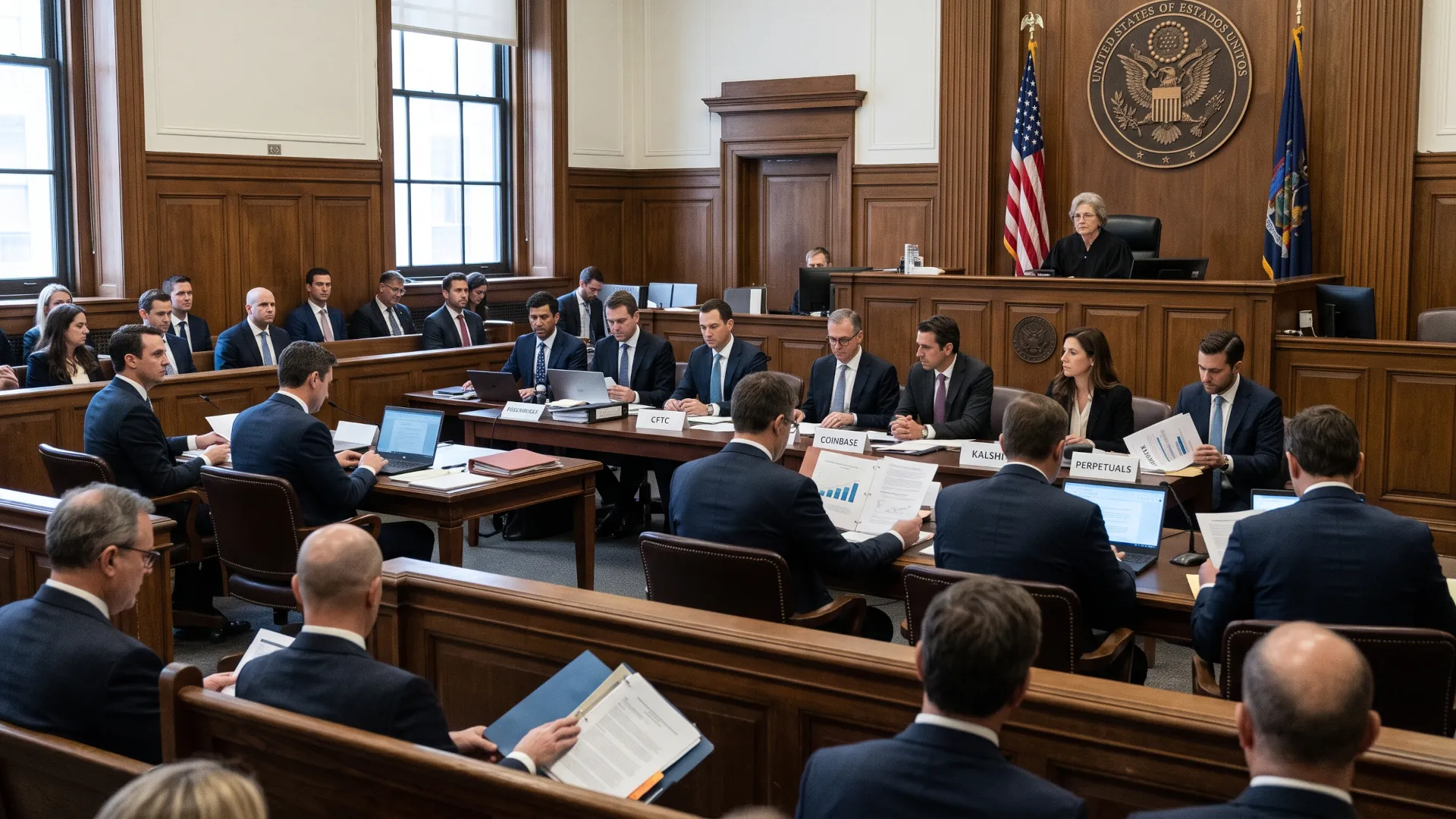
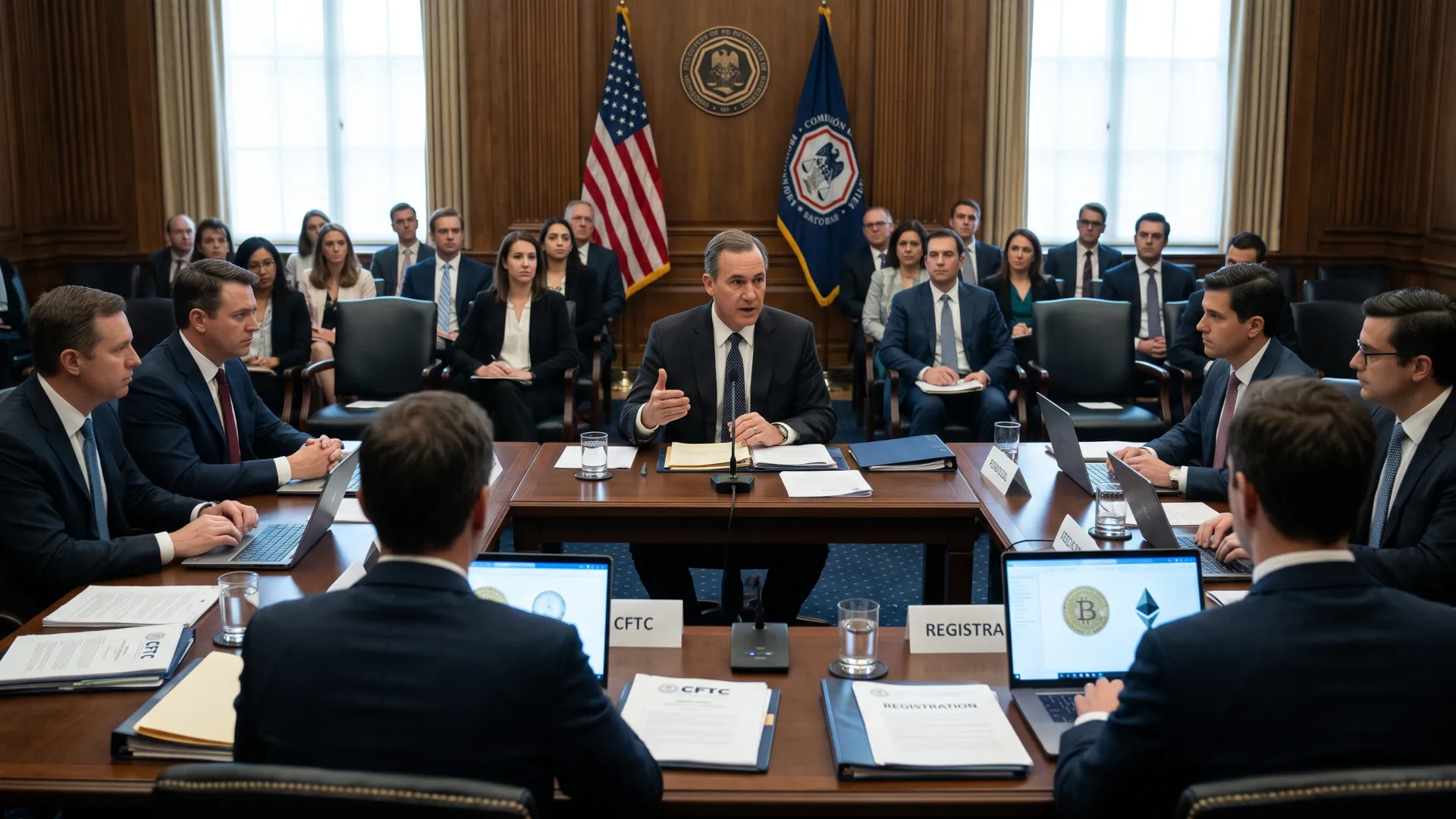
Coinbase, Kalshi and Kraken's parent company, Payward, filed a brief on November 9 with a New York court to back the CFTC in the dispute over whether US exchanges can list perpetual futures on individual stocks. DRW Holdings, Jump Trading and Paradigm Operations signed alongside them. That makes six companies against one association, the Capital Markets Alliance Association, which argues that these products are security-based swaps and that the commodities regulator overstepped its authority in approving them.
The origin of the case is administrative and dull until you look closely. Coinbase Derivatives, KalshiEX and Bitnomial filed applications on September 18 to list perpetuals on large-cap stocks, and those applications were deemed approved by administrative silence on November 2. The plaintiff association is seeking a court order to halt the listings, and the six firms' brief opposes that measure.
At the heart of the matter is a legal definition with enormous consequences: whether a contract that tracks a stock's price with no expiration date is a security future or a security-based swap. The answer determines which regulator is in charge, which investor protection rules apply and whether the product can be offered to retail clients in the United States. Exchanges have been offering it abroad for years, and that is precisely the firms' core argument.
A 2000 definition and a date that does not exist
The centerpiece of the brief is a rule that almost nobody cites outside law offices, and that was written when these products did not exist. Congress excluded security futures from the definition of swap when it passed the Commodity Futures Modernization Act in 2000, and the legal definition of those futures refers to contracts of sale for future delivery of a single security, without requiring them to have an expiration date. The written submission filed by the six companies relies on that literal text to argue that the absence of a maturity date does not change the category.
The opposing argument is intuitive, which is why it has traction. A traditional future expires, and that date is what distinguishes it from an open-ended bet. A perpetual never expires and stays anchored to the price through periodic payments between the parties, a mechanism that looks more like an over-the-counter derivative than a classic futures contract. The plaintiff association concludes that this design makes it a security-based swap, a matter for the securities regulator.
Judge Valerie Caproni already gave a signal at the preliminary hearing: she considered it likely that the plaintiff is right in arguing that the CFTC exceeded its authority, finding that the contracts fit better in the swap category. Even so, she denied the temporary restraining order because she found no imminent and irreparable harm, and that decision left the listings in place while the litigation runs its course.
What is at stake for stock markets
For Coinbase the case comes at a delicate moment, and for the rest of the signatories too: the product is approved and still cannot be used with peace of mind in a field where the doctrine on perpetuals changes every quarterIts derivatives subsidiary filed the application in September, approval came by administrative silence in November, and it now depends on a judge to avoid losing the product before launching it. Its general counsel, Molly Abraham, argued publicly that the 2000 law already settled the matter and that security futures are not swaps.
Kalshi has a different and complementary interest. The company built its business on event contracts and has spent months pushing perpetuals within the US regulated perimeter. Its argument is that the product already exists in international markets and that denying it to US investors does not protect them, it only pushes them to platforms without local supervision.
The case also touches Bitnomial, which filed its own application and is not among the signatories of the brief. Its situation is the same: if the court halts the listings, all three approvals fall together. The immediate precedent is the assault by Kalshi and Polymarket on the perpetuals market, which had already moved the conversation from the terrain of innovation to that of competition between venues. Coinbase's vice president, Ryan VanGrack, added that global markets are already trading these products and that the country should lead that space instead of ceding it to platforms without local supervision. The plaintiff association counts Cboe and Citadel Securities among its members, two names that explain why the dispute is not only regulatory, but also about competition between traditional venues and crypto-native platforms.
The precedent no one wants to cite
The sector has already been through a similar fight with bitcoin perpetuals. In May, the CFTC approved Kalshi's contracts on the bitcoin spot price and treated them as futures, on the reasoning that the underlying asset has a deep and continuous market. That precedent is the basis on which the companies build their argument for equities, and also their weak point: a stock is not a digital commodity, and the securities regulator has something to say about any contract that depends on its price.
The filing also describes a process that the six companies consider exemplary. It states that the two agencies jointly sought public comment on whether the contracts should be classified as security futures and that the securities regulator was at the table from the start, an argument that seeks to dismantle the idea that the CFTC acted on its own.
The practical consequence for the user is simple. If the listings survive, a US investor will be able to trade with leverage on the price of a specific stock without buying it and without an expiration date, from a native platform. If they fall, those products will continue to exist in extraterritorial markets, with different rules and without the protections that the US system claims to offer to those who trade from its territory.
There is a dimension that transcends the specific case. The classification of a financial product determines which agency supervises it, and the two agencies have been clashing for years over that division. Every court decision that sets a boundary becomes a reference for the next product, and the next one almost always arrives before the previous one is fully resolved.
The court as regulator
The paradox of the case is that the decision on whether a product can exist in the United States will be made by a judge, not by Congress or the agencies. The 2000 law was written when single-stock perpetuals did not exist, and its text says nothing about a contract that renews indefinitely through funding payments. That gap is now being filled by lawyers, with literal arguments on one side and economic analogies on the other.
For the market, the important signal will come with the ruling on the preliminary order, not with this week's filing. If the court grants it, the three approvals are suspended and the exchanges will have to wait for the merits to be resolved. If it rejects it, the products will continue to operate while the litigation proceeds, and the precedent will be consolidated through use before there is a final judgment.
Meanwhile, the message from the six companies can be summed up in one sentence that needs no translation: the global market already offers these products, and the only real decision is whether the United States wants to regulate them or watch them trade abroad under rules it does not control.