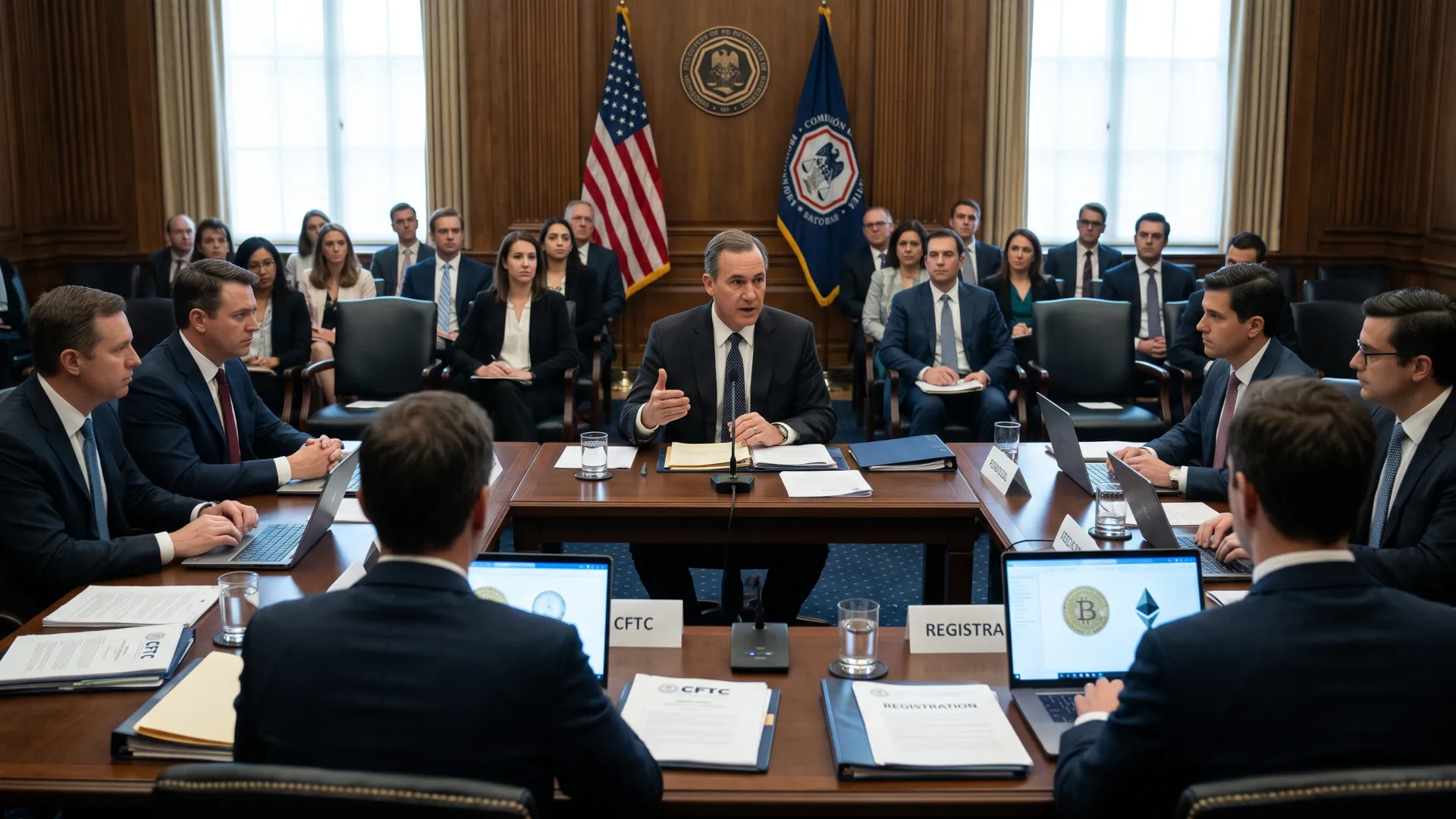
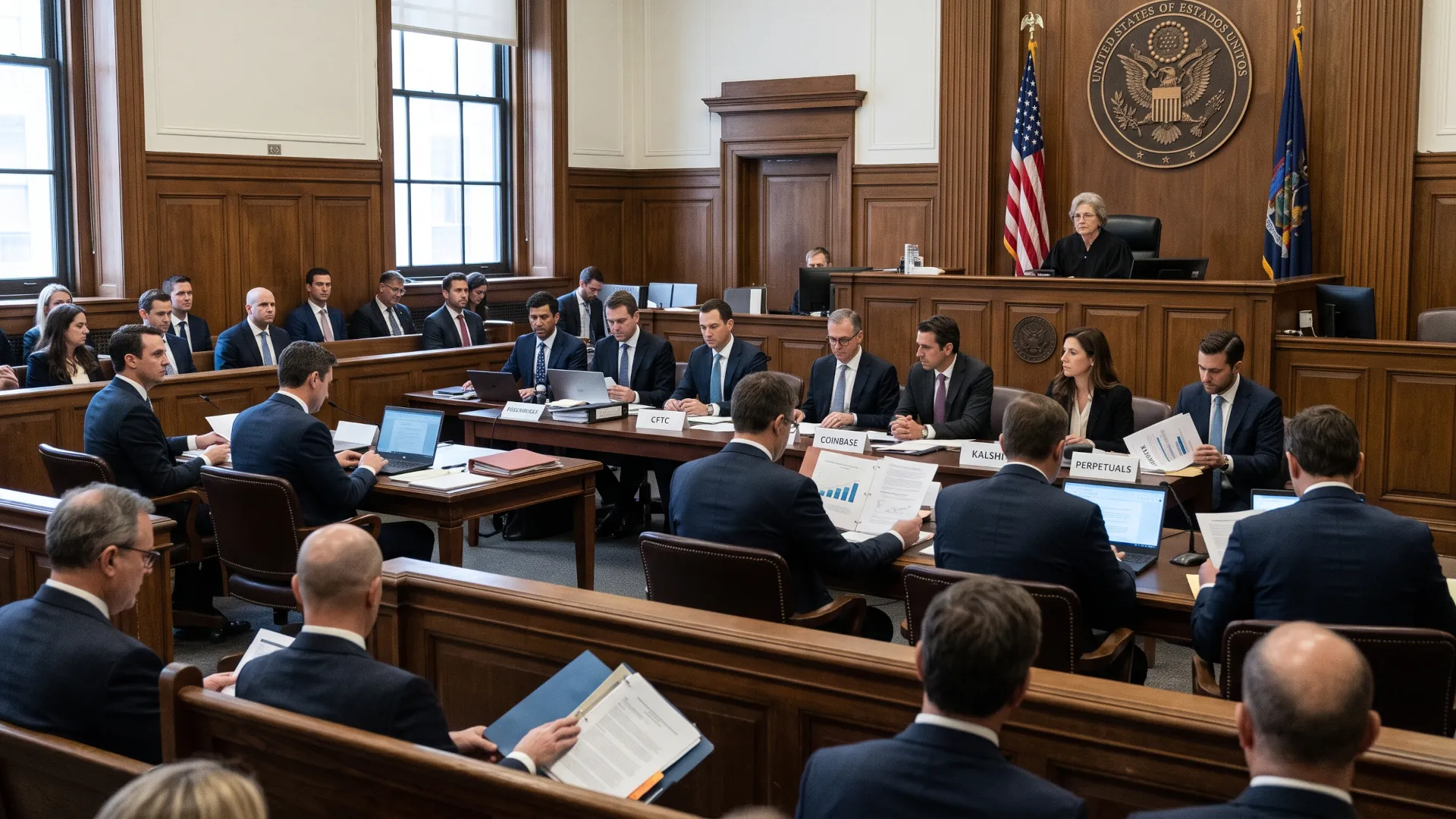
Almost forty-eight hours after Binance confirmed the largest theft in the sector's history, the US derivatives regulator put a proposal on the table. Michael Selig, chair of the Commodity Futures Trading Commission, proposed on Friday, October 30, a voluntary federal registration for cryptoasset trading platforms, including those operating from outside the country. The backdrop is not abstract: the CFTC has already taken over the crypto map after the failure of CLARITY and has been acting for months without a law to order its powers. The idea comes with an explicit limit acknowledged by its own author: without a law from Congress, no one can force those platforms to sign up.
The framework proposed by Selig covers four fronts. It speaks of federal oversight of cybersecurity, surveillance of market manipulation, customer protection and guarantees on the custody of assets. It is, in practice, the first serious attempt to build a federal regime for the spot market in the United States, a terrain that until now has been occupied by states with money transmission licenses and by the Securities and Exchange Commission with case-by-case litigation.
For the European reader, the inevitable comparison is MiCA, the rule that has been in force for months and that does impose mandatory requirements on anyone who wants to serve clients in the Union. Washington suggests the opposite with this initiative: a voluntary incentive for platforms to choose federal oversight in exchange for legal clarity.
A voluntary registry with four areas of authority
The framework Selig proposes covers four fronts. It speaks of federal oversight in cybersecurity, surveillance of market manipulation, customer protection and guarantees on the custody of assets. It is the first serious attempt to build a federal regime for the spot market in the United States, a terrain that until now has been occupied by the states with money transmission licenses and by the SEC with case-by-case litigation.
The other two legs are more contested. Customer protection sounds incontestable until one has to define what it means in concrete terms, because very different things fit behind it: asset segregation, mandatory insurance or pre-contractual disclosure duties. Custody is the point where the sector truly divides, because it affects the business model. The discussion about the cap on exemptions was already had in the debate over the Lummis amendment, where the figure changed from 100 to 50 million a year. A platform that mixes client holdings with its own treasury does not want an audit of asset segregation.
The extraterritoriality detail is the most ambitious part of the approach. Selig spoke expressly of platforms that operate outside the United States and serve US residents, a perimeter that until now was handled with IP-based geoblocking. Registering voluntarily in Washington would give those firms a passport of legitimacy with correspondent banks and institutional partners.
That passport is the product being sold here. Platforms do not need a regulatory seal to operate with retail clients, but they do need one to sit down with banks, funds and insurers. The proposal targets that bottleneck rather than the end user, who will continue to see the same interface with a different seal in the footer.
There is a contradiction that the proposal does not resolve and that is worth putting on the table. If registration is voluntary, the platforms that sign up are the ones that already comply. The ones that cause incidents are, by definition, the ones with no incentive to submit to external examinations, and an optional registry does not reach them no matter how much it is published in the federal register.
The comparison with civil aviation is the one usually used in these debates and it works up to a point. An airline operator flying to the United States accepts inspections because access to airspace is a scarce and controlled resource. In cryptoassets, access to the US market can be circumvented with a VPN and an email address. The lever is not airspace, it is banking infrastructure.
Anyone wanting proof of how that lever works has the precedent of sanctions on mixers and on specific addresses. OFAC does not need a new law to shut a mixing service out of the financial system. What Selig proposes is something else: an orderly entry route for the actors who want to be inside, in the hope that the reputational cost of staying outside ends up being high.
CLARITY and the vote that fell short
The regulator's proposal does not come out of nowhere. On September 15, the CLARITY Act failed to clear a procedural vote in the Senate because it did not reach the 60 votes needed. That failure left the CFTC as the de facto arbiter of the US crypto map, without a law to order its powers and with the implicit instruction to improvise. Reports on MiCA's first hundred days show the opposite path: mandatory rules, supervision from day one and a market that adapted by taking hits.
Senator Cynthia Lummis argued on Friday that the bill would have given legal cover to companies that froze suspicious transactions at the request of law enforcement. Her thesis is that the lack of a legal safe harbor discourages cooperation: if you freeze funds and are sued for it, the platform bears the cost.
On the other side, Amanda Fischer of Better Markets maintained that existing mechanisms already allowed voluntary freezes and that the law would have changed nothing in practice. The discussion is interesting because it reveals two ways of understanding the problem. One consists of legally protecting those who cooperate. The other consists of requiring controls before the money leaves.
The real timelines the regulator is working with
None of this will be ready for the next incident. Selig's proposal is preliminary and its public comment period runs until December 14. From there comes a rule that will then have to be enforced, with staff and procedures, at an agency that does not today have the team to examine dozens of global platforms.
Running in parallel are the CTX and CAM regulations, proposed on October 5 for certain retail transactions in leveraged, margined or financed cryptoassets. They are more technical pieces, but they share a destination: they operate in the field of derivatives, where the CFTC has clear jurisdiction, and they leave spot trading in limbo until Congress decides.
The calendar also has a political variable that should not be ignored. November's midterm elections can change the majorities and with them the willingness to pass any text resembling CLARITY. A voluntary registry is the most a regulator can do on its own, and that is why Selig presented it as an offer and not a requirement.
The question the voluntary registry does not answer
The question left open is uncomfortable for everyone. If a platform accepts federal registration, what happens when a customer loses access to their funds for 48 hours? Will there be a minimum standard of availability, mandatory insurance, a liability regime? The proposal talks about customer protection, but it does not set consequences.
That is where the Binance case stops being an anecdote and becomes the testing ground. The company replaced 90% of what was stolen with its own funds and reopened withdrawals without any US authority having to intervene. No regulator examined its service container, no rule required it to segregate keys and no law determined who was liable if it decided not to pay.
A voluntary registry can improve the sector's average and still leave the incentive problem intact. Users will continue choosing a platform for convenience and liquidity, not for the seal of a regulator that cannot inspect those who do not sign up. And the next incident will once again follow the same sequence: theft, attribution, reimbursement and a postponed regulatory proposal. What is new this week is that, for the first time, the proposal exists on paper.