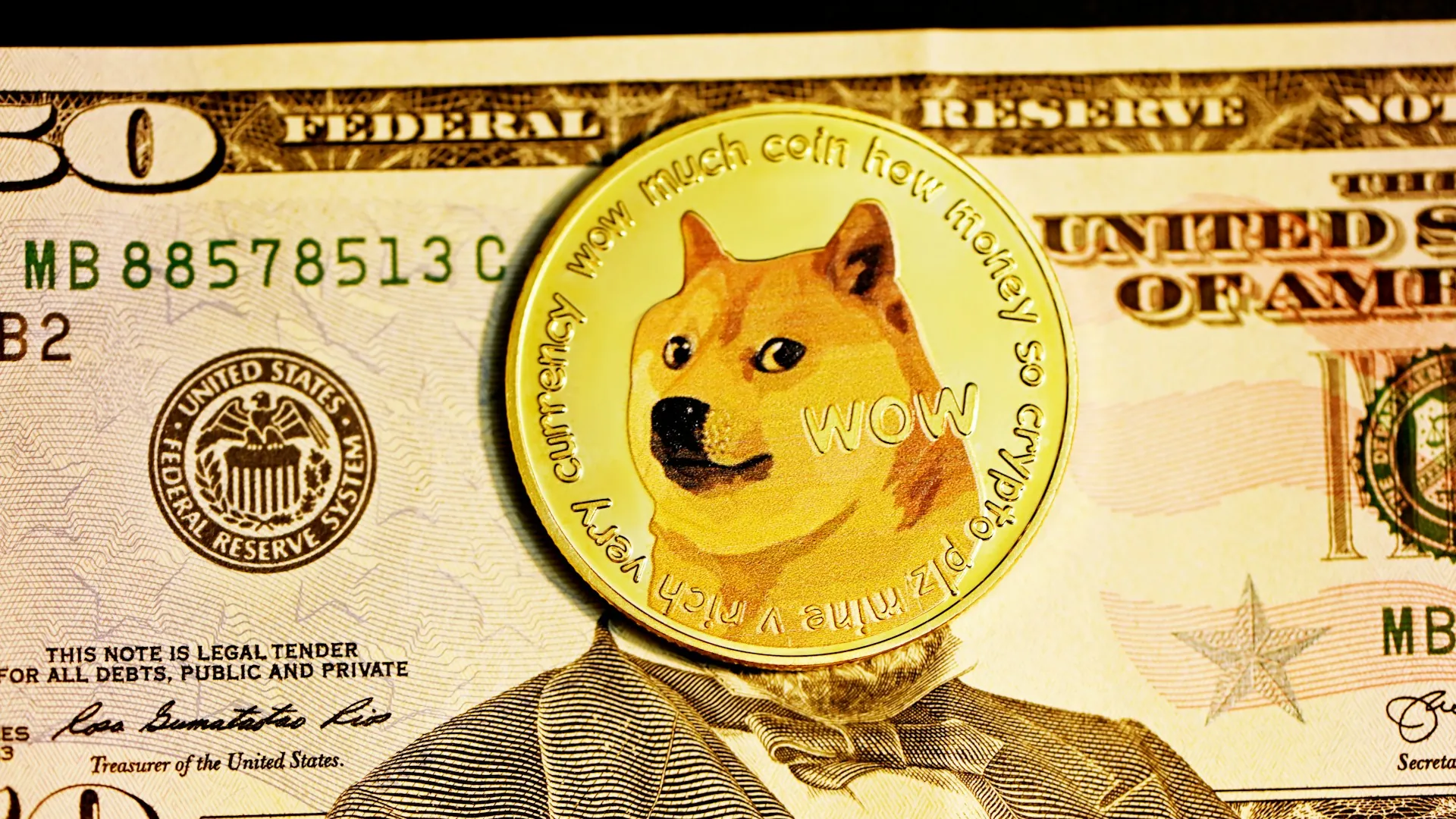
Dogecoin was born in late 2013 as a joke about internet money and thirteen years later it still can do almost nothing beyond holding and sending its coins. This Monday, RedStone activated its price feeds on the DogeOS testnet, the application layer that the MyDoge wallet team is building on top of that chain, with the promise of underpinning the price of everything traded on it. Both firms repeat the same figure to justify the move: more than 10 million wallets holding DOGE and no on-chain way to put them to work.
The oracle is not a technical ornament. Without a price reference the contract can read, a lending market does not know how much the collateral it accepts is worth or when it must liquidate a position, and a backed stablecoin cannot verify whether its reserves cover what it has issued. RedStone speaks of 110 chains and more than 200 clients, and its feeds already power credit protocols in production, so the piece landing on DogeOS is not a laboratory experiment.
It is worth measuring carefully what was announced. The feeds are live on the Chikyū testnet, opened on September 30, and mainnet support will arrive when that mainnet exists: DogeOS has not published a launch date and its design depends on a proposal for Dogecoin Core that remains unimplemented. DOGE trades this Monday at 7.7 cents of a dollar and the market it wants to build on top still has not a single real dollar at stake.
A brick that is not enough on its own
A lending market needs three things from its oracle: how much the collateral in custody is worth, when the position falls below the agreed threshold and with what margin it is liquidated before the debt is left unbacked.
On a perpetuals exchange the same data calculates the profit and loss of each open position and triggers forced closure when margin runs out. Without that external reference, any contract promising credit or hedging on DOGE would have to invent the price or copy it from a market it does not control. RedStone supplies the data with the model the company describes as data on demand, in which the price travels with the transaction that needs it instead of paying for an update per block.
For a young protocol the advantage is cost, because it does not sustain a permanent trickle of transactions to keep fresh an asset that barely moves. The disadvantage appears when the market grows and the feed has to respond to the volatility of a memecoin without losing precision at the moment when it matters most.
The precedent the company puts on the table is credit with tokenized collateral, where the pattern is already proven. The Citi and Aave project to lend against tokenized assets uses the same kind of data that now reaches DogeOS, with the difference that there the collateral is real-world funds and here it would be a currency capable of falling 5% in an afternoon.
DogeOS, a proposal under construction
DogeOS does not touch Dogecoin. It is a zero-knowledge rollup that executes contracts compatible with the Ethereum virtual machine and publishes its state on the original chain, with fees charged in DOGE. For anyone who already knows how to deploy on Ethereum, the promise is that the tools work unchanged; for the DOGE holder, the promise is that their currency stops being an idle balance.
The public Chikyū testnet opened on September 30, 2026 with chain identifier 6281971, four weeks before RedStone plugged in its feeds. Its documentation describes the bridge between layers as an early implementation, with delays of up to four hours.
One piece is missing, and it explains the absence of a date for the mainnet. DogeOS wants Dogecoin to verify its cryptographic proofs, which requires a change in the network's client: the OP_CHECKZKP proposal, presented on July 22, 2025 and still unimplemented. Until that happens, the network relies on a trusted execution environment, a set of validators and a permissioned sequencer.
The numbers the companies put on the table
The figures in the announcement come from the companies themselves and should be treated as such. DogeOS speaks of more than 10 million wallets holding DOGE, a figure no one has independently audited. RedStone says it operates on more than 110 chains and serves more than 200 clients, among them Securitize and Morpho. Its feeds also move tokenized funds from BlackRock and Apollo.
| Ecosystem piece |
Status as of October 26, 2026 |
| RedStone feeds on DogeOS |
Assets on the Chikyū testnet |
| DogeOS mainnet |
Not launched and with no public date |
| OP_CHECKZKP in Dogecoin Core |
Proposal from July 2025, unimplemented |
| Network sequencing |
Permissioned, with TEE and validators as backup |
| DogeOS round |
6.9 million dollars led by Polychain in May 2025 |
That track record is the most serious argument RedStone brings to the ecosystem, far more than the wallet figure. The feeds arriving on Chikyū are the same ones that have already passed through markets where a price error is paid for with real liquidations, and that reduces launch risk. Even so, a feed proven on Ethereum does not inherit Dogecoin's liquidity nor fix the fact that the asset being traded has no collateral history.
Who is building on the testnet?
The projects announced for Chikyū sketch the map of what is meant to be built: Barkswap provides the liquidity engine, Superposition Finance works on lending and Derps is preparing a perpetuals exchange. None of them can open to the public without reliable prices, and that is why the oracle arrives before the users.
The project's corporate backing is not a minor detail either. DogeOS closed a 6.9 million dollar round led by Polychain Capital in May 2025, and in October 2026 its managers joined Dogecoin Labs alongside MyDoge and Such App. None of those announcements included a mainnet date, which leaves the calendar in the hands of milestones the company has not detailed.
What is missing for DOGE to be real collateral
Liquidity is missing, independent auditors are missing and the step that turns a testnet into a market is missing. The price also needs to cooperate: DOGE trades near 7.7 cents, far below its twelve-month high, which exceeded 0.20 dollars.
Design risk is the other front. On a network whose validation today goes through a committee and a permissioned sequencer, the useful question is not whether the data is correct but who can halt the chain or reorder operations while a liquidation is executing. RedStone does not solve that and it is not its job to solve it, because its work begins where the application layer's ends. The collateralized stablecoin poses the same problem in another language: it is the mechanism behind why capital flees banks toward stablecoins and also the point where a stale price turns into unpaid debt.
From memecoin to credit market
Dogecoin has spent thirteen years proving that a community can sustain a currency with no financial utility behind it. Giving it oracles does not turn it into Ethereum, but it delivers the first piece a lender needs to accept DOGE as collateral.
The distance remaining between a balance and a credit market is measured in three things: liquidity, auditors to review those contracts and a mainnet with a date. It will take waiting for the launch to know whether the DOGE market is real or whether the community that sustained the joke for a decade prefers to keep holding and sending. RedStone has already laid the first of the bricks, and this time the announcement comes with feeds running instead of a slide.