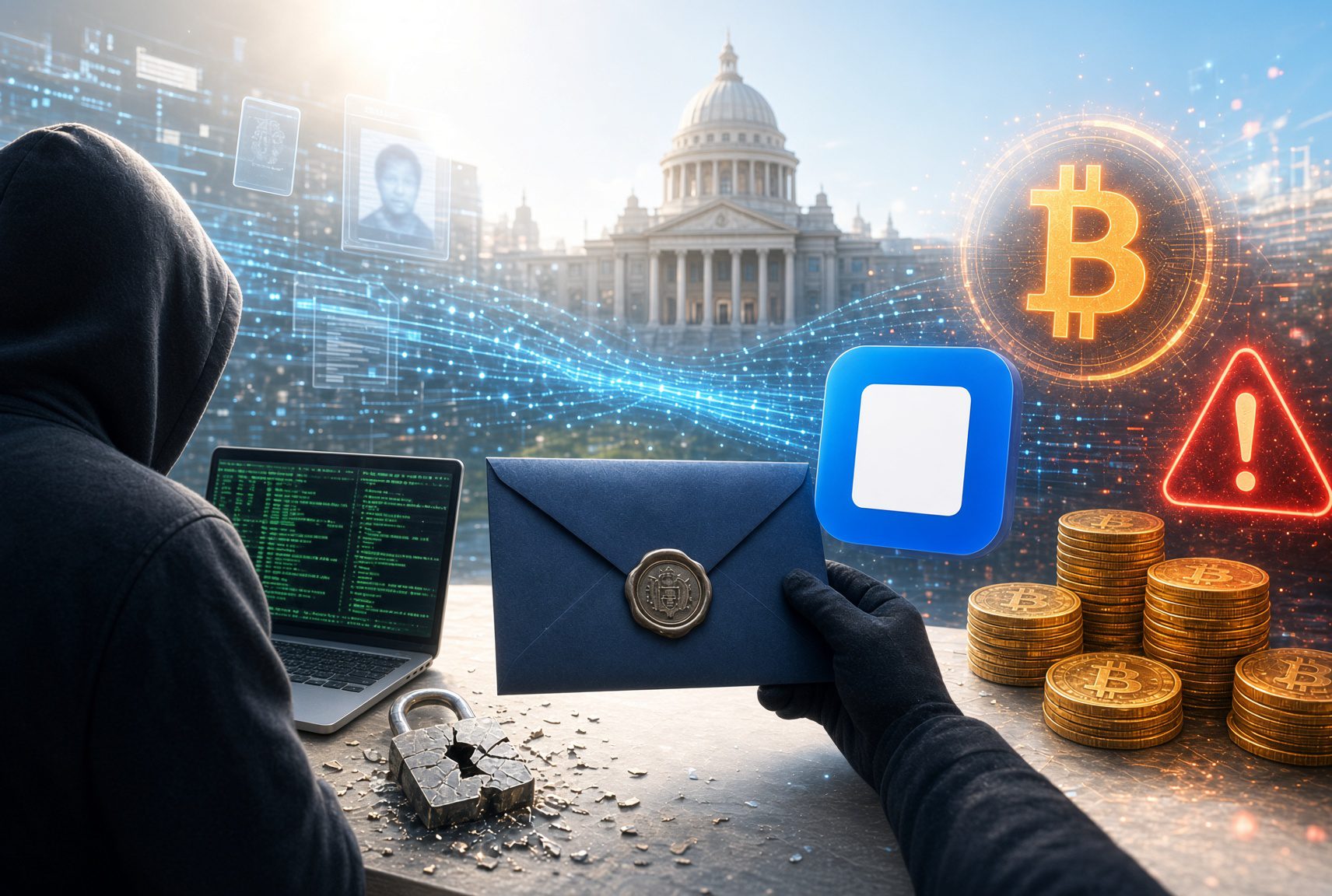
Revolut is being extorted by those responsible for a serious security incident that has exposed personal and financial information of some of its customers. The case began when attackers managed to send fake requests from the domain of a government agency. The fintech believed they were official requests and handed over the requested data.
The potentially exposed information includes names, home addresses, phone numbers, passports or driving licences, identity verification photographs, IBANs, bank statements and transaction histories. In some cases, Bitcoin transactions also appear.
The bank confirmed the incident on 12 September and maintains that the attackers did not access its systems and that customer funds remain safe. The company speaks of a very limited number of affected customers, but has not disclosed how many. The main development in the case came today, 14 September. A group identifying itself as Revolut Smilik told the newspaper City AM that it was behind the incident and demanded a payment from the company to prevent further publication of information.
The attackers claim they have already begun publishing customer data and threaten to release new information every day if Revolut does not pay. International Cyber Digest has shown screenshots of messages attributed to the group featuring data supposedly belonging to high-profile customers. Among them it mentions tennis player Alexander Shevchenko and Felix Römer, CEO of Gamdom.
The group also threatens to publish messages and details about Revolut's internal operations. It further accuses the company of handing sensitive customer information to countries outside its jurisdiction and of negligence on privacy matters. These accusations come from the attackers themselves and, for now, have not been confirmed either.
The extortionists want money
City AM says it maintained direct communication with Revolut Smilik. The newspaper asked the attackers what they hoped to achieve with the leak and they replied that they wanted money from Revolut. They also threatened to keep publishing information. Revolut declined to comment to the newspaper on the payment demand.
The incident is particularly sensitive because the exposed data goes far beyond emails or phone numbers. According to the documentation attributed to Revolut, the company may have handed over copies of identity documents, verification selfies, banking information and complete transaction histories.
Mark Karpelès, former CEO of Mt. Gox, shared on X a communication attributed to Revolut detailing that data. Karpelès also flagged a question that remains unanswered: Revolut has still not publicly identified the government agency from whose domain the fraudulent requests originated.
Verifying after handing over the documents
The question matters because, according to the explanation attributed to Revolut, the attackers created an unauthorized email account within the infrastructure of that authority's official domain and used genuine domain authentication credentials.
When it detected the problem, the company says it contacted the government agency to verify the requests, discovered that the account was not authorized and blocked the address in its systems. It also notified regulators of the incident and applied additional protective measures to affected customers.
UK regulator
The case has also reached the UK data protection regulator. A spokesperson for the Information Commissioner's Office (ICO) confirmed to City AM that the body had received a notification and was assessing the information provided.
Beyond the extortion, the question everyone is asking is what controls Revolut used to verify the authenticity of the requests before handing over such sensitive information, and why it did not ask before delivering the data.
What is clear is that the reputation Revolut has earned as one of the leading players in European digital banking has been called into question by a failure that directly affects customer trust, the most delicate asset of any financial institution.