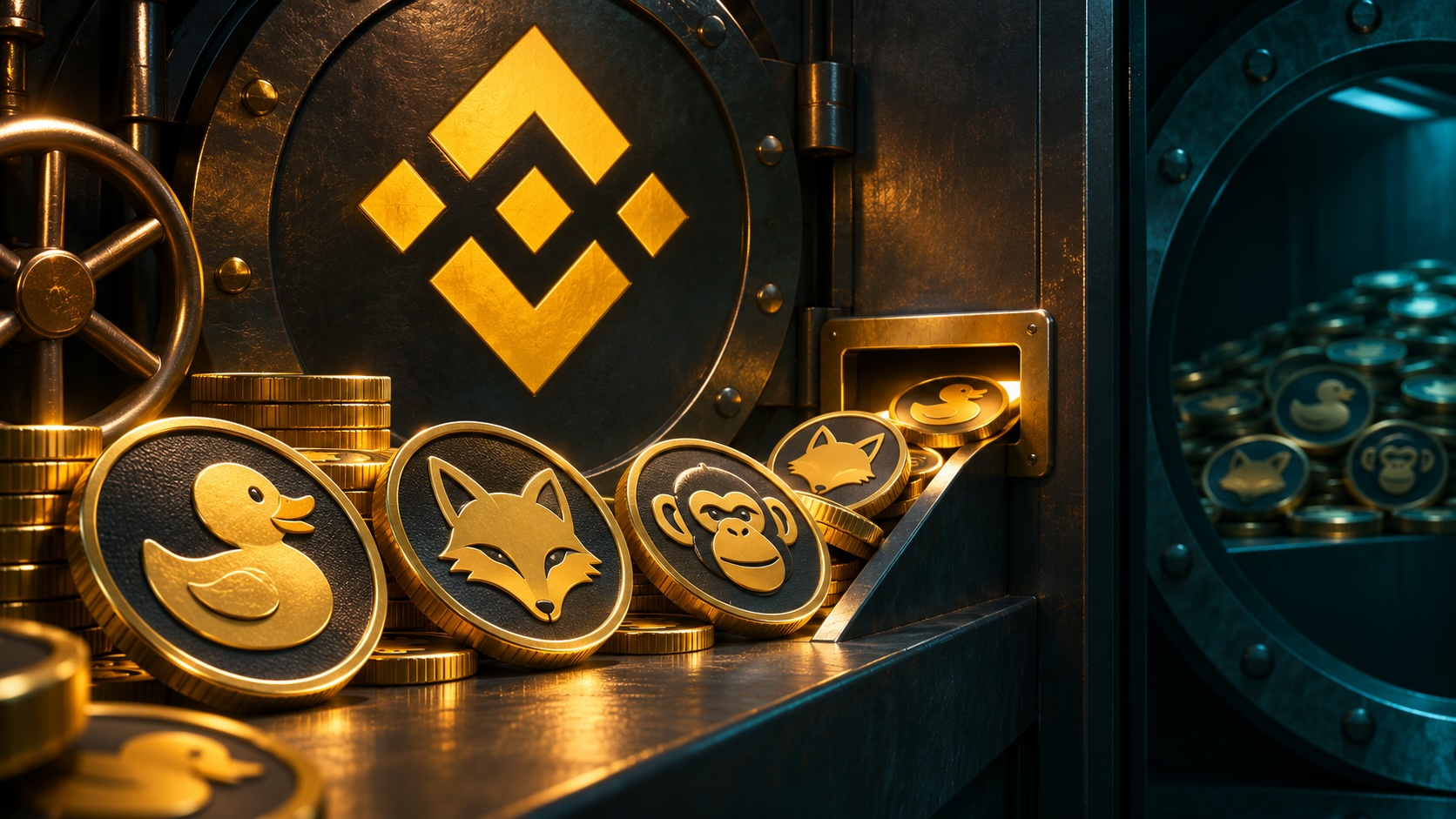
A network linked to North Korea moved about $430,000 stolen from Binance, according to the analytics firm EllipticTo disguise where the money came from, he created six memecoins and used them to trade between wallets he controlled. One bore an image of Elon Musk with the slogan Elon 2028 President. Others had a duck, a fox or a chimpanzee as their logo.
Decentralized market
The network put the six memecoins up for sale on a decentralized market. Some wallets used the stolen funds, which were held in the NEAR cryptocurrency, to buy the tokens. Then other wallets in the same network sold those tokens on the same market and were paid in NEAR.
Binance France closes accounts after losing its MiCA license
This way, the history of the wallet receiving the money showed a sale of memecoins. To know where the funds really came from, one also had to look at who had paid for those tokens. Elliptic traced the purchases to a wallet that held part of the money stolen from Binance. After the sales, part of the funds was exchanged for stablecoins or sent to other networks.
Disposable memecoins
Each token cost about 90 dollars and began selling within three hours of its creation. Almost all the activity came from the network itself. Elliptic detected only a few external purchases of one of the six tokens. In five cases, the money obtained from selling one memecoin was used to finance the launch of the next. By November 8, all six had stopped trading.
Elliptic detected the same method on Tron and a variant on Solana, where the network used tokens that already existed and were barely traded. The firm had documented a similar maneuver after the Bybit theft in 2025, when at least 24 million dollars were moved through a token created for that purpose.
The 430,000 dollars correspond only to what passed through the six NEAR memecoins. Elliptic puts the total theft from Binance at about 6.4 billion dollars. In its report published today, November 9, another 43.7 million dollars in NEAR remain unmoved. Each trade leaves a public record, but adds a step that investigators must reconstruct before identifying the wallet that received the money.
Not recovered
Although Elliptic was able to trace the 430,000 dollars stolen from Binance, the report does not confirm that any of it has been recovered. Identifying the wallets makes it possible to monitor the money and facilitates freezing it if it reaches an exchange that cooperates with the authorities or if it is converted into a stablecoin whose issuer can freeze the funds. As long as the NEAR remains in wallets controlled by the attackers, knowing its location does not allow it to be withdrawn. Even if the money is successfully blocked, returning it is a separate step.