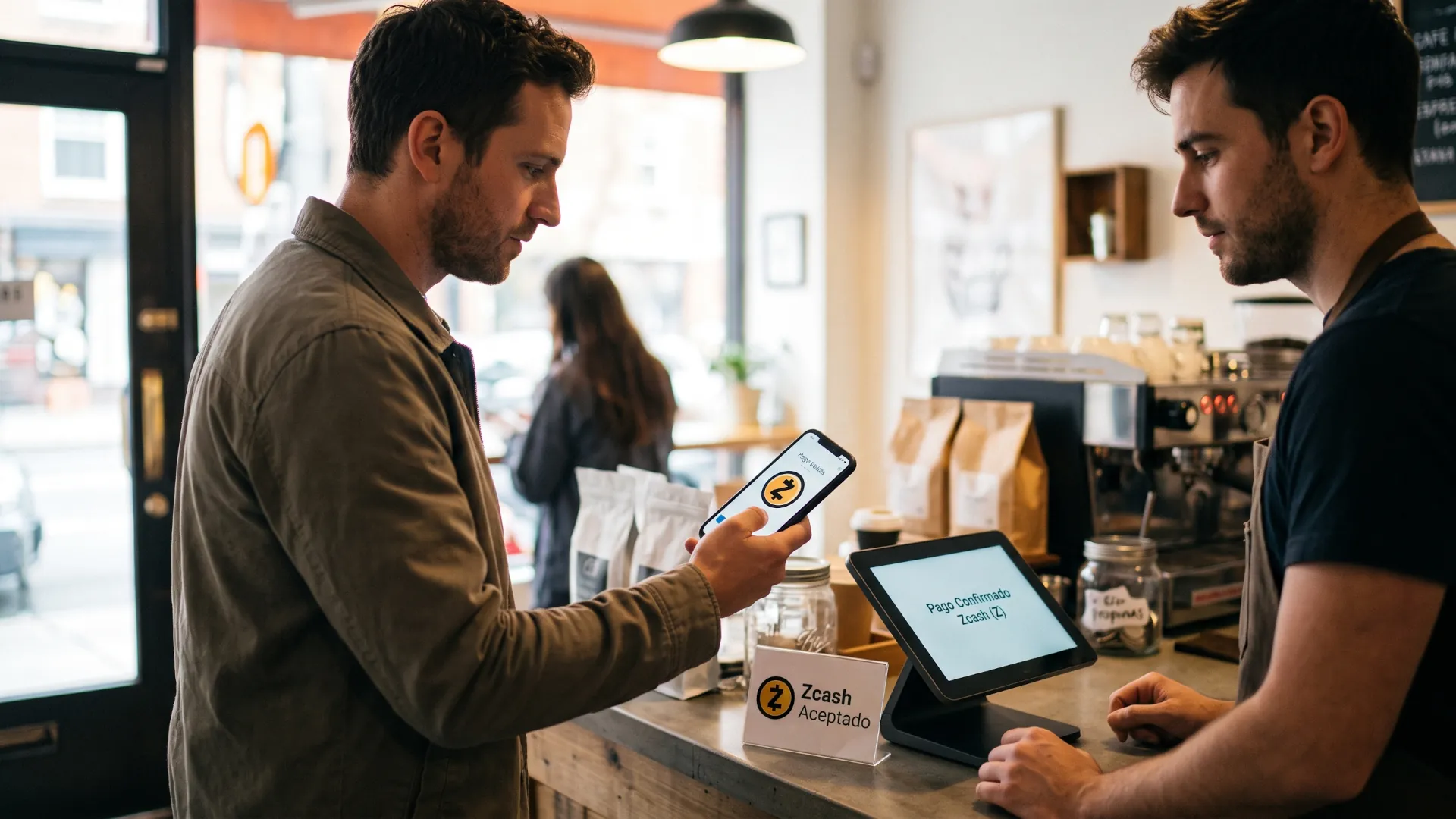
Zcash activated its NU7 upgrade at block 3,543,405, mined at 02:34 UTC on November 6. The most visible change is the target block time, which drops from 75 to 25 seconds, and with it the wait for a first confirmation of a private payment. The network has spent years selling privacy; what was missing was for that privacy to feel fast when paying in a store.
The change is not only about speed. NU7 activates the network sustainability mechanism, which removes 60% of each block's fees and holds them in a public reserve, and retires the Sprout pool, the first Zcash ever had. That closure leaves some 12,224 ZEC that can no longer be spent, because the network no longer accepts the version 4 transactions that pool depended on.
There is a third effect worth looking at before celebrating: faster blocks mean more competition among miners and more discarded blocks. In the Zakura tests, with full blocks across 80 nodes in eleven regions, the orphan block rate rose from 1.57% to 3.43%. That is the technical toll of confirming three times faster, and it cannot be fixed with a patch: it is the arithmetic of network propagation.
Making payments faster
The first change affects waiting times. A merchant that accepts one confirmation waits about 25 seconds on average instead of 75, and an exchange that requires three confirmations goes from almost four minutes to around 75 seconds. For anyone moving funds between platforms, the difference is noticeable on every transaction.
The second affects capacity. NU7 limits private transaction activity per block so that wallets do not have to download as much, and with that adjustment the network can go from two to more than six simple private payments per second. It is a capacity improvement that does not come from making blocks bigger, but from better ordering what goes into each one.
The third affects issuance, and it is the one that averts a serious problem. If blocks arrive three times faster, the network would produce three times as many subsidies and inflation would spike. NU7 scales the per-block subsidy by the same proportion and triples the number of blocks between halvings, so the schedule and the 21 million cap hold.
The detail that does not change is the usual one in Zcash: the wallet. Confirmation policies are a separate layer, and many wallets still require several before letting a received balance be spent. The 25-second block reduces the wait between opportunities; what each interface does with them is another decision.
The fee reserve and the pool being retired
The network sustainability mechanism is the least visible part of NU7 and the one that changes the economic model the most. From now on, 60% of each block's fees leave circulation and sit in a public reserve, while miners receive the remaining 40%. That money will be gradually reissued as rewards starting at block 8,939,664, around 2031.
The idea behind it is for Zcash to have a fund to pay for security when the per-block subsidy approaches zero. Instead of deciding in 2030 where the money comes from, the network starts saving it in 2026. It is a mature decision for a chain that depends on someone still mining a decade from now.
The other change is a funeral with consequences. By deactivating version 4 transactions, the Sprout pool can no longer be spent, and it held 12,224 ZEC at the time of activation. There is no approved recovery plan, so those funds become part of the network's past.
The figure has a practical reading for anyone who held old coins. Zcash was born with Sprout and many of the first transactions went through that pool, so twelve thousand coins are not a rounding error: they are the embers of a stage the network decided to close without a rescue. Anyone with an old backup should check it before counting on that balance. Anyone who held them has a problem no upgrade is going to solve.
Fast blocks and the price of haste
The post-activation numbers show how long a network takes to settle into its new cadence. In the first two and a half hours, 225 blocks were produced with an average of 39 seconds, because difficulty was still adjusting. Another measurement recorded averages of 28 seconds in the same stretch, and differences between tools also count.
The two figures are compatible and neither is an error: they measure different windows with different tools. What they confirm is that the 25-second target is a protocol reference, not a clockwork promise. The network takes days to stabilize difficulty, and until then the real cadence fluctuates, as the Zcash activation note shows with the data from the first hours.
The cost shows up in orphan blocks. When two miners find a block at almost the same time, one of the two is discarded, and with 25-second intervals there is less margin for the news to reach the rest before they start competing. The jump from 1.57% to 3.43% in the Zakura tests measures exactly that.
For a user, an occasional orphan block changes nothing: the transaction stays on the chain that survives. For a miner, it means lost work and an incentive to have better connectivity. The network gains speed and pays with a sliver of efficiency, something CoinShares' analysis describes as a reasonable trade-off.
Zcash keeps evolving
The market context helps read the upgrade without exaggerating it. Zcash reached NU7 in a week when the crypto market lost more than 6% and bitcoin touched $75,463, and even so the token held up better than average. Privacy coins behaved as a relative haven in the drop, and that says something about who buys them.
The broad market decline also explains why the technical news went almost unnoticed. A protocol change that improves the speed of private payments competes poorly for attention against a billion-dollar liquidation cascade.
One question remains that only usage will answer. A network that takes 25 seconds to confirm is closer to serving as a means of payment and not only as a store of value with privacy. If merchants and exchanges adjust their confirmation requirements, the change will be felt; if not, it will be a technical improvement the user never perceives.
There is a precedent that helps calibrate expectations. Protocol upgrades that improve the user experience take time to be noticed because they depend on each service adjusting its thresholds. Zcash did its part: the block arrives sooner. What remains is for the rest of the chain to decide to trust that speed. The retirement of old transactions on Ethereum shows the same pattern: the network sets the schedule, everyone else sets adoption.