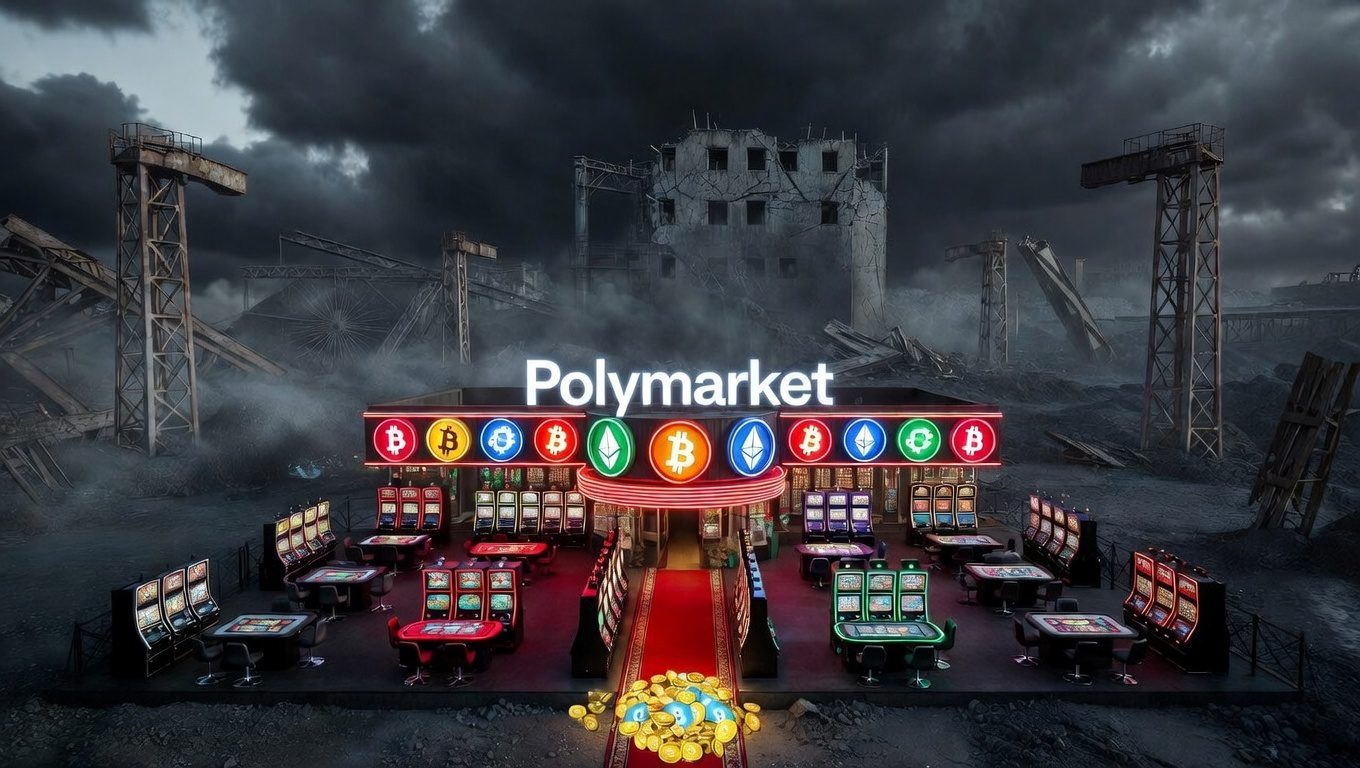
The war between Iran, Israel and the United States has given rise to a gigantic online betting market on the blockchain-based platform Polymarket. In this market, almost any scenario of the conflict is being speculated on, from the fall of the Iranian regime to the price of oil or real-time military movements.
At the close of this edition, bets linked to Iran on the aforementioned platform exceed $529 million. On the site, which operates on blockchain technology, users buy and sell positions on future events. If they are right, they make money; if not, they lose it.
A disturbing offering
In the case of Iran, the offering is as broad as it is disturbing. There are bets on whether the regime will fall, whether the United States will intervene directly, when the war will end or how many ships will manage to cross the Strait of Hormuz. The total volume already exceeds $529 million, making this conflict one of the largest online betting phenomena linked to a geopolitical event.
The question of whether the Iranian regime will fall before March 31 alone has surpassed $30 million in monthly bets, while other markets on political leadership, military attacks or a ceasefire accumulate between $1 million and $14 million each.
At moments of greatest tension, betting volume spikes. A single Polymarket market on whether Iran would attack Israel on March 10 came to concentrate more than $14 million. That same day, journalist Emanuel Fabian, of The Times of Israel, reported that an Iranian ballistic missile had struck an unpopulated area near Beit Shemesh. What the reporter did not know was that his information was having a direct effect on the outcome of that bet: if the missile had been intercepted, the market would resolve as No. If it struck, as Yes.
Death threats against a journalist
For those who had bet large sums on No, his report became a million-dollar problem. According to denounced Fabian himself, after publication he began receiving messages demanding that he modify his article to state that the missile had been intercepted. The pressure escalated until it became death threats. "You have 86 minutes left. You are the only one responsible for your life," one of the messages said.
Some of the bettors even shared the journalist's personal data, including his home address and details about his family. In another message, they warned him: "After you make us lose $900,000, we will invest that to finish you off."
After the journalist's complaint, Polymarket condemned the events and said it had blocked the accounts involved, stating that it would cooperate with the authorities. However, the incident has revived the debate over the ethical limits of turning war into a global betting system.
Hundreds of millions
Users buy yes or no on specific situations. If what they have predicted happens, they make money. If not, they lose it. The result is that every military decision, political statement or movement on the ground is immediately translated into money. For example, markets on whether the United States will invade Iran have generated more than $1.3 million, while others on declarations of war or ceasefire continue to accumulate liquidity day by day.
At the same time, large anonymous bets have generated profits of hundreds of thousands of dollars, which has raised suspicions of the use of insider information. The craze for these bets has led US lawmakers to propose banning this type of market on sensitive issues such as military operations, given the risk of manipulation, corruption or leaks of classified information.
Separately, Polymarket today confirmed the purchase of Brahma, a DeFi infrastructure startup. The platform is doubling down on its technological bet in order to ensure that the flow of capital does not stop. With hundreds of millions of dollars at stake, the Iran conflict has become one of the largest betting phenomena on the internet, where every bombing, political decision or strategic move becomes an opportunity to win or lose money.