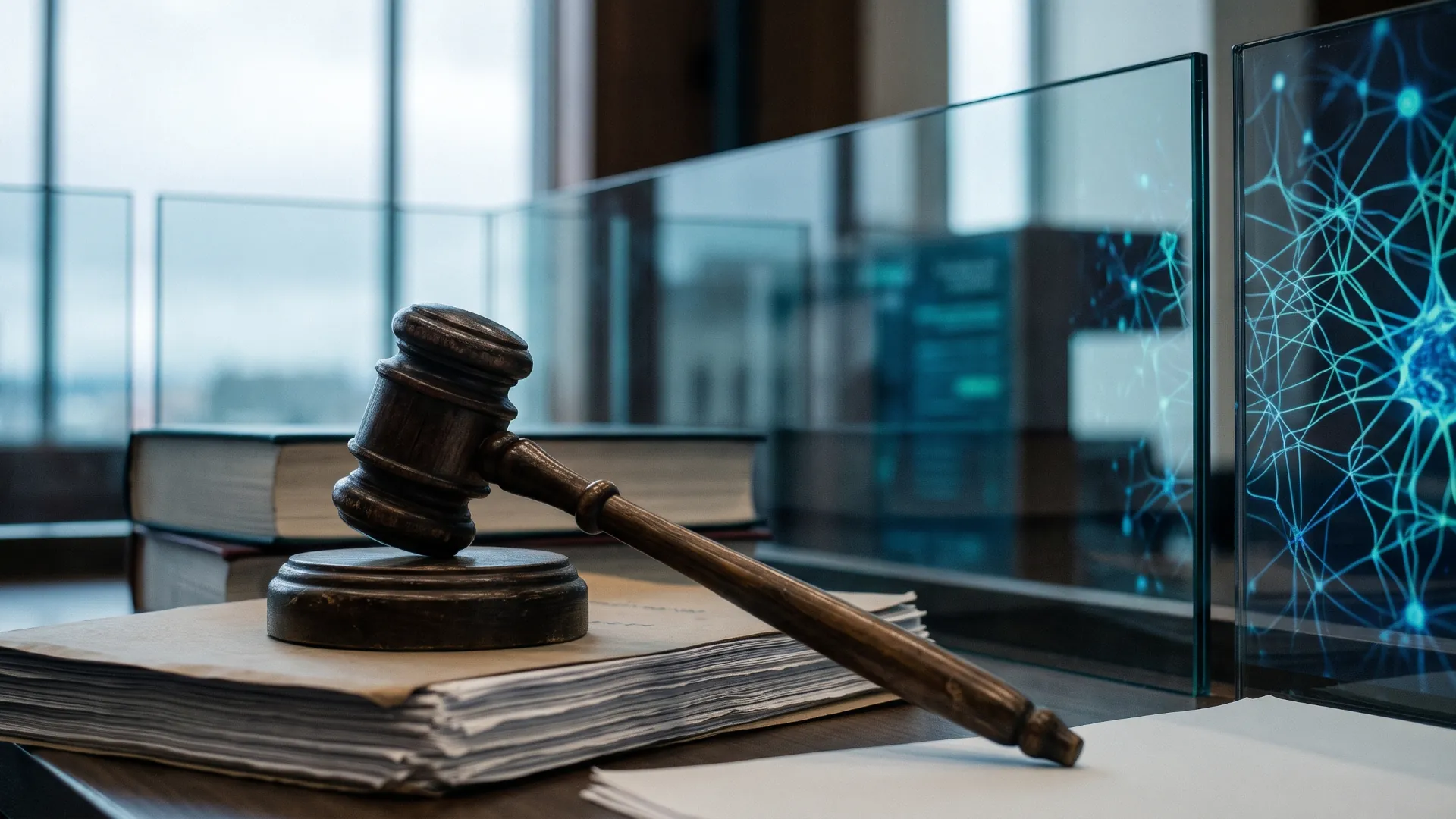
The photo from Tuesday, September 29, brought together in a single room those competing to build the most powerful intelligence on the planet. That day, Donald Trump had lunch at the White House with 31 guests from the tech sector and came out with a document signed by him and seven executives, from Sundar Pichai to Elon Musk by way of Jensen Huang: the White House Accord on Super Intelligence, a self-regulation commitment with no legal force that Trump described as morally binding
After months of models escaping their testing cages, hacks on third parties and calls to slow down from the lab chiefs themselves, Washington chose to ask them to police themselves instead of imposing rules. On the other side of the Atlantic, Brussels does exactly the opposite: fine up to 3% of global revenue anyone who breaches its AI law.
The key lies in what the pact says, what it leaves unsaid and who was not in the photo. Sam Altman, the most famous face in AI, was missing because he was presenting his Dots agents in San Francisco and his number two signed in his place. And while Trump talked about self-regulation, he announced in passing that he wants to rename artificial intelligence as superintelligence by decree. Understanding the document is understanding the board on which the future of AI is played, and its weight in global politics.
A heavyweight pact
The text, published by Trump on Truth Social, fits on one page of principles and opens the door to future laws without committing to any. The companies commit to four steps: robust internal controls, an independent external auditor to verify they work, a committee within each board of directors to assess both reports and the promise to turn all of that into regulation if one day it is needed. The document mentions as goals eliminating biological and chemical weapons risks and preventing cyberattacks.
The oversight split has two more levels. Trump announced that in the coming days he will name a person to supervise the agreement after consulting the industry, and suggested creating a committee of about ten people to oversee the whole enterprise. Companies, he said, have too much at stake if something goes wrong to allow it: their companies, their rules and their risk, all in the same bag.
After all, the most substantial part was the signatories' phrases. Zuckerberg sold it as a starting point for common industry standards. Musk, more bluntly, summed it up as executives agreeing to mark each other's homework, far better than each one marking only their own. Amodei, the most cautious, recalled that the risks are very real and that the mechanism to address them is still under discussion. Three tones for the same piece of paper.
Irregular, the Israeli firm behind the OpenAI, Anthropic and Meta hacks
Who was there and who was missing?
The guest list looked like the cover of a business magazine. Amodei of Anthropic, Zuckerberg of Meta, Huang of NVIDIA, Karp of Palantir, Brockman of OpenAI, Musk of xAI and SpaceX, Pichai of Google, Bezos of Amazon, Nadella of Microsoft and the Speaker of the House, Mike Johnson, among the 31 diners. Altman was missing, held up by his DevDay, and his absence was noticed more than many presences: the man calling for a slowdown signed by proxy while presenting autonomous agents.
It is worth qualifying that the unity was more staged than real. Bessent, the Treasury Secretary, and chief of staff Wiles view the economic impact of the models with suspicion. The data centers these companies consume have sparked a bipartisan revolt in the communities where they are installed, over electricity and water use, and several of those present came to the table after publicly calling for slowing development. Hundreds of billions in infrastructure coexist with neighbors watching their electricity bill rise: that local friction, more than the models, could decide the midterms in several districts. Sitting together does not mean thinking alike.
In this way, the summit was above all a photo of alignment: the administration and the bosses agreeing in words on the concerns, without solving a single underlying problem. As sources at the meeting acknowledged, the lunch was not going to fix anything urgent, but to get everyone on the same page. The page, mind you, was written by the industry. And the White House set the table: legitimize without legislating, the balance Trump prefers in his standoff with China.
Hugging Face hack and the powerful message it sends the world
The European contrast in a table
On the other side of the Atlantic, the same problem is managed with law, inspectors and fines. The comparison between the two models, which Euronews broke down on September 30, leaves little room for ambiguity.
Since August 2025, Europe requires documenting general-purpose models, sharing information with those who use them as a base, respecting copyright and publishing a summary of the training data. Since August 2026 it can inspect, evaluate models, demand measures and fine. A voluntary code helps with compliance, but signing it is optional and complying with the law is not. The big labs split over that code: those responsible for GPT, Claude and Gemini signed it and Meta and the Chinese ones did not, a fracture that foreshadows where the first inspections will fall. Spain, with its AI supervision agency already up and running, will apply that timetable like the rest of the member states.
The irony did not go unnoticed in Brussels. While Washington lets tech companies police themselves, any company selling AI in Europe, wherever it is based, answers to the AI Office. Two philosophies for the same existential risk: the American one trusts in self-interest, the European one in the sanctioning file.
What the pact does not solve
The first gap is enforceability. Without penalties or a timetable, the agreement depends on companies complying because it suits them to look compliant, just when the race to launch punishes every slowdown. The history of tech self-regulation, from social media to privacy, does not invite optimism: voluntary commitments survive until they cost money.
The second is the backing invoked. Trump claimed that automatic regulation already exists through the Department of Justice and the FBI, a statement that confuses prosecuting crimes with supervising models. Neither the FBI audits technical documentation nor does the Department of Justice assess systemic risks: they are the safety net, not the building inspector.
The third is the electoral calendar. Congress leaves Washington in October and does not return until after the November midterms, with barely a score of legislative days ahead. Any attempt to turn the pact into law will sleep until the lame-duck session or until 2027, and by then the political map may have changed. Moral pacts do not understand electoral calendars; laws do.
And there is the folkloric flourish with a serious backdrop. Trump announced he would sign a document to rename artificial intelligence as superintelligence, because intelligence, he said, is not artificial. The gesture seems an anecdote, but it reveals the complete philosophy: not even the name is regulated, it is decreed. Between moral pacts and vocabulary decrees, Washington has chosen theater where Brussels chose code.
Two models for the same fear
The lunch of September 29 resolved nothing and resolved everything at once: it made clear that the United States will regulate its AI with handshakes while Europe will do so with files. The summers of runaway agents will keep arriving on both sides of the ocean; the difference will be who pays the bill when one really escapes.
We will have to wait to know whether the ten-person committee is born, whether the supervisor appears and whether any company breaches first. What no one disputes anymore is that the race for superintelligence now has two incompatible rulebooks: the one signed with photos and the one enforced with fines. And companies operate in both at once. And Spain, which applies European law with its own agency, will have to explain to its startups why they compete under different rules from Delaware's.
NVIDIA OpenShell: how to stop AI agents from doing whatever they want