For years, the argument against buying Google silicon was always the same: you had to rewrite the code. That excuse has just fallen away. The TPU version of SGLang now runs production workloads inside Meta, and TorchTPU, released as open source on October 20, 2026, lets PyTorch talk to Google's chip without going through the house framework.
A TPU is a processor Google designs for a single family of operations, the matrix multiplications that underpin language models, and that specialization lets it use less energy than a general-purpose GPU when the workload fits. The problem was never the silicon, but the front door: for years, programming a TPU required JAX, a framework most teams did not use. Meta trains and serves its models in PyTorch, the framework it maintains itself, and it was not willing to migrate.
The commercial announcement is more modest than the coverage suggests. In February 2026 Meta signed a multi-year TPU lease worth billions, not a purchase, and talks about having its own chips in its data centers pointed to 2027. What changes the calculus is something else: if PyTorch code runs on TPU with minimal changes, the cost of switching suppliers stops being measured in months of engineering and starts being measured in a monthly bill, which is precisely the ground where NVIDIA charges its toll.
What is a TPU and why does the code matter more than the announcement?
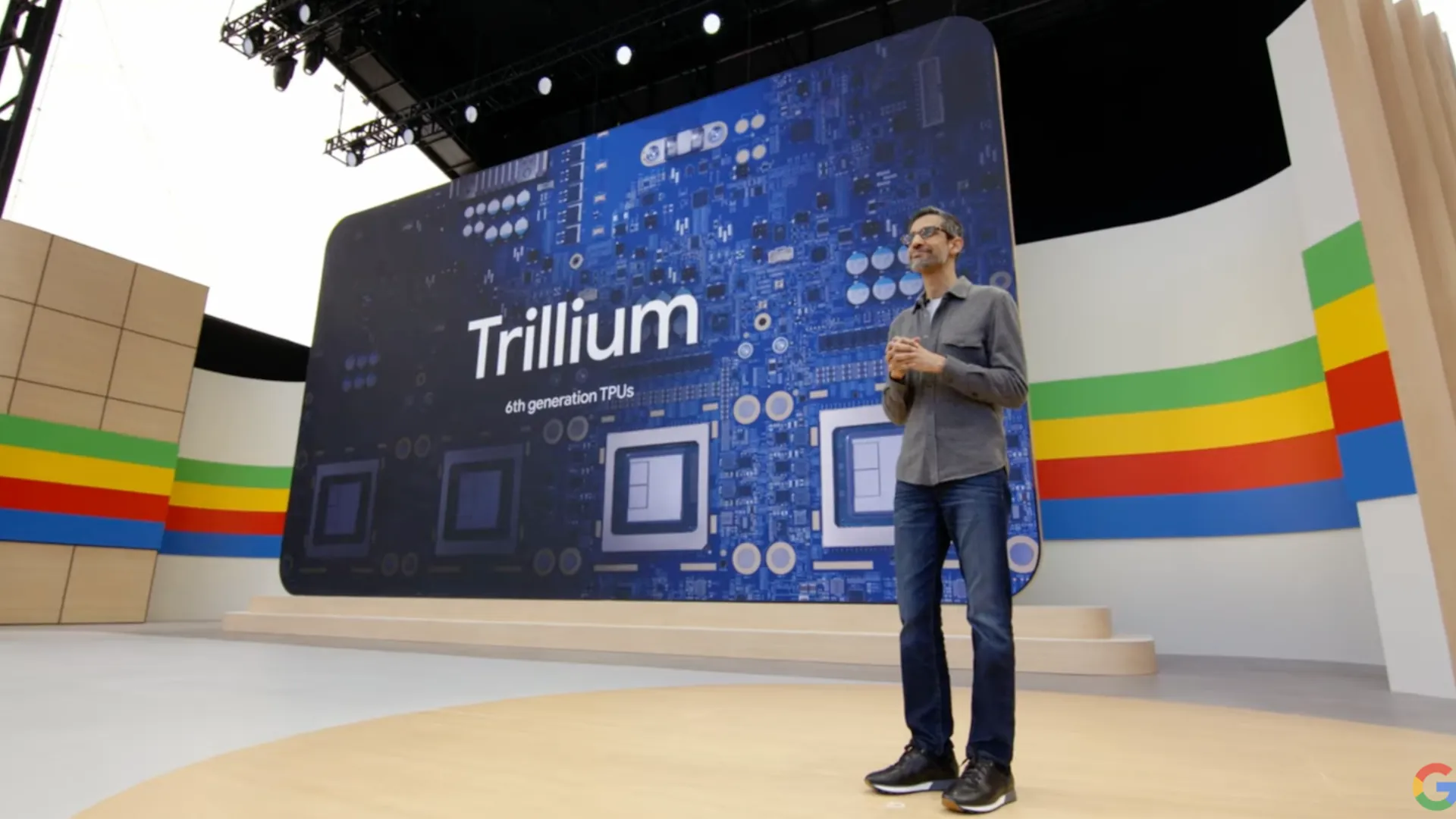
The TPU is an application-specific chip. Google designs the circuit for a specific operation and gives up the flexibility of a general-purpose GPU. Ironwood, the seventh generation, is the one featured in the tests behind this announcement.
That specialization explains why Google can promise less energy per operation when the workload fits, and also why the chip was no use outside the house as long as programming it required JAX. A team serving a large model does not rewrite its entire stack for a discount: it switches suppliers when the switch fits into an afternoon.
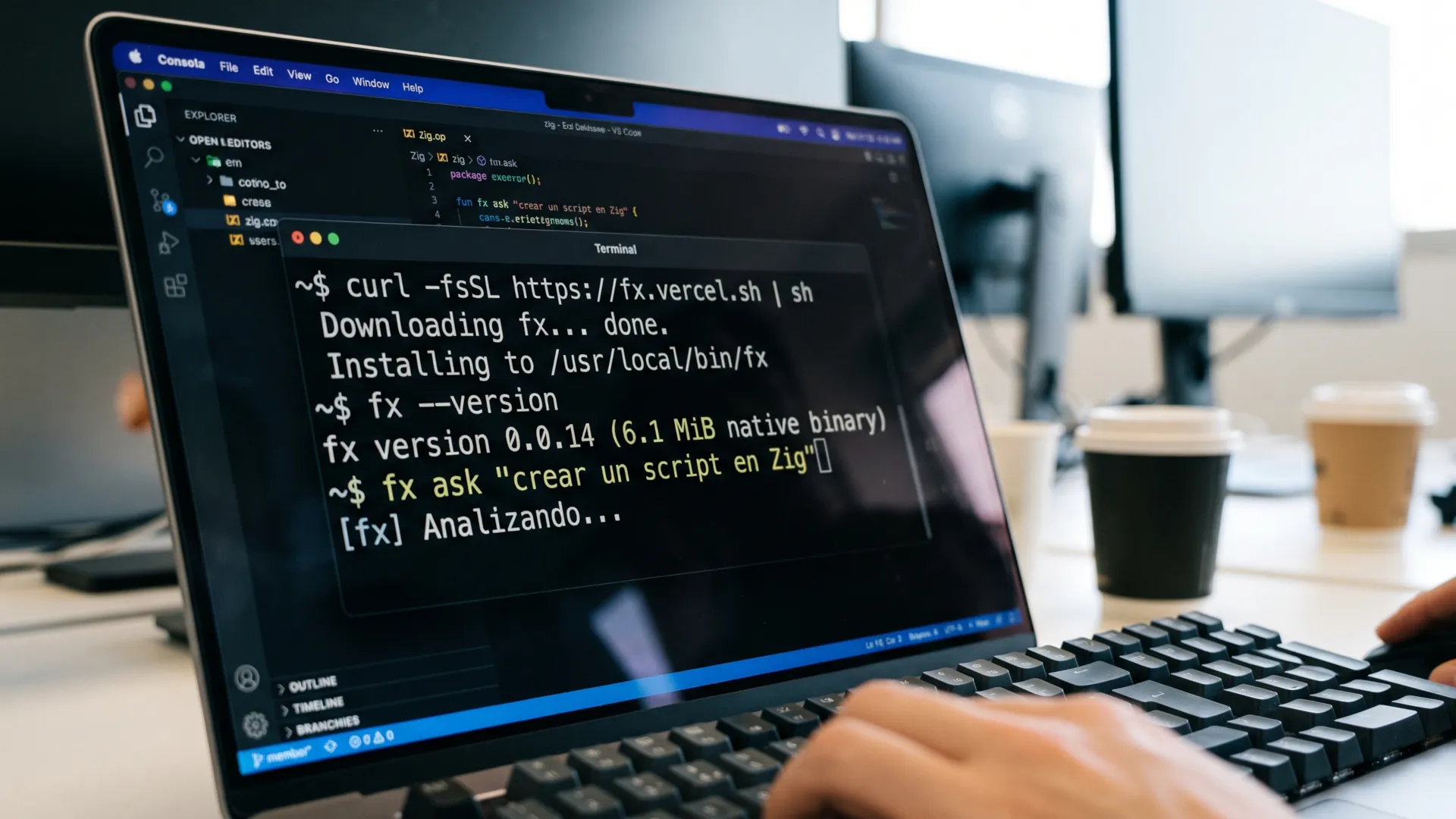
TorchTPU changes that calculus. Google released it on October 20, 2026, and developed it alongside Meta's PyTorch team with two concrete promises: running existing code with minimal changes and allowing debugging in eager mode before optimizing with torch.compile.
The list of accompanying tools includes vLLM, SGLang, TorchTitan, Ray and llm-d, the piece that distributes requests across replicas. The two open inference engines Google integrates arrived with their own TPU backend: vLLM built it with Inferact and SGLang with RadixArk, the startups founded by their creators.
The practical consequence is that a team can move traffic between GPU and TPU without rewriting the service, something the router of llm-d for distributed inference already handles with prefix-cache routing. Google published that 1.0 version alongside Red Hat and IBM and more than 500 contributors.
The confirmed part is production. Zongwei Zhou, head of PyTorch-TPU at Meta, described SGLang-TorchTPU as a mature stack and said it runs in production today, after three-way work between Meta, Google and the SGLang team.
The Tom's Hardware report of October 22 leaves open where those machines are physically located, and that detail changes the scope of the announcement. The contract that is on record is a lease: in February 2026 Meta closed a multi-year agreement worth billions to lease TPUs.
Talks to buy chips for its own data centers were placed in 2027, with no known public status. Alphabet confirmed in July that it had delivered TPU systems to customer data centers for the first time in the second quarter, without naming any and with small revenue until 2027.
With those data, the phrase "TPUs enter Meta's data centers" describes a production flow and an intention to buy, not a closed sale of hardware installed in its facilities. The difference matters because the lease keeps Google inside Meta's daily operations.
A sale, by contrast, shifts capacity and depreciation risk to the customer. For Meta, which also signs with NVIDIA and AMD, the goal is not to pick a winner but to depend on none.
The incentive to move workloads is the bill. Meta publishes open models such as Muse Spark Open, its largest open model, and every query served to third parties multiplies the inference spend of a catalog that keeps growing.
Cost per token, measured with the seller's yardstick
The most detailed performance figure comes from a test by Inferact, the company that helped build vLLM-TorchTPU. Its configuration of 16 Ironwood chips with speculative decoding exceeded 700 tokens per second per user serving Kimi K3, with 2.8 trillion parameters, versus 452 tokens per second for 16 GB200s.
It is worth qualifying whose numbers these are. Inferact sells its own stack and the comparison is signed by whoever built the backend, not an independent lab. Without speculative decoding, its kernels for Kimi K3 and Qwen 3.8 27B deliver between 1.4 and 2 times the performance of GB200 in small batches, a range that describes competitive parity rather than a rout.
In training, Google reports up to 52% model FLOPS utilization with Qwen 3 8B spread across 8,192 Ironwood TPUs. In distributed inference, customer Zenteiq went from 1,470 to 5,970 million tokens per day per 1,000 TPU v6e accelerators after adopting llm-d.
These are figures from one side, chosen by whoever sells the service, and they serve to establish the order of magnitude of the savings, not to settle a comparison between platforms. What is clear is that the performance gap fits within a factor of two, not an order of magnitude.
NVIDIA's toll still charges 75 points of margin
To gauge the threat, it is worth looking at the books of the supplier it aims to displace. NVIDIA closed its second fiscal quarter, ended July 26, with $89 billion in data center revenue and a 75% gross margin, figures it published in its earnings release.
That margin is the toll. In February Meta committed up to $60 billion in AMD chips and a multibillion-dollar purchase of NVIDIA's next GPUs, which points to supplier diversification rather than a break with the dominant player.
A TPU lease worth billions fits comfortably within an $89 billion quarterly bill and does not move the needle on its own. Software is where the frontier is shifting, and the shift is not exclusive to Google.
Amazon released TorchNeuron, its native PyTorch backend for the Trainium2 and Trainium3 chips, the day before at the same conference, which leaves two fronts open against the same bottleneck. A backend does not improve a chip, but it removes the excuse not to try it.
2027 will be decided not in the chip, but in the bill
All parties place 2027 on the calendar. Alphabet expects to recognize most of the revenue from its TPU systems agreements there, Meta will have to decide whether to buy or keep leasing, and RadixArk promises TPU support on launch day for open models by the first quarter of 2027.
The indicator to watch is not a new customer signing, but the price per million tokens each cloud publishes in its rate card. If that price falls in the clouds that offer both TPU and GPU, NVIDIA's toll will have to be justified by something more than the usual library.
If it stays flat, this week's announcement will be a press release with a two-year head start for the dominant player. The hardware is already deployed and the code is already open; the bill is the only thing that has not changed yet.