Migrating from Windows to Linux: discover tools for software development and gaming
2026 will go down in software history as the year the "penguin" made its power play. Linux has broken the mythical 5% market share barrier on Steam, a technical earthquake driven by the Steam Deck hurricane and the mass exodus of users after the end of Windows 10.
But the real secret of this conquest lies not on the surface but in its guts: the arrival of software such as Wine 11, Proton 11 and, above all, NTSYNC, a revolutionary synchronization driver embedded directly in the kernel. This low-level alchemy has shattered performance losses, transforming Linux into the promised land for both demanding developers and casual gamers.
The UNIX origin and the power of software development on Linux
For software engineers weighing a migration from Windows to Linux, the transition represents a return to the origins of modern tools. After all, the vast majority of enterprise development solutions, network utilities and web servers were originally conceived in Linux environments or legacy UNIX systems such as macOS and FreeBSD.
In fact, working on a native UNIX-like system eliminates the troublesome emulation layers and gives programmers direct control over system processes, the network stack and file permissions. This architectural affinity makes it easier to understand how applications work in depth, reducing friction during deployment phases.
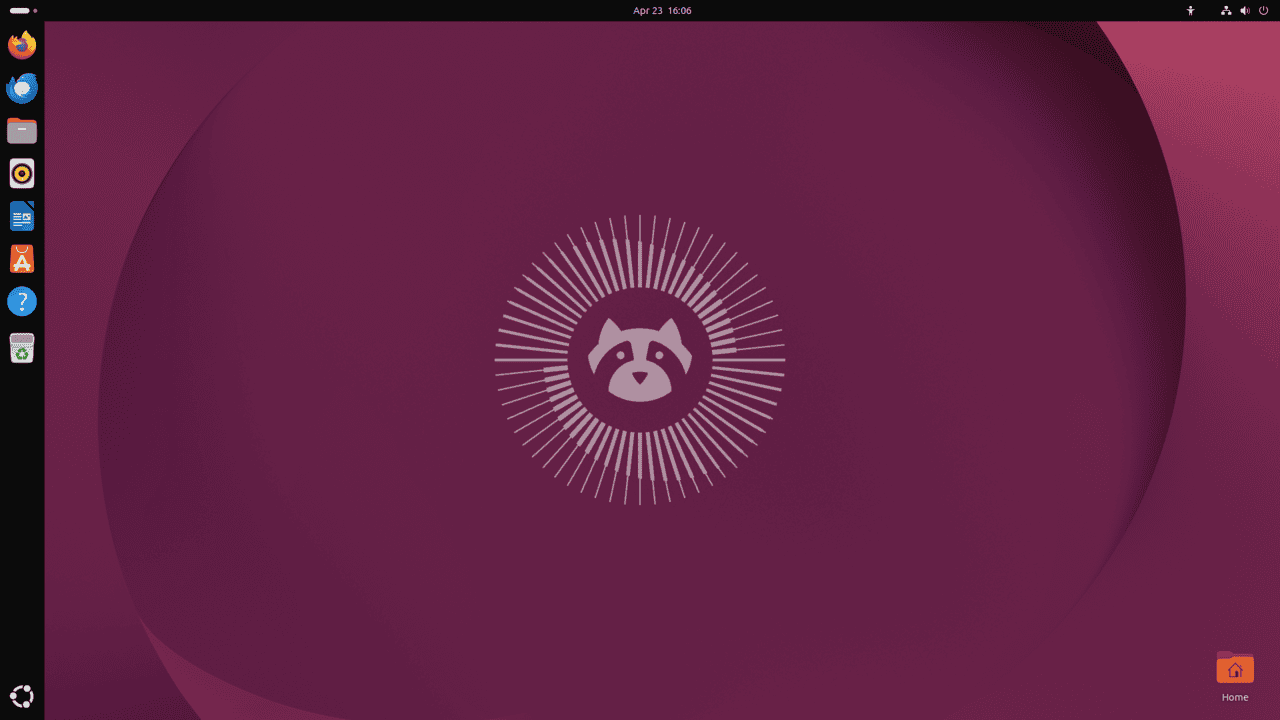
A look at Ubuntu, one of the best-known Linux distros
On the other hand, the Linux terminal offers power and flexibility that far exceed the classic capabilities of cmd.exe or PowerShell in Windows environments. Likewise, integrated package managers make it possible to install, update and manage complex development dependencies with simple one-line commands.
In addition, the ability to update system software on the fly avoids the constant, annoying forced restarts characteristic of commercial operating systems. This environment helps programmers stay focused by eradicating automated background processes not approved by the user.
Containerization and infrastructure performance: Linux versus Windows
In contemporary software development, containerization through Docker, Podman or technologies such as Jails is an indispensable tool for building stable, replicable microservices. On Linux and FreeBSD, containers and jails run natively using the kernel's own primitives, achieving perfect isolation without virtualization overhead.
But on Windows, this architecture requires the mandatory use of heavy virtualization subsystems such as WSL 2 or Hyper-V. This additional emulation layer notably reduces efficiency and limits the number of concurrent containers a programmer can keep active locally. In fact, Microsoft understands this and in its most recent keynote, BUILD 2026, it has presented a series of improvements aimed at solving this problem; however, there is little it can do to match Linux performance in this area.
Unmatched performance
And this is clear in a performance study published by the IEEE organization, in which it demonstrated that Docker's arithmetic and memory computation performance on Linux consistently exceeds that of Windows. However, the most devastating bottleneck on Windows lies in communication with NVMe solid-state drives and cross-access to the NTFS file system.
Why, when mounting code folders from Windows storage into Linux containers on WSL 2, system call translation severely penalizes speed. An everyday process such as installing dependencies can take more than three minutes on Windows, while in a native Linux environment it is completed in just 30 seconds.
Beyond raw read and write performance, native migration to Linux solves critical logical problems in developers' source code. One example is the case sensitivity of Linux file systems, a factor absent on Windows that often causes silent failures in production. Likewise, the difference in encoding frequently renders scripts unusable inside emulated containers.
Operational stability and security in digital asset validation
All these problems can be solved by programming natively, which allows the developer to ensure that the local environment faithfully mirrors the production server.
Linux's reliability not only boosts developer productivity but is also essential to the security of distributed network infrastructure. And this is something that validator node operators within the crypto ecosystem value; after all, they depend on continuous uptime to avoid staking penalties in network validation schemes.
We can see this quickly with a simple example. Imagine a full Ethereum network validator node, which requires at least an 8-core processor, 32 GB of RAM and 1 TB of high-speed SSD storage, with fault tolerance and data duplication. Faced with forced, unplanned automatic updates that constantly interrupt Windows servers, Linux stands out as the ideal platform for its immutability and absolute operational control.
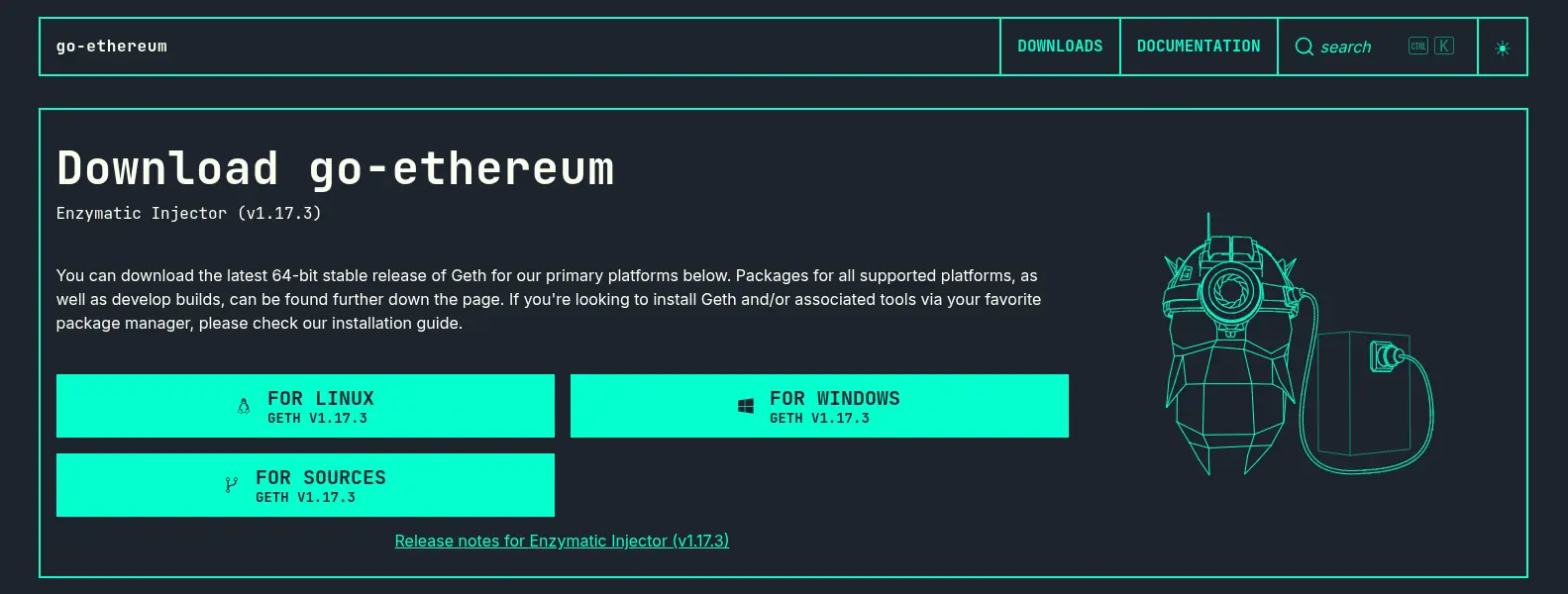
Ethereum's main client is developed primarily for Linux
Open source servers
To protect the integrity of digital assets against threats, Linux offers an arsenal of highly robust native tools. For example, the SELinux and AppArmor security modules make it possible to restrict access to critical files of the validator node, preventing a compromised service from escalating privileges on the host system. Likewise, utilities such as AIDE continuously monitor the integrity of system files, alerting to suspicious modifications in the node's executables. This modular security structure explains why the vast majority of blockchain infrastructure is deployed on open source servers.
For enterprise operators, integration with hardware trusted execution environments such as Intel SGX is vital. This technology, built into dedicated servers, safeguards the cryptoasset validator's private keys within physically encrypted memory enclaves, protecting funds against unauthorized access.
The new era of gaming on Linux: NTSYNC and Proton 11
Historically, interactive entertainment was the main obstacle preventing Windows users from abandoning Microsoft's platforms. However, in 2026, Valve's Proton compatibility layer, together with Wine 11, has completely redefined performance expectations for the casual user. The big innovation this season is the incorporation of NTSYNC directly into the Linux kernel mainline. This new kernel-level synchronization module, developed by engineer Elizabeth Figura, represents a complete rewrite of Windows call emulation.
Previously, to coordinate operations, Proton made constant round trips to user space to query a server process called wineserver. In demanding titles, this delay saturated the system, causing stutters and a poor experience. NTSYNC eliminates this intermediary by exposing a virtual /dev/ntsync device in the kernel, allowing the kernel to resolve multithreaded synchronization natively and instantly. This change reduces background CPU consumption and significantly improves the stability of minimum frames per second.
And this is vital to conquering the gaming world. In addition to Steam, which is the sector's fundamental pillar thanks to SteamOS and Proton, casual users have distribution options such as GOG and initiatives such as Humble Bundle. To unify these fragmented libraries without installing the heavy official Windows clients, the community has designed powerful professional-grade game launchers. These alternatives eliminate forced telemetry and the background resources consumed by commercial launcher applications on Windows. This way, users maintain their privacy and maximize the hardware available for their titles' performance.
Steam home page, the main online gaming ecosystem for Windows and Linux
Heroic Games Launcher
Among these integration tools, Heroic Games Launcher stands out, an open source application compatible with GOG, Epic Games Store and Amazon Prime Games. Heroic replaces proprietary Windows interfaces, allowing saved games to be synced directly to the cloud and optimized Proton versions to be downloaded from its interface. For its part, Lutris stands as the definitive universal launcher for granular configuration of indie games or titles that require precise adjustments to legacy DLLs. This versatility ensures that the heritage of recreational software is not lost during the technological transition and can run without a hitch.
Choosing the right distribution will depend on the profile and computing needs of each user who decides to migrate. In 2026, the ecosystem has highly specialized systems that minimize hardware maintenance tasks. These platforms come by default with optimized graphics drivers, state-of-the-art performance measurement utilities and polished compatibility layers. This way, the transition for the non-technical user is as friendly as setting up a traditional home entertainment system.
Operational synergies and outlook for system migration
For all these reasons, the decision to migrate the daily work environment from Windows to Linux in 2026 no longer requires sacrifices in work productivity or digital entertainment. The confluence of a native containerization environment together with an optimized kernel that runs cutting-edge titles without performance losses represents an indisputable value proposition. By operating on a stable UNIX-like kernel, software engineers not only develop programs more agilely but also become familiar with the real architecture on which their production services run. This hands-on learning raises the developer's level of professional competence compared with peers in the global technology industry.
To ensure a successful system transition, new users are advised to keep their source code environment within native Linux paths and not on NTFS partitions, thus avoiding unnecessary read and write penalties. The systematic adoption of isolated installers in Flatpak format and the choice of launchers such as Heroic or Lutris guarantee a robust, clean system free of software dependency conflicts. This way, the technological migration culminates in a smooth experience, where cryptoasset security, enterprise-grade computing performance and personal enjoyment are unified under the same open source kernel. The technology landscape of 2026 reaffirms that Linux has become the high-performance desktop environment par excellence.