Framework has just tripled the money it gives to CachyOS, a Linux distribution that sells it no licenses and bills it no support. The donation goes from $250 a month to $850, and the annual total jumps from $3,000 to $10,200, according to the announcement the project published on its forum on October 14, eleven days ago. It is a factor of 3.4 that the statement sums up as more than triple the original amount.
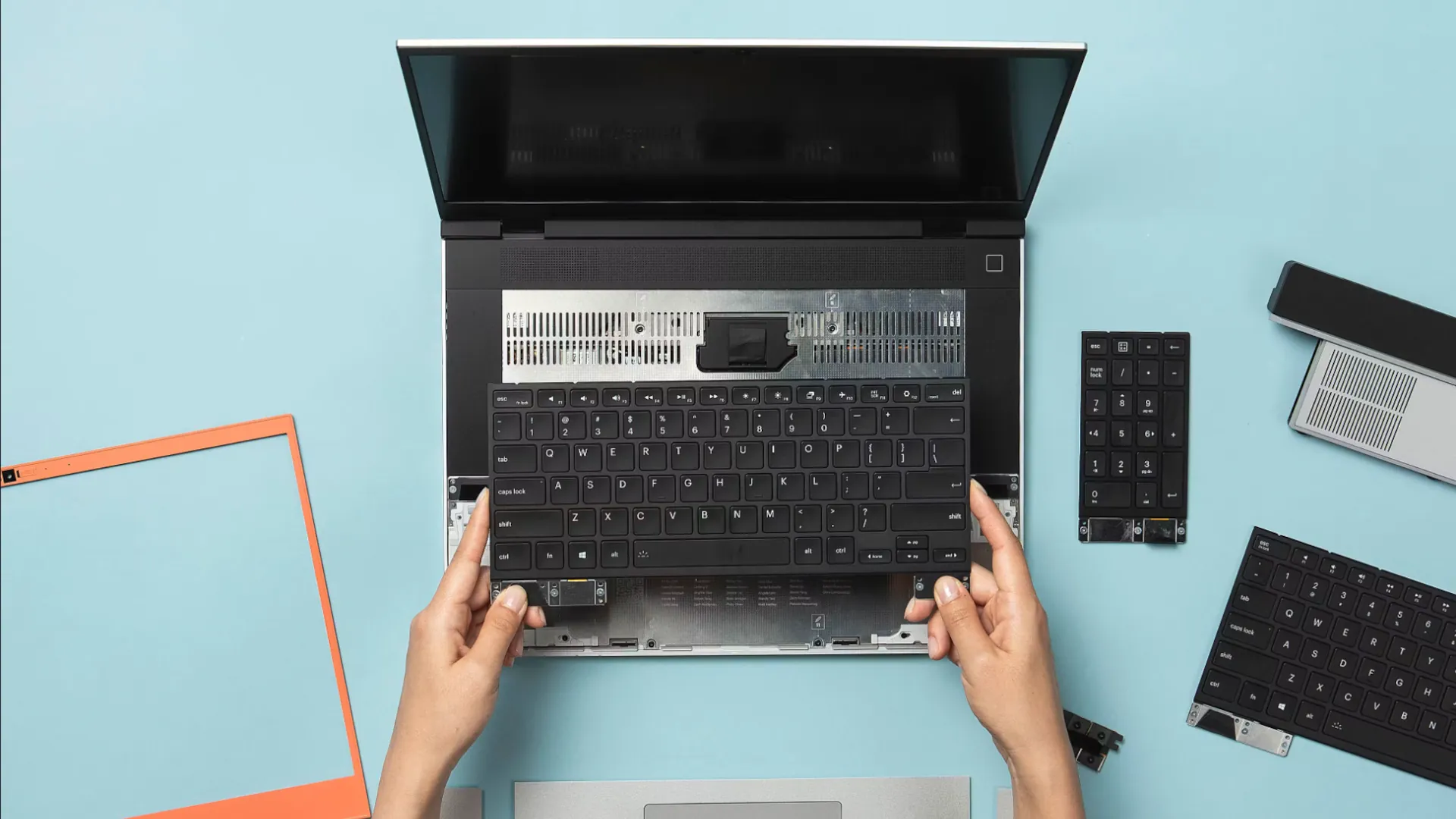
The relationship did not start yesterday. In December 2025, almost eleven months ago, Framework sent a Framework Laptop 16 so the team could fine-tune its kernel and its packages on that laptop, and committed to a monthly donation. That first payment represented close to 10% of the monthly donations the distro received, according to the announcement of December 2025, so the Framework CachyOS arrangement is not starting now: it is moving up a category.
The figure is both large and small at once. CachyOS declares €238 a month for servers, and the annual sponsorship, about €9,100 at the ECB rate of October 23, triples that bill. Spain's 2026 minimum wage is €17,094 a year in fourteen payments, so the patronage comes to little more than half of the country's lowest legal salary. That double edge explains why the gesture matters and why it still does not solve the underlying problem.
What changes in CachyOS's coffers
The October 14 announcement details where the money goes: maintaining build servers, mirrors and infrastructure, and moving closer to the goal of working on CachyOS full time. There are no new line items and no product promises.
The arithmetic also clarifies the size of the jump. The $250 a month added up to $3,000 a year and the $850 adds up to $10,200. The ratio exceeds triple, as the statement sums up. The distro presents it as a sign that Framework takes seriously the Linux that runs on its laptops, a reasonable reading coming from the recipient of the money and one that should be read with that caution in mind.
| Line item |
Amount |
Source |
| Framework donation through October 2026 |
$250/month ($3,000/year) |
CachyOS, December 4, 2025 |
| Framework donation from October 14, 2026 |
$850/month ($10,200/year) |
CachyOS, October 14, 2026 |
| Monthly infrastructure declared by the distro |
€238/month (€2,856/year) |
CachyOS donations wiki |
| Framework sponsorships of free software, money and product |
more than $260,000 |
Framework, March 2026 |
Put in context, the table says two different things. The previous amount paid for infrastructure and little more; the new one makes it possible to think about kernel and packaging hours without the distro having to choose between compiling and eating. The second reading is less kind: $10,200 is a minor line for a manufacturer with a presence in several countries, although it is not a giant either.
A distro costs servers and kernel hours
CachyOS publishes its list of monthly expenses on the donations wiki, and there is no mystery: a build server with a Ryzen 9 7950X3D at Hetzner costs €127, a second machine with a 7700X costs €70, the web server and its mirror €17, the mail server another €17 and the forum hosted on a Netcup VPS €7. In total, €238 a month and €2,856 a year, a figure any freelancer recognizes as modest.
That bill is only the floor. Behind it is work that does not appear on the list: packaging updates for an Arch base, maintaining performance patches, testing kernels on specific laptops and answering on the forum anyone who reports a bug. The distro sums it up in its recurring goal (working full time on the project), which remains just that, a goal.
The 10% figure helps size the community. If $250 a month was a tenth of the total, donations were around $2,500 a month; the current $850 is equivalent to a third of that pot, with the caveat that the figure is from December 2025 and the donor base may have changed since then.
Why does a manufacturer pay a distribution?
Framework explains its sponsorship program with a less than romantic logic: it funds the projects that produce the software that makes its products work. In the statement of December 2025, the company justifies its support for Arch Linux because it is among the three most used distributions by owners of a Framework Laptop and a Framework Desktop, and for CachyOS because it tops performance comparisons such as those carried out on a Framework Desktop.
The second reason is a laboratory one. A manufacturer needs its hardware to boot, suspend and perform on the system its customers install, and a distribution optimized for performance comes cheap as a test bench. The laptops sent to the CachyOS team serve that function before the donation does, and the company itself distinguishes those shipments from the press or development units that are not counted.
There is a third, less confessable motive. The money buys goodwill in a community that decides which distro to recommend to anyone buying a modular laptop, and it costs less than an advertising campaign. None of this is illegitimate, but it is worth naming: a manufacturer's sponsorship is also marketing with a receipt.
The sponsorship map and its scale
CachyOS is not the only distribution on the list. Framework also sponsors Arch Linux, Debian, Bazzite and NixOS, as well as FreeBSD, NetBSD, KDE, Xfce and the Cloud Native Computing Foundation, according to the tally the company keeps public. The company put its total commitment at more than $225,000 at the end of 2025 and more than $260,000 in March 2026, adding money and product.
- Arch Linux, the base on which CachyOS is built and one of the favorites of Framework laptop users.
- Debian, the root of Ubuntu and Linux Mint and a common choice among those who buy these machines.
- NixOS, the distribution one of its firmware engineers uses to test new hardware.
With those numbers, CachyOS's $10,200 a year is close to 4% of the total committed since 2025. Choosing a distro has more nuances than it appears, as we showed when comparing Linux with WSL for programming, and that is why manufacturers test several in parallel instead of betting on just one. The percentage works in two directions: it is a serious commitment for a community distro and a minor line in the budget of a company that sells laptops.
Patronage also has a ceiling
Dependence is the flip side of the gesture. A single manufacturer now contributes the equivalent of a third of what the community donated in December 2025, and that concentration turns any change of strategy into an infrastructure problem. If Framework reduced its support, CachyOS would have to cut servers or go back to relying on small donations, and neither of those things is decided in an open meeting.
The model has been repeated in free software for decades, as we recounted when reviewing 43 years of GNU and free software: small donations, borrowed hardware and the occasional consulting contract sustain projects that enormous companies depend on. The novelty is not that a manufacturer pays, but that it does so openly and with figures, something worth demanding of everyone.
There is another route the sector already practices: consulting contracts, funded positions and foundations with their own budgets. They are less photogenic formulas than a monthly check, but they tie money to deliverables rather than to marketing sympathy. CachyOS is still there.
What $10,200 does not buy
The money buys kernel time, servers that do not go down and some peace of mind for a team that until now compiled on two rented machines. It does not buy independence, or staff, or the certainty that next October the sponsor will renew. The distro knows this and that is why it keeps its donations page open: €238 a month for infrastructure is a modest bill, but it is theirs.
The question left on the table is not whether Framework is right to pay, because it is, but whether free software wants to keep depending on the generosity of its suppliers. As long as the answer is yes, every jump like this will be good news with fine print: the distro that runs on your laptop lives, in part, on a manufacturer still finding it worthwhile.