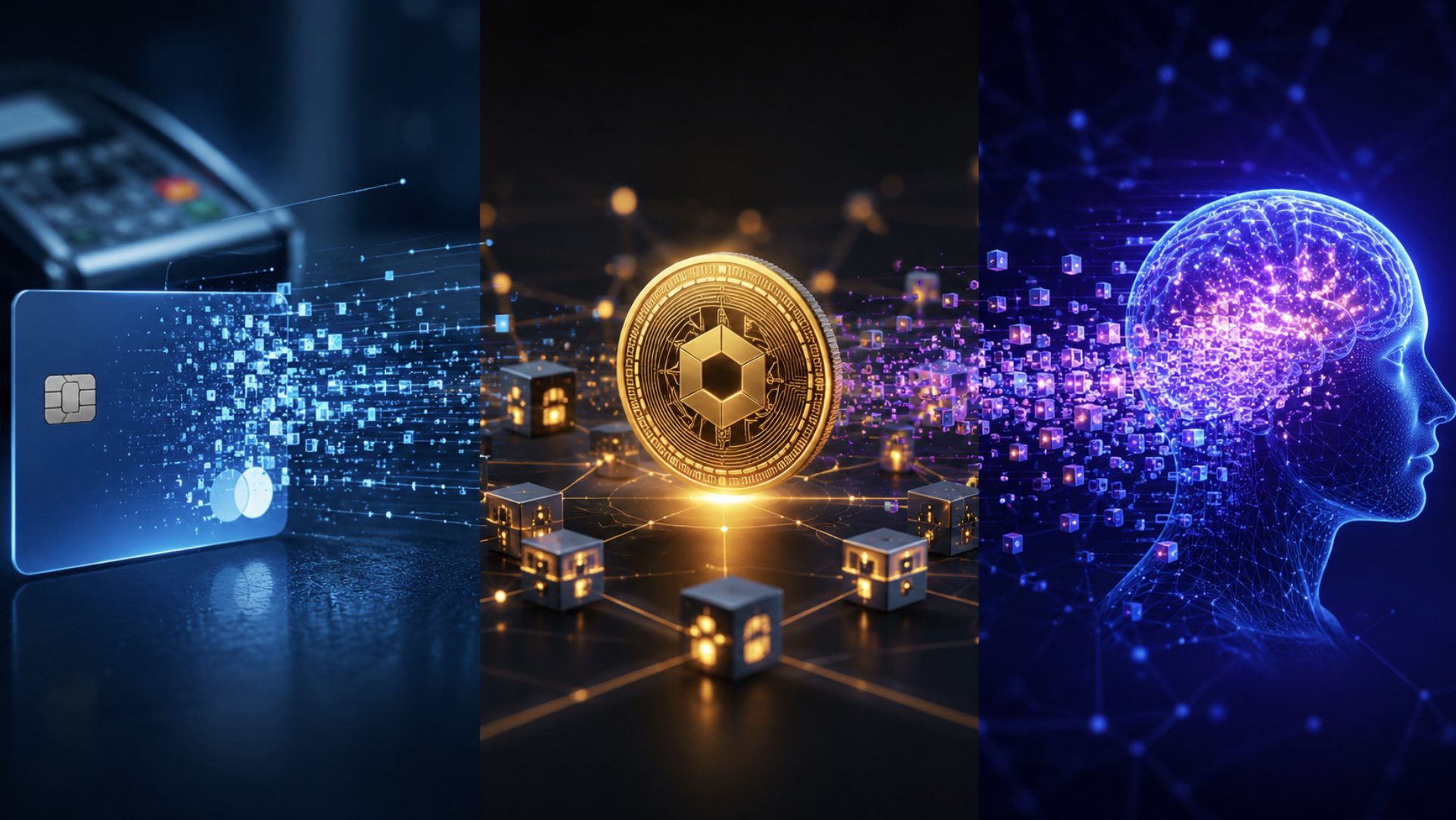
Why does an AI token have nothing to do with a blockchain one?
The word token has become one of the most widely used in the contemporary digital economy. It appears constantly in conversations about blockchain, artificial intelligence, cybersecurity and payment systems, but we rarely stop to think that behind that term lie completely different technologies, objectives and realities.
AI token and Blockchain token
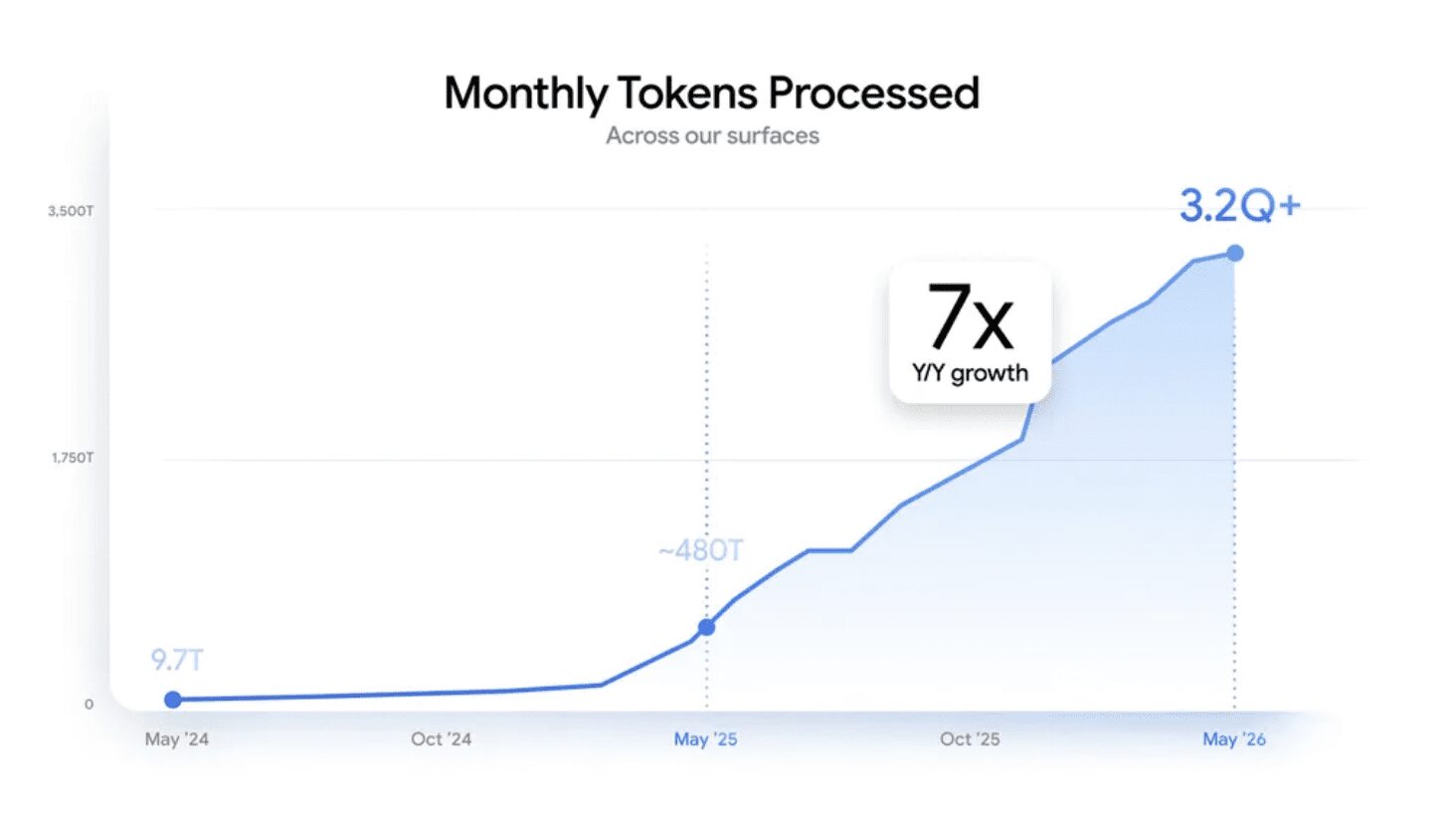
When Google recently announced that its systems process more than 3.2 trillion tokens per month, many readers linked to the crypto ecosystem may have thought it referred to some kind of digital asset similar to those circulating on blockchains. However, artificial intelligence tokens have nothing to do with blockchain tokens. They share a name, but they represent different phenomena. In fact, the history of digitalization in recent decades can be told as a succession of different forms of tokenization: first we tokenized data, then we tokenized value, and now we are tokenizing words.
Over the past 12 months, more than 375 Google Cloud customers each processed more than a trillion tokens, representing extraordinary demand for AI across all kinds of sectors
Long before Bitcoin or ChatGPT appeared, tokens already played a fundamental role in global digital infrastructure. In the field of cybersecurity and electronic payments, tokenization emerged as a solution to protect sensitive information. When a user makes a purchase with a credit card, modern systems avoid directly storing the real card number and replace it with an alternative sequence of characters known as a token. This token acts as a representative of the original information without revealing the authentic data.
Visa, Mastercard or Apple tokens
Companies such as Visa, Mastercard or Apple have used this technology for years to reduce fraud risks and protect millions of daily transactions. In this context, a token had no economic value of its own and could not be traded on a market. Its function is to represent a piece of data without exposing it. Tokenization was, fundamentally, a security tool.
The arrival of Bitcoin radically transformed the meaning of the word. When Satoshi Nakamoto designed a network capable of transferring digital value without intermediaries, he opened the door to a new conception of tokens. Unlike traditional payment systems, where the token represented information, on blockchain it began to represent assets.
Bitcoin proved that it was possible to create scarce, censorship-resistant digital money verifiable by a distributed network of participants. Ethereum later expanded that idea by allowing virtually any asset to be represented through a token. From dollar-backed stablecoins to corporate stakes, governance rights, loyalty points, real estate or digital collectibles, blockchain turned tokenization into a mechanism for representing economic value. For the first time, a token could be owned, transferred, exchanged and stored as an asset with its own market value.
Computers do not understand words
While blockchain moved toward the tokenization of assets and economic rights, artificial intelligence followed a completely different path. The large language models developed by OpenAI, Google, Anthropic or xAI faced a different problem: how to enable a machine to process human language. Computers do not understand words, meanings or contexts the way people do.
To work with texts, they need to convert language into mathematical units they can manipulate. That is where AI tokens come in. When we type a question into ChatGPT or Gemini, the system breaks our sentences down into small units that may correspond to whole words, fragments of words, punctuation marks or sequences of characters. The model does not work directly with sentences, but with these elementary pieces of information. Each token represents a small portion of language that can be statistically processed by the machine.
The economic importance of these tokens has grown extraordinarily because they have become the basic unit of consumption for artificial intelligence. If for years we measured the Internet in page views, clicks or gigabytes transferred, the new AI economy is beginning to be measured in millions and trillions of tokens processed.
Two technological revolutions that use the same words
Every query made to a model, every document analyzed, every line of code generated and every autonomous agent deployed consumes tokens. When Sundar Pichai states that Google processes trillions of tokens per month, what he is really saying is that Google's machines are processing astronomical amounts of human language. Words have become an industrial raw material.
This is where the great conceptual difference between blockchain and artificial intelligence emerges. Blockchain tokens represent value. AI tokens represent language. The former can be stored in a digital wallet, transferred between users and traded on global markets. The latter cannot be owned or exchanged. They are simply units of information used to measure a machine's cognitive activity. A bitcoin can appreciate or depreciate, whereas an AI token only reflects an amount of processed text. Both belong to emerging digital economies, but they serve radically different functions.
It is fascinating to observe how two of the most important technological revolutions of the 21st century have ended up using the same word to describe such different phenomena. Blockchain was born to organize value and solve the problem of digital scarcity. Artificial intelligence has emerged to organize knowledge and process massive amounts of language. One tokenizes assets. The other tokenizes words. One builds the infrastructure of digital money. The other is building the infrastructure of digital knowledge.
Perhaps that is why the evolution of technology over recent decades can be summed up in the idea that first we tokenized data so we could protect it, then we tokenized value so we could exchange it, and now we are tokenizing language so that machines can understand it.
Covadonga Fernández is founder and director of the newspaper Observatorio Blockchain. She has worked with various companies developing crypto/blockchain projects, such as Singular DTV, a Switzerland-based platform and a pioneer in decentralizing the film industry, which led her to take part in the 2019 San Sebastián Film Festival. That same year she also took part in the Bern International Film Innovation Festival (Switzerland), with a presentation on linguistic plurality in blockchain. In 2022 she took part in the Acción Cultural Española edition with an article on Metaverse and Culture. In 2017 she wrote the chapter on Blockchain and Journalism in the book: «Blockchain: The Industrial Revolution of the Internet», published by Grupo Planeta. A year earlier, in 2016, she created the first Meetup on Blockchain and Journalism. That same year she also created the Blockchain Media site, to track the decentralization process of the cultural and creative industries. In 2020 she co-organized an event on how blockchain could help the cultural and creative industries, where the money received from sponsors was tokenized and speakers received payment in NFT format. Before founding Blockchain Media and Observatorio Blockchain, Covadonga worked at Grupo Z and the newspaper ABC; she was communications director of the Madrid Chamber of Commerce, a journalism professor at Universidad Carlos III de Madrid and chair of Telemadrid. Winner in the Outreach category at the 2024 Financial Innovation Awards and honored by Alastria at the 2025 Blockchain Awards