MoneyGram launches MGUSD, a stablecoin for its 60 million customers
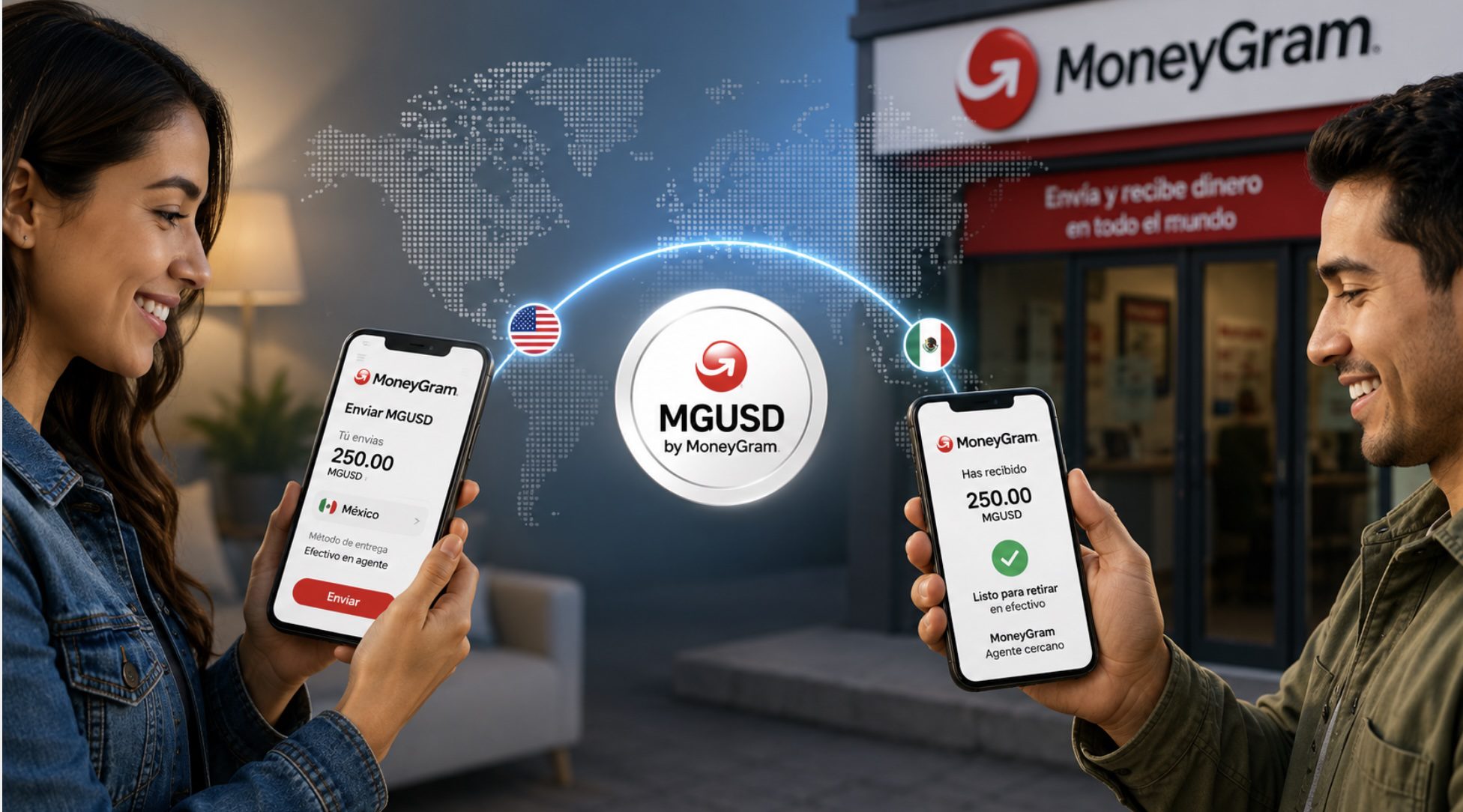
MoneyGram, one of the world's largest remittance and international transfer companies, has announced the launch of MGUSD, a stablecoin developed on the Stellar network. The new digital currency will be backed by the infrastructure of Bridge and Fireblocks and will form part of the company's strategy to modernize international payments. With the aforementioned stablecoin, the company wants sending money between countries to be as simple as sending a message.
MoneyGram serves more than 60 million customers and has an extensive network of offices and agents spread across more than 200 countries and territories. This means that MGUSD is born with potential access to one of the largest financial distribution networks in the world.
The company's goal is to use stablecoins to make moving money between countries faster, cheaper and simpler than with traditional systems. Instead of relying exclusively on banks, international transfers or financial intermediaries, users will be able to use dollar-backed digital assets to send value anywhere in the world and later convert it into local currency when necessary.
MoneyGram and stablecoins
MoneyGram announced in May an alliance with Kraken that allows users of the exchange to withdraw cash from cryptocurrencies through the company's global network. Thanks to this agreement, Kraken customers can convert their digital assets into physical money and collect it at thousands of authorized establishments. In Spain alone, MoneyGram's network has nearly 55,000 service points, a figure higher than the number of ATMs existing in the country.
Now, with MGUSD, MoneyGram no longer acts only as a bridge between traditional money and cryptocurrencies, but also enters directly into the stablecoin business. The launch of MGUSD confirms that stablecoins are ceasing to be a tool exclusive to the crypto sector and are becoming a financial infrastructure used by large payment companies. MoneyGram's goal is to leverage its global network to become one of the leading players in blockchain-based international payments.
Covadonga Fernández is founder and director of the newspaper Observatorio Blockchain. She has worked with various companies developing crypto/blockchain projects, such as Singular DTV, a Switzerland-based platform and a pioneer in decentralizing the film industry, which led her to take part in the 2019 San Sebastián Film Festival. That same year she also took part in the Bern International Film Innovation Festival (Switzerland), with a presentation on linguistic plurality in blockchain. In 2022 she took part in the Acción Cultural Española edition with an article on Metaverse and Culture. In 2017 she wrote the chapter on Blockchain and Journalism in the book: «Blockchain: The Industrial Revolution of the Internet», published by Grupo Planeta. A year earlier, in 2016, she created the first Meetup on Blockchain and Journalism. That same year she also created the Blockchain Media site, to track the decentralization process of the cultural and creative industries. In 2020 she co-organized an event on how blockchain could help the cultural and creative industries, where the money received from sponsors was tokenized and speakers received payment in NFT format. Before founding Blockchain Media and Observatorio Blockchain, Covadonga worked at Grupo Z and the newspaper ABC; she was communications director of the Madrid Chamber of Commerce, a journalism professor at Universidad Carlos III de Madrid and chair of Telemadrid. Winner in the Outreach category at the 2024 Financial Innovation Awards and honored by Alastria at the 2025 Blockchain Awards