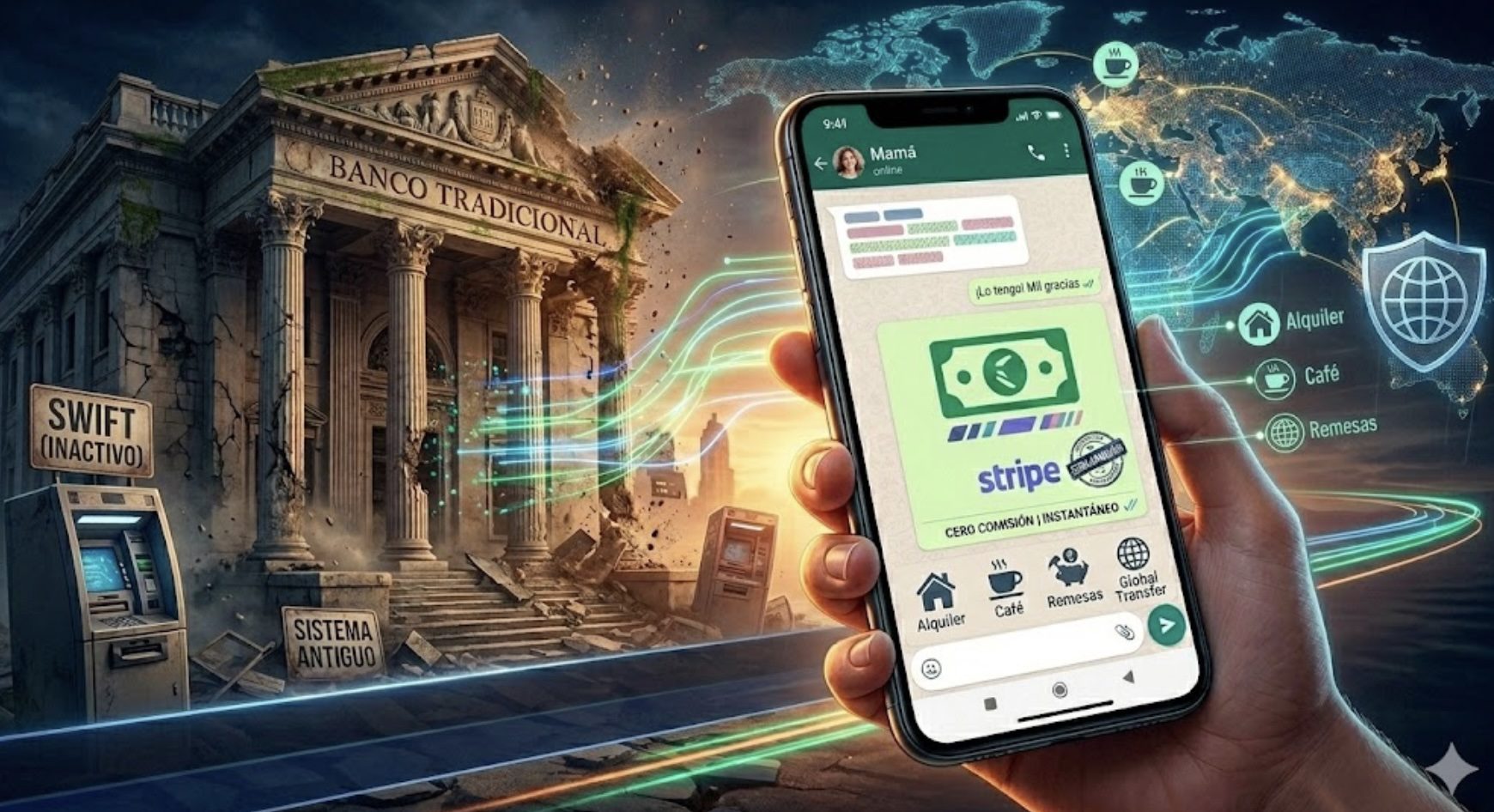
Judging by the reports circulating in various media outlets these days, Meta appears to have activated a plan to make WhatsApp the app you use to pay for everything from your breakfast coffee to your rent. And the news doesn't come alone, since the ally in this venture is Stripe, the company that is reportedly in preliminary talks to acquire PayPal.
After the failure of Libra and Diem, Mark Zuckerberg has learned that there is no point in taking on the regulatory wall alone. Apparently, Meta has chosen Stripe for its stablecoin-based infrastructure to run WhatsApp's payments engine. The rapport between the two companies was cemented in 2025, when Patrick Collison, founder of Stripe alongside his brother John, joined Meta's board and convinced Zuckerberg that he didn't need to be a bank for his more than 3.5 billion users to move money as easily as they send an emoji. All he needs is to lean on Stripe's pipes.
Why Stripe's stablecoins put the PayPal Mafia in check
Both news items, the possible purchase of PayPal by Stripe and the company's talks with Meta, broke in parallel. The deal would undoubtedly have a clear strategic logic. First, PayPal holds global banking licenses that Stripe needs to roll out the WhatsApp payments system immediately and legally across multiple jurisdictions. Second, acquiring PayPal would allow Stripe to inherit millions of payment buttons across the internet, turning the WhatsApp balance into a universal means of payment. Third, and no less important, Stripe would also get its hands on PayPal's social payment jewel, Venmo, to integrate it directly into Meta's conversational ecosystem.
In this whole web, the protagonist and technical engine of the alliance is Bridge, the subsidiary Stripe bought just over a year ago for 1.1 billion dollars and which on February 12 received the green light from the US regulator OCC to operate as a National Trust Bank. With the GENIUS Act in hand, tasked with regulating stablecoins in the United States, this system enables instant transfers in digital dollars, eliminates dependence on IBAN and delegates custody and regulatory compliance to Stripe, keeping Meta at a distance from all banking complexity.
The implications for the financial industry are seismic. Remittances, which today carry fees of 6%, will become free and real-time, transforming messaging into the definitive financial infrastructure. With Stripe providing the technology and licenses, and Meta injecting its billions of users, traditional banking inevitably loses control of retail commerce. On this new board, Stripe not only accelerates the obsolescence of systems like SWIFT or Bizum, but devours PayPal's legacy to build, alongside Meta, the operating system of global money.