Is a crypto-friendly SEC and CFTC enough, or does the United States still need the CLARITY Act? The regulators appointed by Donald Trump have gone further than their predecessors in defining the digital asset market, but their ability to replace Congress has legal, institutional and political limits
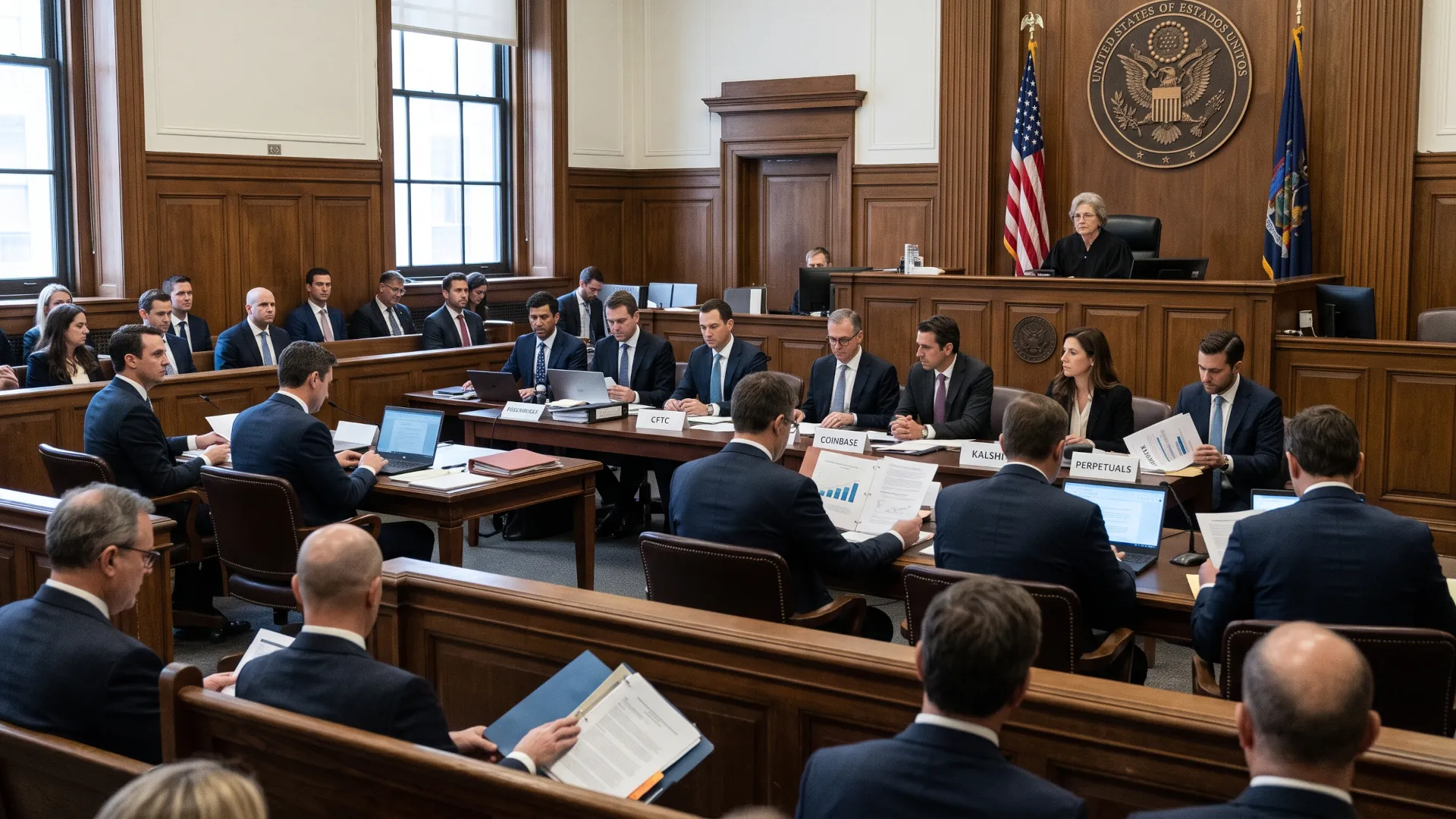
The countdown has begun for the CLARITY Act, as the US Senate faces this week its final days of activity before the August recess. As the window narrows to move forward the long-awaited digital asset market reform, the crypto industry is speculating about what will happen if Congress fails to pass the crypto law.
A favorable SEC and CFTC
The United States currently has the most crypto-industry-friendly heads of the Securities and Exchange Commission (SEC) and the Commodity Futures Trading Commission (CFTC) in its recent history. Paul Atkins chairs the SEC and Michael Selig heads the CFTC. Both were appointed by President Donald Trump and confirmed by the Senate.
The alignment between a White House favorable to digital assets and regulators in step with that strategy has completely changed the regulatory landscape compared with just two years ago. During Gary Gensler's chairmanship, much of the industry called for a law to end regulatory uncertainty and clearly delimit the powers of federal agencies.
Although the regulatory context has changed significantly and both the SEC and the CFTC have ample room to approve rules, issue interpretations, grant exemptions and set supervisory criteria within the powers granted to them by federal law, neither can replace Congress. Only the legislative branch can modify the legal framework under which regulators operate.
Digital asset spot market
That is the main difference between regulating and legislating. The SEC and the CFTC can develop existing laws, but they cannot create a new legal regime or claim powers that Congress has not delegated to them.
That limit is especially evident in the digital asset spot market. The CFTC oversees markets for digital commodity derivatives and can pursue fraud and manipulation, but it does not have comprehensive federal authority over the spot markets for cryptoassets that are not considered securities. Precisely one of CLARITY's main objectives is to fill that jurisdictional gap.
The SEC faces a similar limitation. It can interpret securities law and determine when a digital asset falls under its oversight, but it cannot on its own change the legal definition of a security or decide which powers belong to the CFTC. That division can only be established by Congress through a law.
More flexible regulation
There is also a legal element that reinforces the importance of CLARITY. In June 2024, the US Supreme Court, in Loper Bright Enterprises v. Raimondo, ended the so-called Chevron doctrine, which for decades had given federal agencies broad latitude to interpret ambiguous laws. Since then, courts have exercised much stricter scrutiny over those interpretations.
For the digital asset market, the consequence is significant. A favorable SEC and CFTC can promote more flexible regulation, but they have less room to build a new regulatory framework solely through administrative interpretations. The more ambitious their decisions, the greater the likelihood that they will end up being reviewed by the courts.
In that context, CLARITY takes on an importance that goes beyond the political debate. The law is not intended to replace the SEC and the CFTC, but to provide them with a clear legal basis on which to exercise their powers and reduce the legal uncertainty that has accompanied the sector for years.
Losing political momentum
The issue becomes even more relevant given the political moment the bill is going through. CLARITY already passed the House of Representatives with broad bipartisan support, but its path through the Senate is proving more complex. The upper chamber is working on its own version of the text and several Democratic senators have conditioned their support on the inclusion of stricter rules on conflicts of interest and public ethics related to the digital asset businesses of President Donald Trump and his family circle. Republicans and much of the industry argue, by contrast, that both issues should be debated separately so as not to delay a reform they consider strategic for US competitiveness.
If the law fails to advance before the August parliamentary recess, it will not automatically lapse, but it could lose political momentum. After the summer it will have to compete with the federal budget negotiation, government funding and a legislative agenda increasingly shaped by the November elections.
Meanwhile, the SEC and the CFTC will continue to set the pace of US regulation. They will keep approving rules, interpretations and supervisory criteria that will shape the market's evolution. However, none of those decisions can on its own offer the legal stability that a law passed by Congress provides.