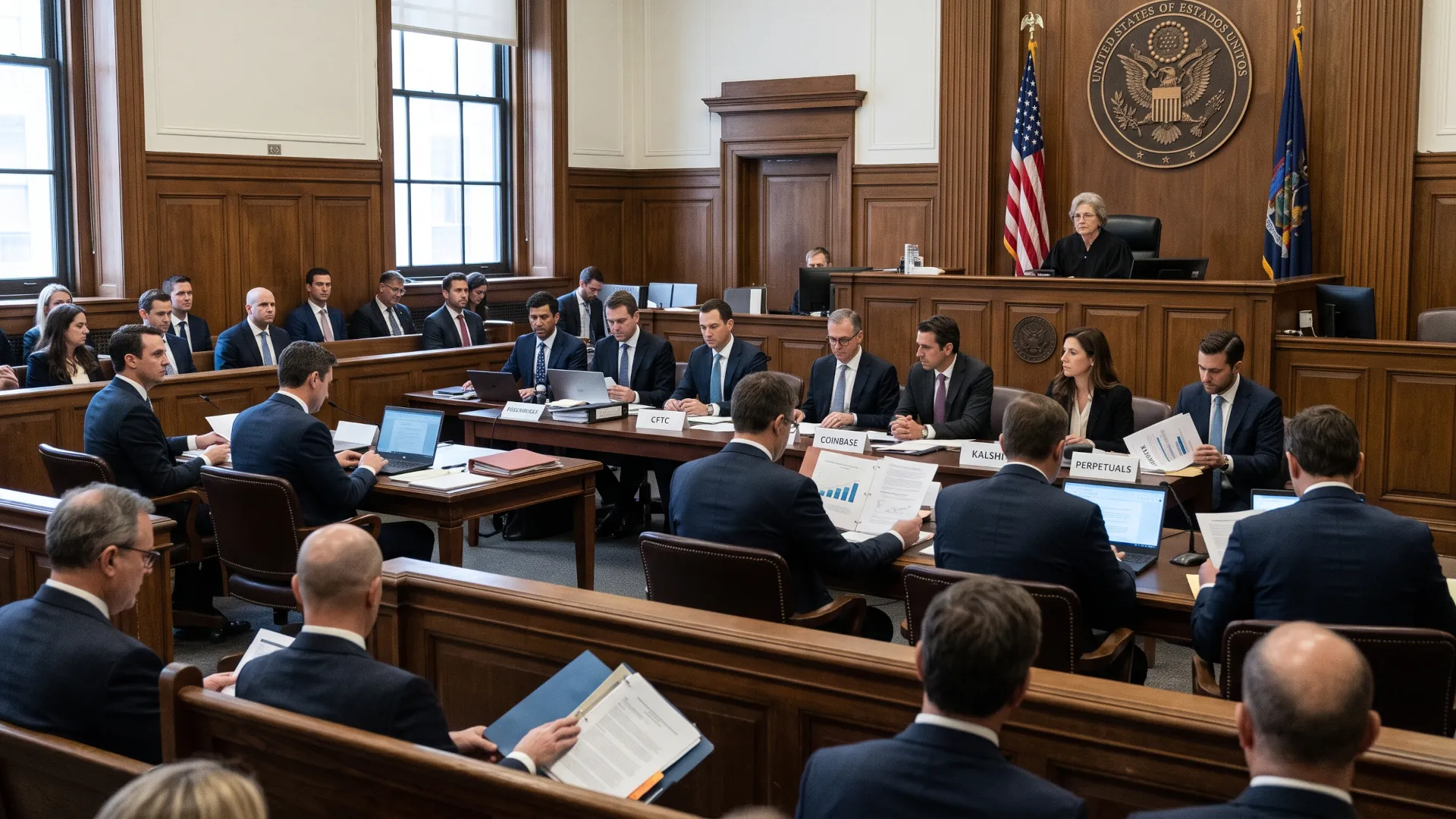
The US Senate Banking Committee yesterday published the full draft of the new Digital Asset Market Clarity Act, the law that reorganizes much of the country's digital asset regulation. The text, pushed by the committee's chairman, Republican senator Tim Scott, sets out new regulatory frameworks for digital assets, stablecoins, tokenization, decentralized finance and blockchain activities within the US financial system.
The proposal redefines part of the SEC's and CFTC's remits and establishes new regulatory categories for certain digital assets, as well as introducing rules on stablecoins, DeFi, NFTs, self-custody and the tokenization of securities.
Tokens become "ancillary assets"
One of the most important changes appears in sections 102 and 103 of the document, where the draft introduces the concept of ancillary assets, defined as tokens whose value depends on entrepreneurial or managerial efforts.
The text establishes a presumption under which a token will be considered an ancillary asset unless the issuer or an intermediary proves to the SEC that it is not. The proposal also states that these tokens will be treated as digital commodities and not as traditional securities for the purposes of the regime set out by the law.
In addition, the draft creates a new regime called Regulation Crypto, which would allow certain companies to raise funds without complying with all the regulatory requirements applicable to traditional listed companies.
According to the text, companies could raise up to 50 million dollars a year for four years or up to 10% of the total value of the ancillary assets in circulation. The maximum aggregate limit would be 200 million dollars. The proposal also allows issuers or intermediaries to certify that the entrepreneurial or managerial efforts have ended, which would eliminate certain disclosure obligations before the SEC.
In practice, the draft seeks to make it easier for crypto companies to issue tokens and raise large amounts of money with fewer regulatory controls than traditional financial markets, while also limiting the SEC's ability to consider these assets as securities and supervise them as if they were company shares. The ancillary assets would thus function as a new legal category for many crypto tokens: digital assets tied to the development of a project or company, but not automatically treated as traditional financial securities under SEC oversight.
Restrictions for insiders and partial recognition of DAOs
Section 104 introduces limits on the public resale of ancillary assets by insiders over twelve-month periods. The aim is to reduce risks of market manipulation, insider trading and mass sales that could affect token prices.
The proposal also clarifies that decentralized governance systems, including DAOs, will not automatically be treated as a single person or group under common control. It also states that certain cybersecurity emergency measures do not necessarily constitute a form of coordinated control over a blockchain network.
This section attempts to address some of the crypto market's main historical criticisms, especially those related to price manipulation, mass sales by insiders and regulatory doubts over who really controls decentralized networks. The draft thus seeks to offer a clearer framework for DAOs and blockchain projects, distinguishing between legitimate security coordination and effective control of a network.
Bitcoin and Ethereum
Section 105 establishes that the SEC may not consider a digital asset a security if a US court has previously determined, by final judgment, that said asset does not constitute a financial security. Although the text does not expressly mention Bitcoin or Ethereum, several provisions could be interpreted as indirect protection for both assets, especially because Bitcoin has for years been treated by US regulators as a commodity and Ethereum has been at the center of multiple regulatory and judicial debates over its legal nature.
In practice, the proposal seeks to limit the SEC's ability to reopen or reinterpret certain legal classifications of digital assets once firm judicial precedents exist, something the industry considers key to reducing regulatory uncertainty around widely adopted cryptocurrencies.
The proposal also requires the SEC to update its rules to allow registrations and books and records systems based on distributed ledger technologies, opening the door to greater integration of blockchain infrastructures into traditional regulatory, administrative and financial processes.
Stablecoins: banks yes, interest no
Title IV of the draft addresses the relationship between banking and digital assets. The proposal amends various US banking laws to clarify that national banks, financial holding companies, state banks and certain credit unions may use digital assets and blockchain technology for activities they are already authorized to carry out, such as payments, lending, custody or trading.
However, section 404 prohibits certain digital asset service providers from paying interest or passive yields on payment stablecoins held by US customers. The text does allow rewards linked to activity or transactions under future joint rules from the SEC, CFTC and Treasury.
Europe's big banks urge the EU to unlock blockchain financial markets.
In addition, section 304 requires the Treasury to produce periodic reports on offshore stablecoins backed by US Treasury bonds and used on a large scale, assessing risks related to illicit financing and links to the US financial system.
DeFi, a specific regulatory framework
Title III introduces specific rules for DeFi protocols and seeks to clarify one of the sector's major regulatory gaps: when a truly decentralized platform assumes legal responsibility for its operations. The proposal defines the cases in which a DeFi protocol loses its decentralized character, focusing on issues such as effective control, discretion over operations or the ability to unilaterally modify how the protocol works.
The text also clarifies that the regulation will not automatically classify validators, nodes, relayers and certain blockchain infrastructure as controlling entities of a protocol, provided that no actor exercises effective unilateral control over the network or system.
In addition, the Treasury will have to develop AML/CFT guidance for certain front ends or web interfaces used to interact with DeFi protocols, seeking to address regulators' growing concerns about money laundering, international sanctions and illicit financing in decentralized applications. The proposal also creates a voluntary cybersecurity program managed by NIST for DeFi protocols, including auditing standards, transparency and security best practices.
In practice, the draft attempts to resolve one of DeFi's main regulatory problems: the difficulty of determining who really controls these protocols and who should assume legal responsibilities, without at the same time blocking the technical operation of decentralized networks or automatically criminalizing developers or blockchain infrastructures.
Protection for blockchain developers
Section 601 establishes legal protections for software developers, validators and participants in decentralized networks when their activities are limited to technological development, computational validation of transactions or maintenance of blockchain infrastructure.
The aim is to prevent authorities from treating purely technical actors as traditional financial service operators simply for contributing to the operation of a decentralized network.
The law also seeks to prevent authorities from automatically classifying certain developers, node operators,walletsproviders or blockchain infrastructures as money transmitters ( money transmitters ) under the legislation
In practice, the proposal attempts to avoid cases such as those of developers prosecuted or even imprisoned for third parties' illicit use of open source software they created, a debate that has marked recent years around privacy tools and decentralized protocols in the crypto ecosystem.
Tokenization and regulatory sandbox
Section 505 specifically addresses the tokenization of financial securities, one of the areas where Wall Street and the blockchain industry are converging fastest. The text makes clear that the regulation will continue to treat tokenized securities, such as shares, bonds or funds issued on blockchain, as securities , even when they use blockchain infrastructure or digital formats.
In addition, the proposal requires the SEC to study issues related to custody, regulatory coordination, investor protection and the cross-border treatment of these tokenized assets, seeking to prepare a legal framework for the future integration of traditional financial markets and blockchain technology.
The law also creates a micro-innovation sandbox between the SEC and the CFTC to allow controlled regulatory testing of new financial products and blockchain technologies. In practice, this mechanism would function as a supervised experimental environment where companies and developers could test financial innovations without having to comply with all traditional regulatory requirements from the outset.
Protection of self-custody and private wallets
Section 605, called the Keep Your Coins Act, establishes that federal agencies may not prohibit, restrict or prevent the use of self-custodied wallets to store digital assets, thus reinforcing users' right to maintain direct control over their cryptocurrencies without the need for intermediaries.
At the same time, the text preserves the existing powers of the Treasury, the SEC, the CFTC and other federal agencies regarding sanctions, money laundering, terrorist financing and regulatory compliance. The proposal also creates a safe harbor for NFTs. In practical terms, this means that non-fungible tokens would fall outside securities laws and SEC oversight unless they explicitly function as investment contracts or financial products.
The text also orders studies on mixers and tumblers used in illicit activities, including analysis of money laundering risks, banking exposure and international regulatory approaches.
On the other hand, section 205 creates a federal framework for cryptocurrency ATMs, incorporating anti-fraud measures, transaction limits for new customers and customer service obligations for the operators of these machines.
SEC-CFTC coordination and entry into force
The draft creates a joint advisory committee between the SEC and the CFTC to coordinate issues related to digital assets, including oversight, enforcement and information sharing between the two regulators.
The text also grants federal agencies a general one-year deadline to develop the necessary rules to implement the law through rulemakingprocesses. According to the text, general entry into force would occur 360 days after the law's approval, although certain provisions would not apply until the regulators publish the corresponding final rules.