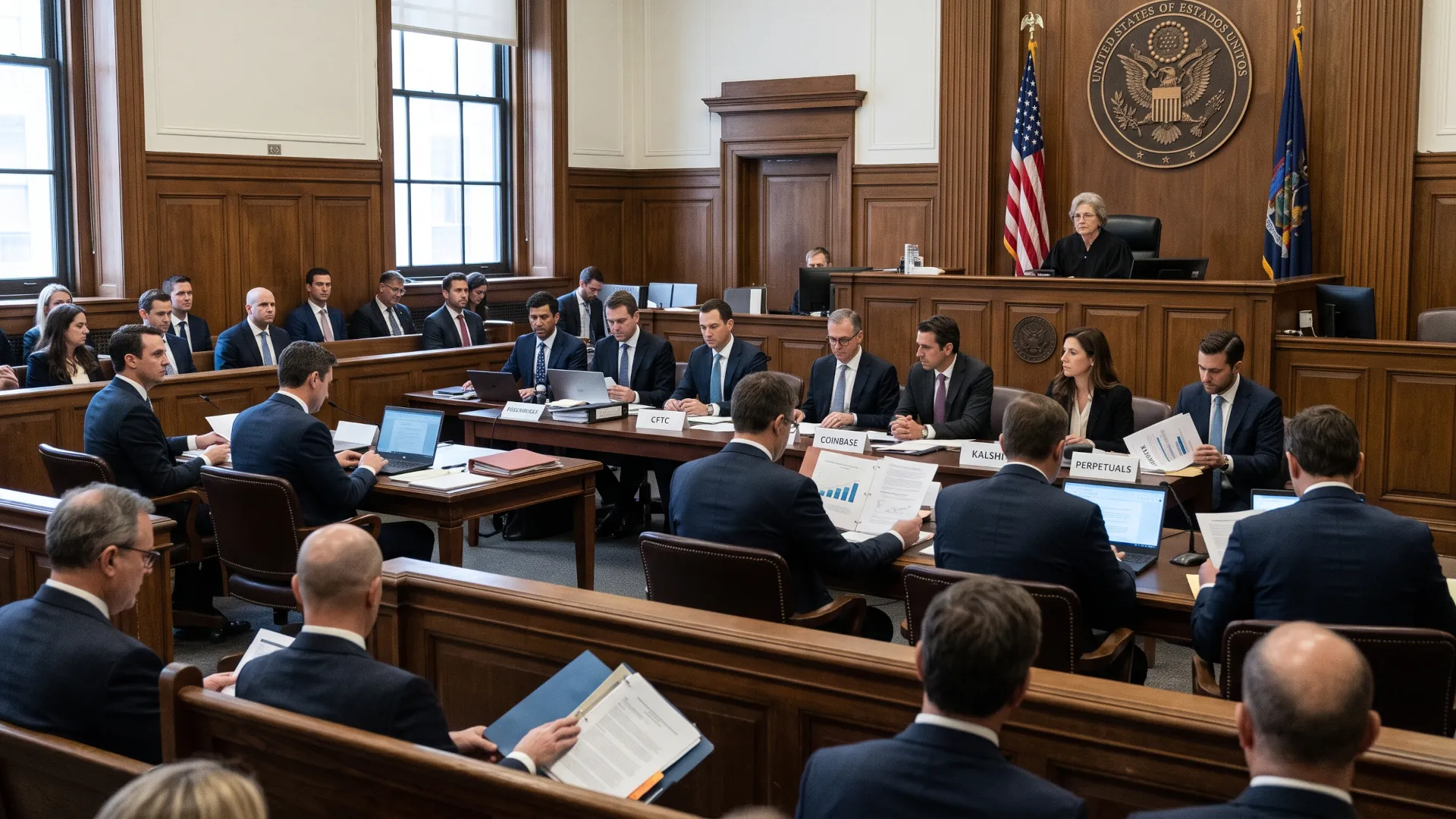
The blocking of Clarity, the major US law to regulate the crypto industry, opens a new phase for the sector in the US. Brian Armstrong calls on the SEC and CFTC to act within the powers they already hold; Stani Kulechov bets on growing DeFi until regulation has to adapt; CZ finds an upside in stablecoin rewards; Robert Leshner warns of everything left unresolved and Carlos Domingo looks toward securities tokenization. Meanwhile, bitcoin trades around 75,900 dollars and the market loses 1.8%.
The failure of the CLARITY law in the US
The US Senate yesterday, September 15, failed to reach the 60 votes needed to advance the CLARITY Act, the legislation with which Washington intended to build a federal framework for the digital asset market and clarify, among other issues, the regulatory boundaries between the Securities and Exchange Commission (SEC) and the Commodity Futures Trading Commission (CFTC).
The main obstacle to its non-approval had to do with ethics. Democrats considered insufficient the restrictions aimed at preventing President Donald Trump and other senior officials from benefiting from cryptocurrency-related businesses. The latest version had incorporated new safeguards and much of the proposal negotiated by Senators Thom Tillis and Ruben Gallego, including greater scope for state attorneys general to act. Republicans say that during the negotiation they accepted 126 substantive changes requested by Democrats.
The other major front was stablecoins. Banks fear that the rewards offered on these assets will compete with traditional deposits and trigger outflows, especially from community banks. The final text gave the Treasury new powers to intervene if those reward programs caused deposit flight.
Let the SEC and CFTC use their powers
The outcome leaves unresolved precisely the issues CLARITY sought to sort out: which assets fall under the SEC, which under the CFTC, what protection investors and developers will have and under what rules US companies will be able to operate.
But the industry's reaction shows that the sector does not seem willing to sit idly by waiting for another vote. Brian Armstrong, CEO of Coinbase, was especially explicit on his X account, stating that Congress can no longer be waited on. His proposal is for the SEC and CFTC to use the powers they already hold to create clear rules.
In March, the SEC published a joint interpretation with the CFTC that classifies different types of cryptoassets and clarifies issues related to investment contracts, staking, airdrops and protocol mining. Paul Atkins, SEC chairman, described the move at the time as a bridge while Congress worked on permanent legislation.
The SEC also presented Regulation Crypto Assets in August, a proposal that creates specific exemptions for certain cryptoasset transactions and a safe harbor to establish when an investment contract ceases to exist. The paradox is that Atkins himself acknowledges the limits of this solution. When presenting the proposal he stated that an act of Congress remains indispensable to achieve sufficiently durable rules and prevent a future SEC leadership from dismantling them.
The difference is that the SEC and CFTC can move forward, but Congress is still needed to consolidate the framework in the long term.
DeFi proposes not even waiting for regulators
Stani Kulechov, founder of Aave, proposes a different strategy. His response to the failure of CLARITY is that DeFi must win through adoption, building products used by millions of people and becoming too important to be ignored. He sums it up as the Uber path. His approach is that instead of waiting for rules to exist, grow until regulators have to confront an economic reality that is already consolidated.
CZ, founder of Binance, found a positive consequence in the failure. Stablecoins can continue to offer certain yield mechanisms. It is precisely one of the issues that pitted the crypto industry against banking during the negotiation, he said.
Armstrong also referred to this issue. He recalled that GENIUS already regulates payment stablecoins and asserted that some of the concessions accepted by the industry during the CLARITY negotiation had been "hard to swallow." He even went so far as to say that the failure of the vote may be for the best. This means the sector loses the legal certainty it sought with CLARITY, but it also avoids the restrictions it was willing to accept to achieve it.
Tokenization, the SEC's other path
Carlos Domingo, founder and CEO of Securitize, hopes that if CLARITY does not advance, the SEC's innovation exemption for securities tokenization will gain prominence. This market poses a different regulatory problem. When a stock, a bond or another traditional security is tokenized, the main discussion is no longer whether the asset constitutes a security. The question is how to bring it onto blockchain while respecting securities laws. That is why tokenization can advance along a different track from CLARITY and one much more directly tied to the SEC's powers.
Robert Leshner, founder of Compound, offers the opposite reading. He considers that the failure leaves everyone losing, since the boundaries between tokens and securities remain insufficiently clarified, the new protections planned for investors and developers are not arriving and conflicts around stablecoins and public ethics remain open.
From a major law to piecemeal regulation
The United States intended to pass a major horizontal piece of legislation to organize the digital asset market, but it may now end up advancing piece by piece. Stablecoins already have their own federal framework. The SEC and CFTC are coordinating their interpretations. The SEC is developing Regulation Crypto Assets. Tokenization can advance under securities laws. DeFi will keep growing while the obligations that correspond to protocols, interfaces and developers are debated.
CLARITY sought to bring much of that ecosystem together under more coherent rules, but its blocking may accelerate a regulatory mosaic built from the agencies and by market segments.
Bitcoin at 75,900 dollars
On the market side, the legislative setback shows today a market in the red. According to the CoinGecko snapshot consulted by Observatorio Blockchain at 13:10 on September 16, bitcoin was trading at 75,869 dollars, 1.4% less in 24 hours and 3.9% below its price of a week ago.
Ethereum stood at 2,404 dollars, with a daily drop of 2.9%. XRP recorded a much larger decline, of 8.2%, while Solana lost 3.7% and BNB 1%. Total market capitalization was around 2.676 trillion dollars, with a drop of 1.8%, and volume traded during the last 24 hours exceeded 105 billion dollars.
Listed companies linked to the sector suffered a heavier punishment after the vote. Coinbase and Circle fell by around 9%.