Vitalik Buterin explains why Ethereum will be much more than a blockchain
Vitalik Buterin explains that Ethereum will be more than a blockchain: it will distribute computations and allow results to be verified with cryptography.
Vitalik Buterin explains why Ethereum will be much more than a blockchain
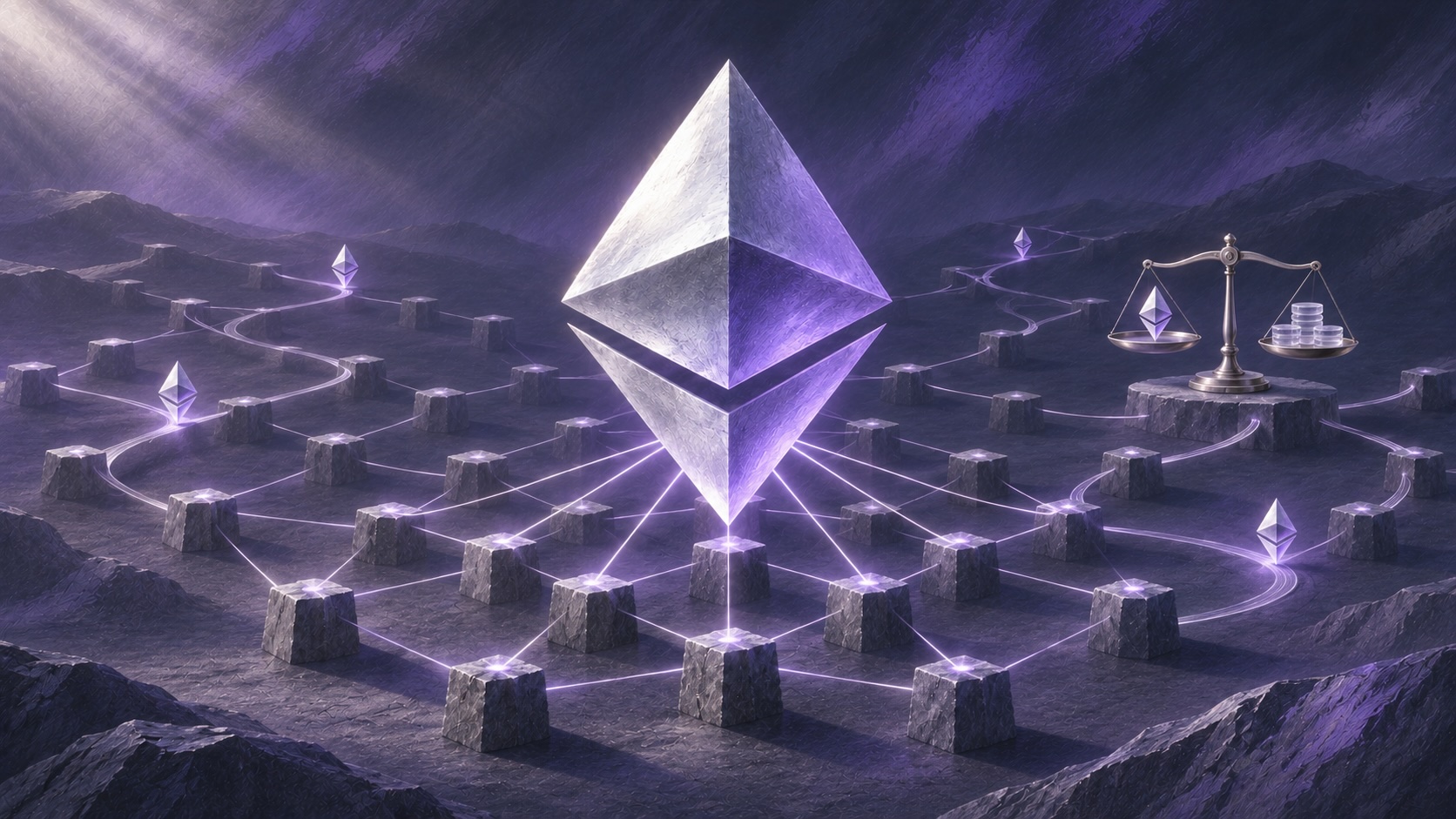
Vitalik Buterin argues that Ethereum will be more than a blockchain because, to fulfill the old idea of a world computer, it will have to distribute a good part of the work and allow anyone to verify the results through cryptographic proofs. In an article circulated yesterday, he proposes that nodes stop depending so much on downloading the data and repeating the computations of every block. In the architecture he describes, different participants would process information in parallel and present proofs that they have followed the rules. Nodes would verify those proofs and check that the necessary data is available.
The blockchain would keep its role as a shared ledger, but part of the work would be done off-chain. Buterin calls this evolution a cryptographic world computer. The difference matters because verifying an operation is usually easier than executing it again. If that model works at scale, more participants could check Ethereum's activity with less demanding equipment, while applications process more work without loading everything onto every node. Buterin links that possibility to technologies such as zero-knowledge proofs and PeerDAS, which allows data availability to be checked through sampling.
Applications built differently
The change would also affect those who build on Ethereum. Buterin expects an application to become more costly if it concentrates all computation in a sequence that must be executed step by step. By contrast, it could make better use of the network if it organizes independent tasks to process them in parallel and groups results before adding them to a block.
His proposal also includes mechanisms to strengthen transaction inclusion against censorship and to expand privacy. But Ethereum's cofounder acknowledges difficulties such as managing large amounts of data about the state of the network. He therefore does not present those capabilities as already solved nor set a date when all of them will be available.
Buterin places the moment when this transformation would come to dominate Ethereum's evolution after Hegota, the fork planned for 2027. If his proposal comes to pass, Ethereum would no longer work as a machine in which everyone does the same work. It would be a network that distributes tasks and allows cryptographic verification of what others have done.
Covadonga Fernández is founder and director of the newspaper Observatorio Blockchain. She has worked with various companies developing crypto/blockchain projects, such as Singular DTV, a Switzerland-based platform and a pioneer in decentralizing the film industry, which led her to take part in the 2019 San Sebastián Film Festival. That same year she also took part in the Bern International Film Innovation Festival (Switzerland), with a presentation on linguistic plurality in blockchain. In 2022 she took part in the Acción Cultural Española edition with an article on Metaverse and Culture. In 2017 she wrote the chapter on Blockchain and Journalism in the book: «Blockchain: The Industrial Revolution of the Internet», published by Grupo Planeta. A year earlier, in 2016, she created the first Meetup on Blockchain and Journalism. That same year she also created the Blockchain Media site, to track the decentralization process of the cultural and creative industries. In 2020 she co-organized an event on how blockchain could help the cultural and creative industries, where the money received from sponsors was tokenized and speakers received payment in NFT format. Before founding Blockchain Media and Observatorio Blockchain, Covadonga worked at Grupo Z and the newspaper ABC; she was communications director of the Madrid Chamber of Commerce, a journalism professor at Universidad Carlos III de Madrid and chair of Telemadrid. Winner in the Outreach category at the 2024 Financial Innovation Awards and honored by Alastria at the 2025 Blockchain Awards