Stani Kulechov, founder and CEO of Aave, announced a few hours ago that he will allocate 5,000 ETH from his personal wealth, about 12 million dollars, to the recovery fund DeFi United. This initiative, launched yesterday, seeks to mitigate the damage from the year's largest exploit in the DeFi ecosystem: the 293 million dollar hack suffered by KelpDAO on April 18.
Although Aave was not the direct target of the attack, it did end up one of the hardest hit. The attacker exploited a vulnerability in the LayerZero bridge used by KelpDAO to mint 116,500 unbacked rsETH, about 18% of the total supply. These tokens have been deposited as collateral in Aave and are being used to request loans worth about 190 million dollars in ETH and other assets.
Circle takes the reins of AAVE to rescue USDC liquidity
When it was discovered that the rsETH lacked real backing, an estimated 123 to 230 million dollars in bad debt was generated, according to an internal report from the protocol. As an emergency measure, Aave immediately froze the rsETH markets in its V3 and V4 versions to prevent further deterioration. The impact was immediate: panic spread among users, triggering massive liquidity withdrawals.
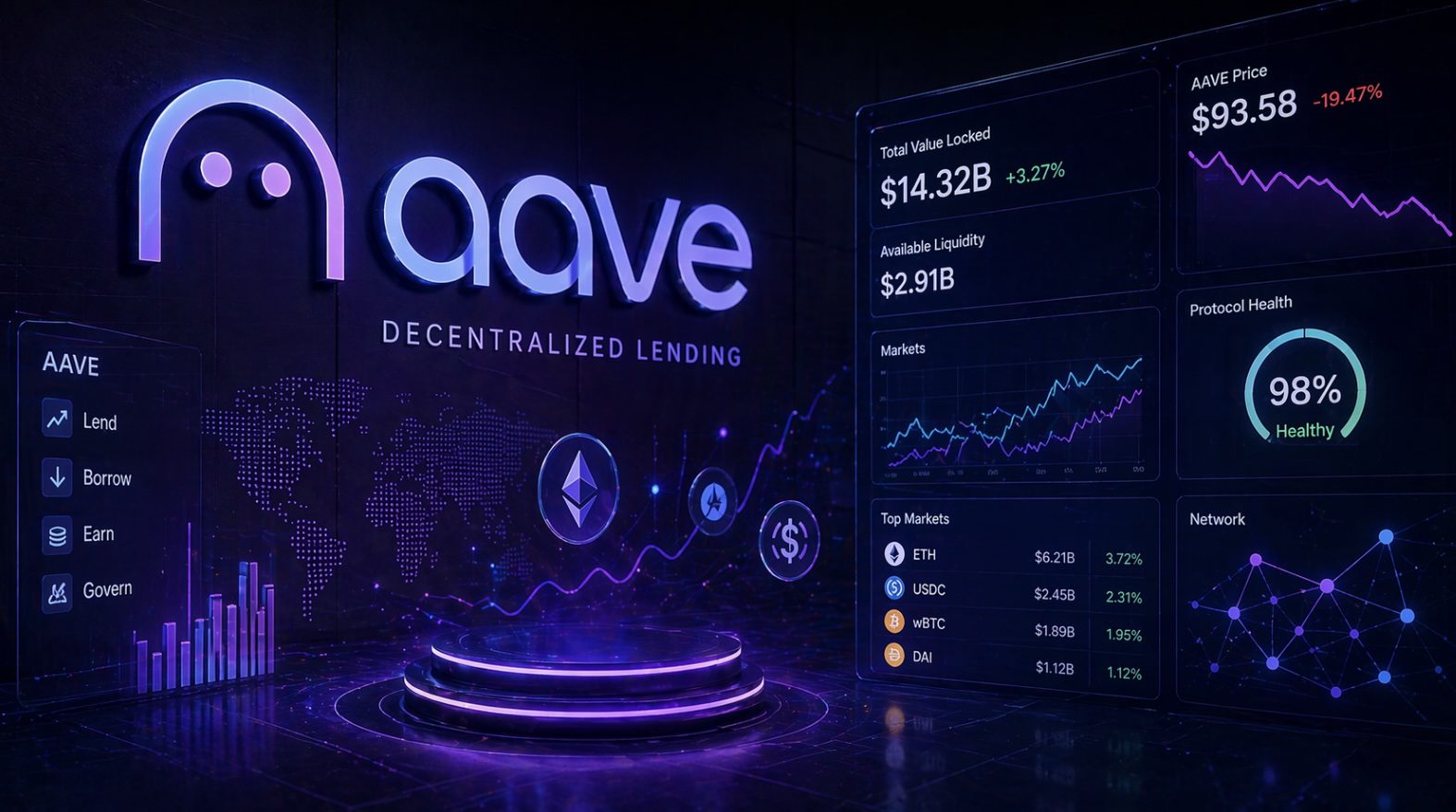
Aave falls 19.47% in a week
According to DeFiLlama data, Aave lost between 8,000 and 17,000 million dollars in total value locked (TVL) in a matter of days, with a drop in deposits of more than 15,000 million. Utilization of some ETH pools reached 100%, hindering withdrawals and creating a temporary liquidity crisis.
The blow was also reflected in the market. At the close of this edition, the AAVE token trades at 93.58 dollars, after falling 19.47% in the last week. The weekly chart shows a sharp plunge: from a high near 117 dollars on April 18, the price fell to the 88-90 dollar range between April 20 and 21, before registering a slight recovery. Market capitalization is around 1,440 million dollars, while the protocol's TVL currently stands at 14,323 million, still far from pre-incident levels.
Despite the scale of the attack, the DeFi ecosystem responded quickly and in a coordinated way. Under the DeFi United umbrella, more than 150 million dollars have already been committed between contributions and credit lines. In addition to Kulechov's 5,000 ETH, contributions include those of Lido, with 2,500 stETH; Mantle, which has proposed a credit line of up to 30,000 ETH; the freezing of 30,700 ETH in Arbitrum; BGD Labs, with 250 ETH; as well as various individual donations.
112,200 tokens
According to community trackers, the initiative already covers more than 40% of the estimated rsETH hole, around 112,200 tokens, equivalent to about 118,000 ETH. Several analysts agree that this joint effort, beyond absorbing the bad debt and recapitalizing rsETH's backing, reflects a degree of coordination and maturity unusual in the decentralized finance ecosystem.