Linux servers belonging to government entities and State-linked infrastructure have been targeted by an espionage campaign that ran at least from October 2025 to April 2026. Palo Alto Networks Unit 42 tracks it under the name CL-UNK-1211, where the first part indicates that it is a group with no known name and the second that its motivation is unclear. What is striking is not the objective, but how the attacker wrote.
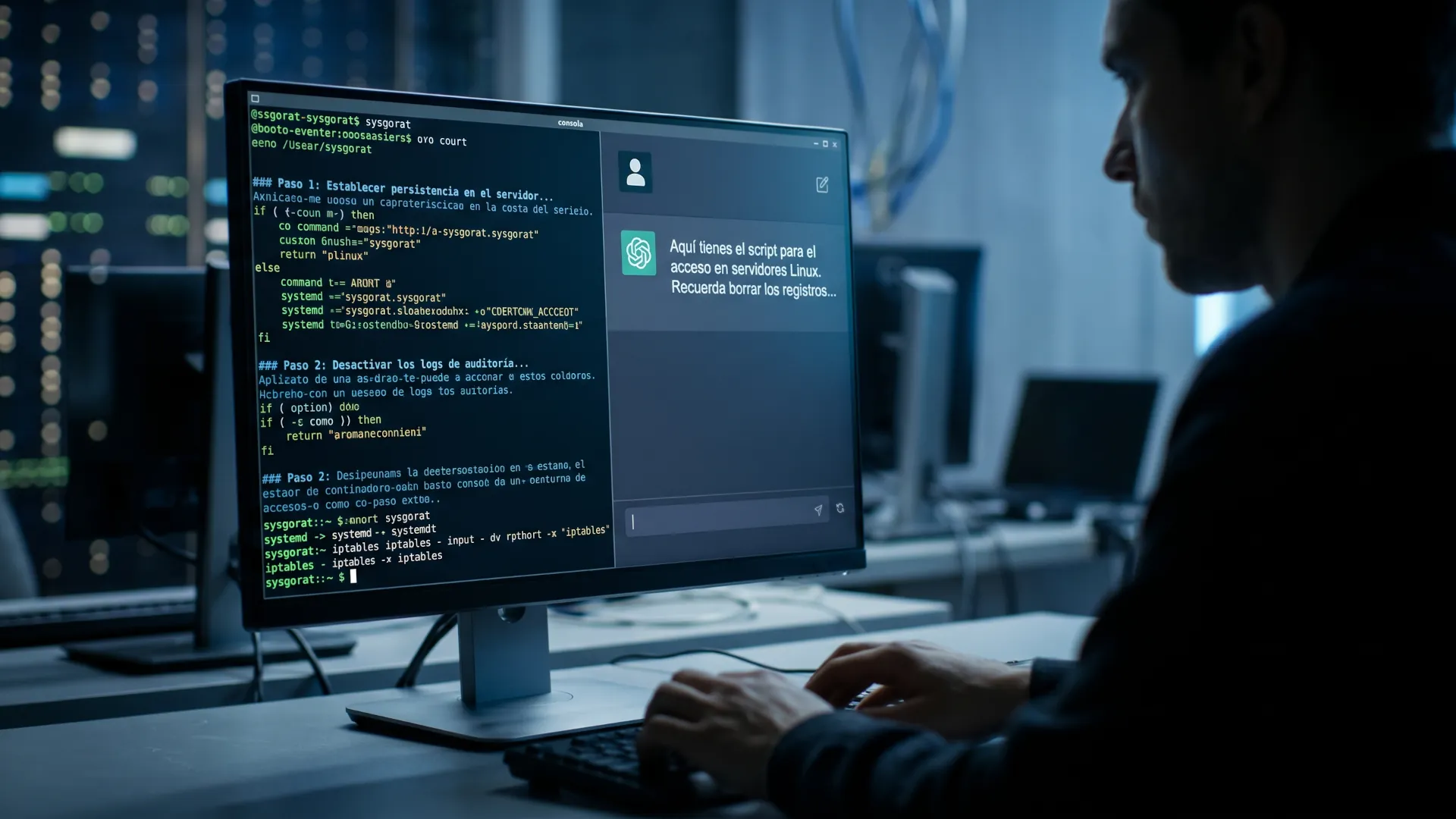
The scripts he used to stay inside carried reasoning notes step by step, the kind a conversational assistant produces when explaining its own code. They were not documentation comments for other programmers, they were explanations addressed to whoever had given the initial instruction. That detail, more than any technical indicator, points to part of the work having been done by a language model.
The campaign combines the old and the new without concealment. On the one hand, there are open source tools, cross-platform backdoors and webshells in PHP; on the other, a layer of automatic generation that speeds up the production of scripts and reduces manual effort. The result is a classic espionage attack with a development cadence that does not match that of a small human team.
A playbook disguised as an audit
The group followed a fairly complete script. It carried out extensive reconnaissance, maintained persistent access and devoted itself to dumping sensitive databases. It also tried to exfiltrate institutional mailboxes, a step that usually has an indirect objective: email opens the associated social media accounts and reaches contacts who are not on the compromised server.
One of the coldest details is the camouflage. The attackers planted markers that mimic those left by a red team during a legitimate security test. The idea is simple: if someone finds those traces, the first hypothesis will be that an audit is underway and not an intrusion. Buying time inside a network is sometimes more valuable than any tool.
They also tried to disable endpoint protections and delete system logs. These are two actions that, together, describe an adversary who knows that detection comes through the logs and who prefers to eliminate the evidence rather than hide it. The combination of both techniques makes later reconstruction of the incident much more difficult.
When the code gives its author away
The most interesting finding of the analysis is linguistic. Several scripts included conversational notes explaining the logic of the code, something that does not appear in standard technical documentation. An experienced programmer comments on the reason for a decision; they do not describe step by step what they are going to do next as if speaking to someone.
That pattern is consistent with code copied from a model's output or generated by an automated agent that reasons out loud. On its own it does not prove that the attacker used AI, but it adds up: the structure is coherent, the style is explanatory and the notes add nothing for anyone who already understands the script.
The practical implication is that attribution tools based on programming style lose reliability. If several groups use the same models to write their utilities, the code looks alike even when the authors are different. The useful fingerprint stops being in how it is written and moves to what is done and against whom.
The campaign recalls something the sector rarely repeats. Linux servers are not immune; they have simply had less targeted malware because other systems occupied the desktop. When the target is government infrastructure, the server's operating system matters least: what matters is that there are exposed services, weak credentials and administration panels within reach.
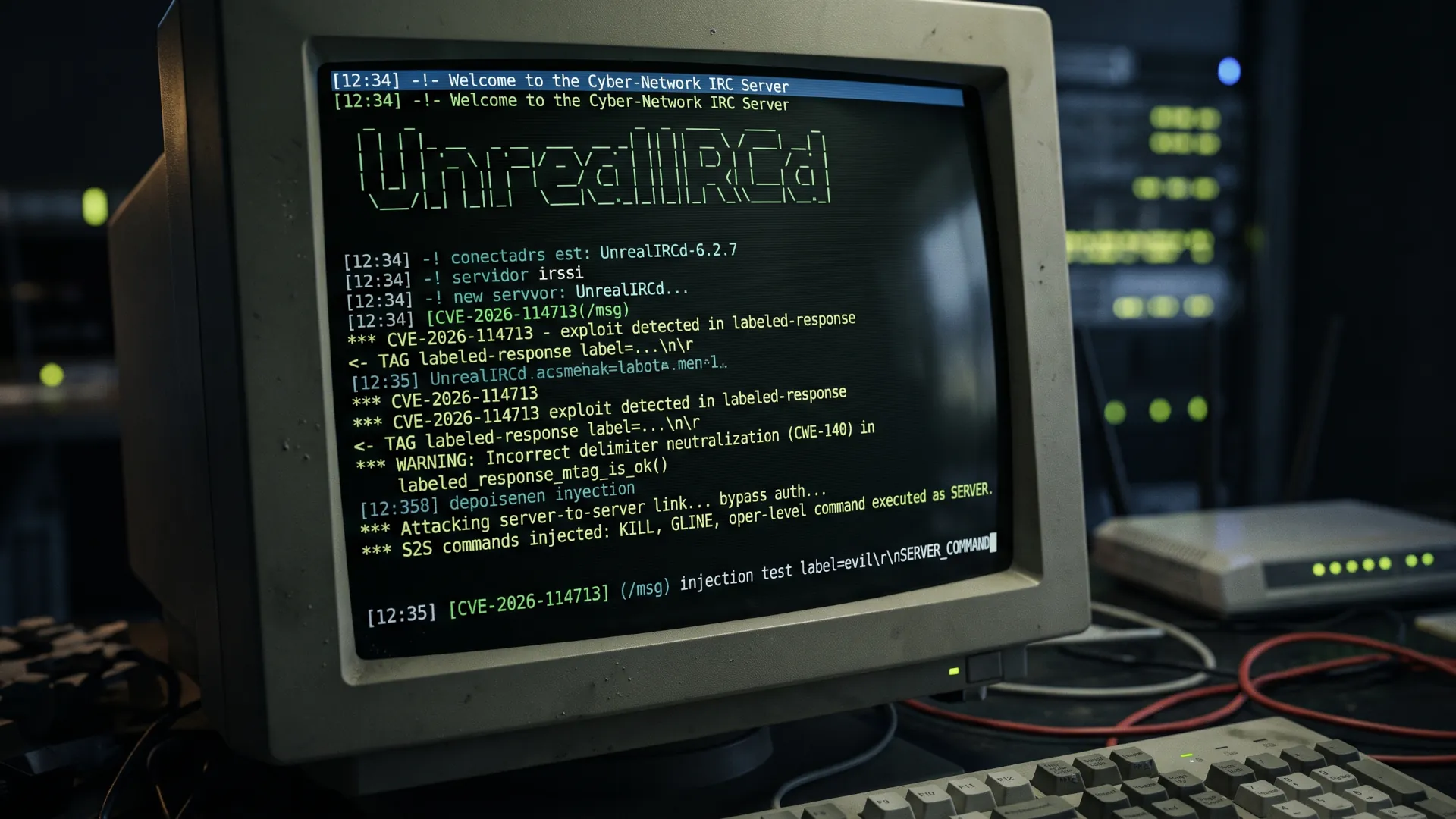
The CVE-2026-98432 in the kernel, which affected Ubuntu and RHEL with a score of 9.8, showed the same month that the Linux ecosystem also accumulates critical flaws and that distributions take their time patching them. The difference is that on Linux remote exploitation of the kernel is exceptional, whereas a webshell in a misconfigured PHP remains an everyday occurrence.
Webshells are the least glamorous part and the most effective. A file of a few lines in a directory with generous permissions gives persistent access without exploits and without suspicious binaries. Against that, file integrity monitoring and reviewing what is uploaded to production are worth more than any antivirus.
What gives away a script written by a model
An analyst reviewing malicious code looks for author patterns. For years, those patterns came from each group's school: variable names, ways of obfuscating, formatting quirks. The scripts in this campaign break that logic because they do not write for a human reader; they write to justify a decision to whoever gave the order.
That conversational style leaves useful marks. Comments that describe what the code is going to do before it does it, redundant explanations of obvious functions and a structure that mimics a tutorial. In a persistence file for a compromised server, that tone is as out of place as a signature at the foot of an exploit.
Detection cannot depend only on reading scripts, because the script changes with every wave. It is worth cross-referencing signals: processes that do not match the schedule, new scheduled tasks, PHP files with recent dates in static directories and outbound connections to domains registered weeks ago. Each one on its own can be explained; together they tell a story.
What to look at in your own infrastructure
The first review is of inventory. Which Linux servers there are, who administers each one, which services listen on the public interface and which accounts have access. The second is of behavior: processes that appear outside working hours, outbound connections to young domains, scheduled tasks that no one remembers creating and PHP files with recent dates in directories that should be frozen.
It is also worth reviewing corporate mailboxes as a risk surface and not only as a work tool. If access to email allows accounts on social networks to be recovered, the mailbox is a master key. Multi-factor authentication with physical keys and the separation of personal and work accounts reduce that path.
Finally, logging is useless if the attacker can delete it. Sending logs to an external system with write-only permissions is a cheap and boring measure that ruins the strategy described in this case. Without it, the subsequent investigation is left to conjecture about what may have happened.
Attribution becomes blurred
CL-UNK-1211 has a name because no one knows who is behind it, not even with what exact intention. That ambiguity is going to become increasingly common. When the code is written by a model from instructions, the style gives away the model and not the group, and the tools that for years served to attribute campaigns lose much of their value.
For the organizations attacked, the question of the author is secondary. What determines the damage is how long the intruder was inside and what they took. In a seven-month campaign against government infrastructure, that time is measured in decisions that can no longer be reversed.