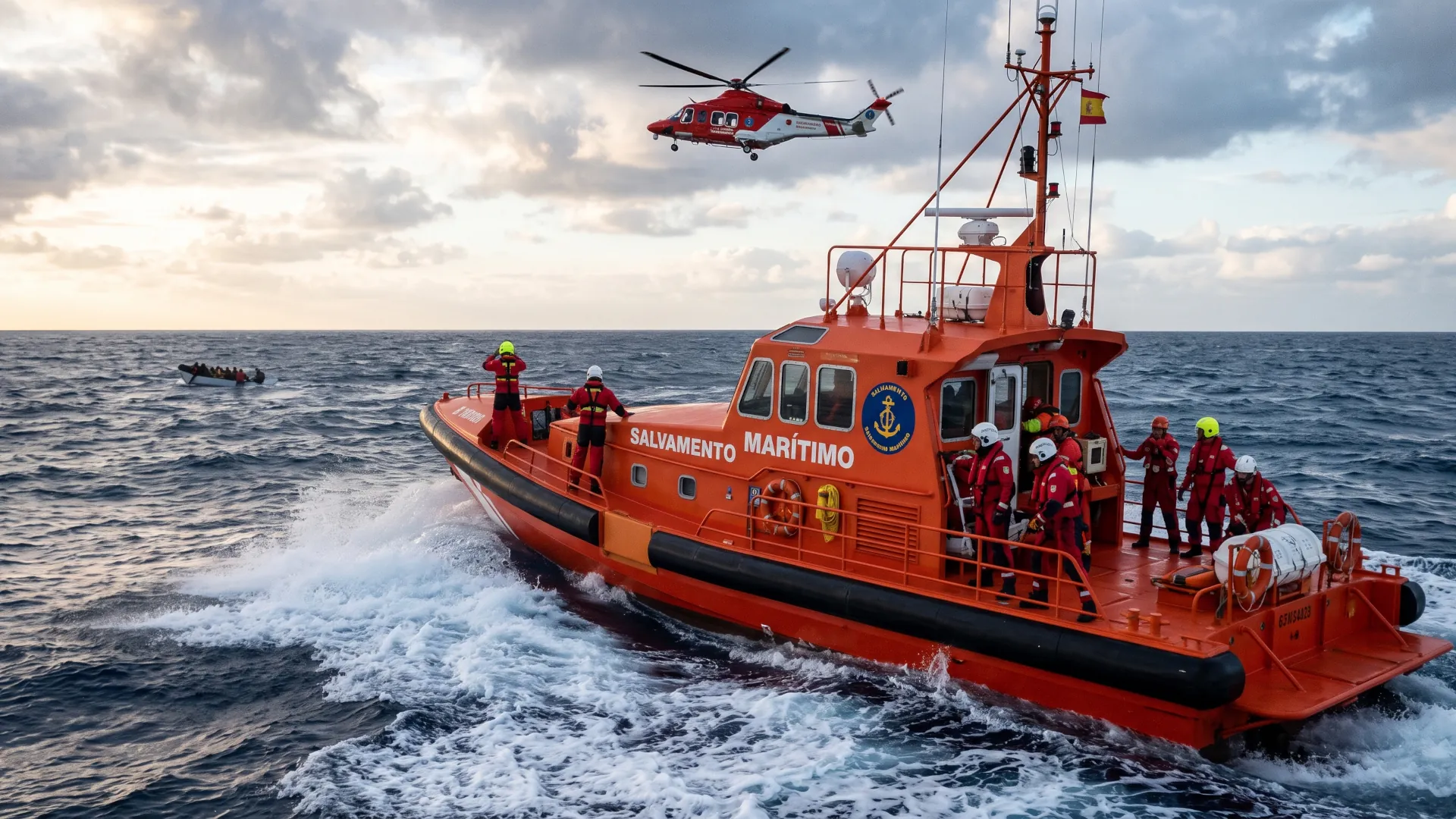
According to elDiario.es, citing confirmation from Salvamento Marítimo, a cyberattack forced the disconnection of SIGO, SIMAN and Navision, including the one that centralizes the information on emergencies detected by the rescue centers, while the Canary Islands coast was experiencing one of the most intense arrivals of vessels of the year.
The confirmation of the cyberattack by Salvamento Marítimo acknowledges the attack and describes the containment and recovery measures, as well as a strengthening of security.
What is at stake is not the convenience of an office. It is a public infrastructure that decides which vessel a tugboat is sent to and with what priority, on a coast where every hour counts. The fact that the service held up does not make it minor: it was sustained by the contingency plan. And a plan that works under pressure is the only test that truly counts, because the rest is documents kept in a folder.
What was shut down and what kept working?
The three affected applications are not the same. SIGO is the administrative brain of emergencies: it receives alerts, sorts them and distributes them among centers. SIMAN lives in maintenance, an area that in a service with vessels and aircraft is critical in the medium term and dispensable for a few hours. Navision belongs to the administrative world, the easiest to suspend without immediate consequences.
The sequence described by the facts fits a standard protocol. Anomalous activity is detected, what is affected is isolated to prevent propagation and it is recovered in order of criticality. What stands out is the timing: it coincided with daily operations in the Canary Islands, where the agency coordinates its own resources, those of the Guardia Civil and those of Cruz Roja on the same board.
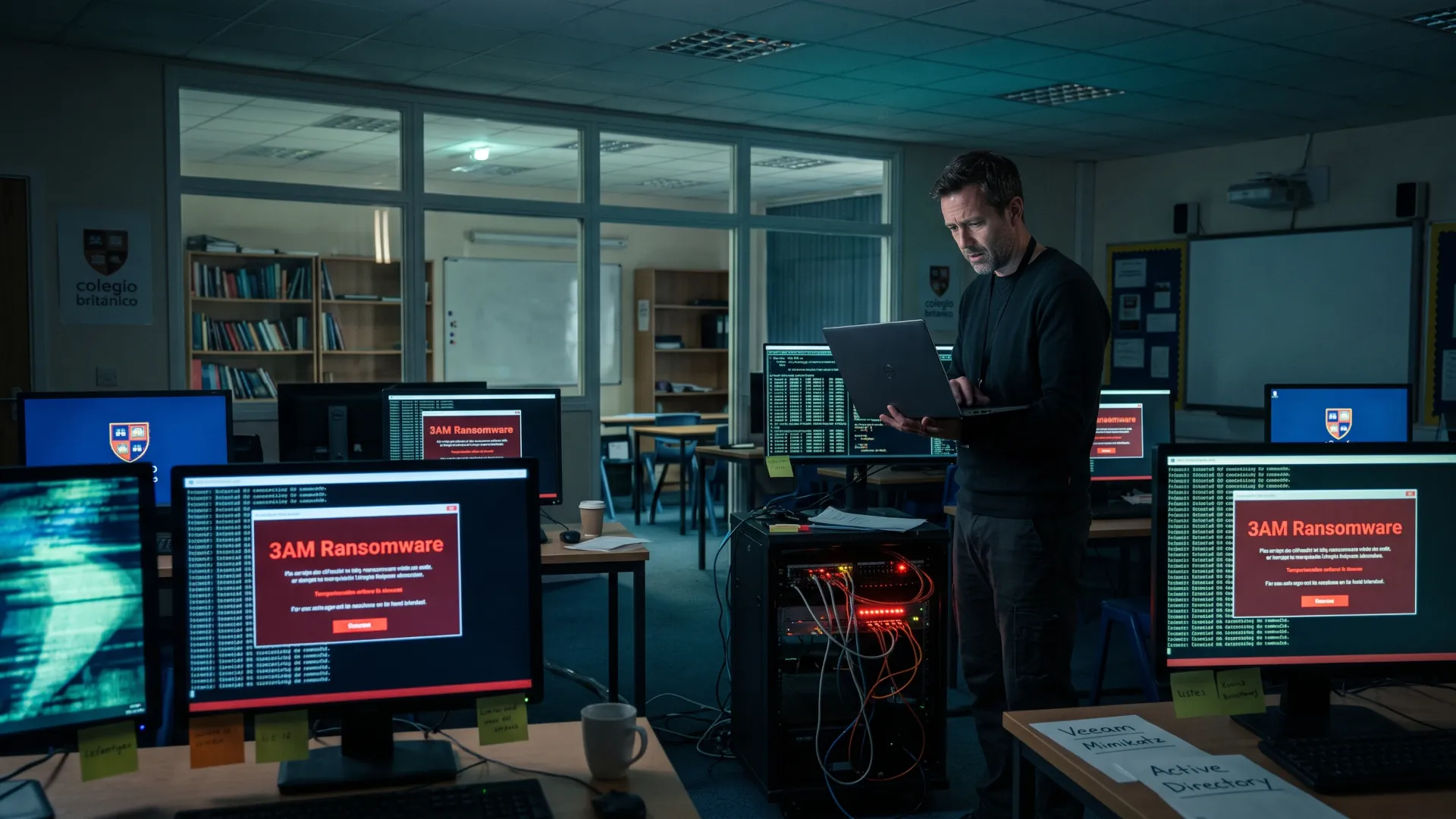
The entity has not detailed the entry vector or the scope of the intrusion, and without that data any attribution is speculation. There is also no public confirmation of information theft. In incidents like this, the difference between ransomware that encrypts files and a silent access that copies data takes weeks to clarify, and sometimes it never is.
The bill for administrative dependency
There is a pattern that repeats across European administrations and that this case illustrates well. The systems that sustain critical services are usually legacy management applications, with years of layers, integrations and patches. Their value is not in the technology, it is in the fact that they contain the information that makes daily operations work.
That kind of software was rarely designed with an adversary in mind. It was designed so that one official could log an alert and another could see it. When the attacker gets in, they do not find a fortress: they find a flat network with traveling credentials, shared printers and a network folder where things have been stored for years.
The other half of the problem is segmentation. If the emergency application shares a network with the administrative system, shutting down one part forces the other to be shut down. Incidents in physical infrastructure, such as the attack that left 115 European supermarkets without refrigeration, show the same lesson from the other side: what falls is not the attacked system, it is the process that depended on it.
A rescue without brakes
The continuity of a service like this does not depend on the application, it depends on there being a procedure for when the application is not there. In maritime rescue that procedure is written with radio, telephone and human coordination, and it is rehearsed because the sea does not wait for a server to be restored.
The fact that the agency confirmed the activation of containment and recovery measures suggests that the plan existed and was executed. What cannot be assessed from outside is how much it cost: how many hours of service were spent on manual coordination calls, how much data was recorded on paper and how much was lost along the way.
That invisible cost is the one that should enter investment decisions. A service that withstands an attack without interrupting operations is not a service that was not attacked, it is one that paid for the attack with hours of work and with accumulated risk. The chain of failures that compromised thousands of corporate devices leaves the same trace: the visible incident lasts days, the security debt that allowed it, for years.
The uncomfortable context more than the attack
Any assessment of the incident has to mention the setting. The weekend coincided with a massive arrival of cayucos and pateras to the islands, with coordination centers at the limit of their capacity. An attack at that moment is not just a computer problem: it is a stress test of the State's capacity to respond to two emergencies at once.
It is also worth resisting the temptation to turn it into a headline about cyberwar. Without public attribution and without technical data, the honest thing is to treat it as a serious availability incident in a critical service, with an unknown origin and with an operational response that worked. Hypotheses about state actors or criminal groups are just that, hypotheses, and most incidents of this type in administrations end up being opportunism with known tools.
What can be stated is that the Spanish public sector has been accumulating warning signs for months. Legacy applications, multiple suppliers, security budgets that compete with current spending and an exposure surface that grows every time a new system is connected to the old ones.
What needs reviewing: inventory and drills
There is a question that incident reports almost never answer and that this case leaves on the table. How many hours of manual work did it cost to keep the service running while the applications were down? That figure does not appear in any press release, but it is the one that decides whether the continuity plan was real or a folder with signatures.
The second question is one of design. If three applications of the same agency fall at once, the cause may be the attack, but the breadth is decided by the architecture. Separating networks, limiting credentials and isolating the administrative from the operational costs money and goes unnoticed when everything works, which is exactly why it gets postponed.
The missing drill
The first review is of inventory: which applications contain critical information, which networks they share with others and which can be shut down without stopping the service. The second is of credentials, because most incidents with real impact begin with a legitimate access that is poorly protected and not with an exotic vulnerability.
The third is of rehearsal. Contingency plans that are not tested under conditions similar to the real ones are not plans, they are documents. An emergency service should be able to answer an uncomfortable question at any moment: if these three applications disappear tomorrow, how many hours can we hold out and with what procedure?
Salvamento Marítimo already knows the answer to that question in its practical version. What remains pending is for the rest of the administration to know it before an attack teaches it to them.