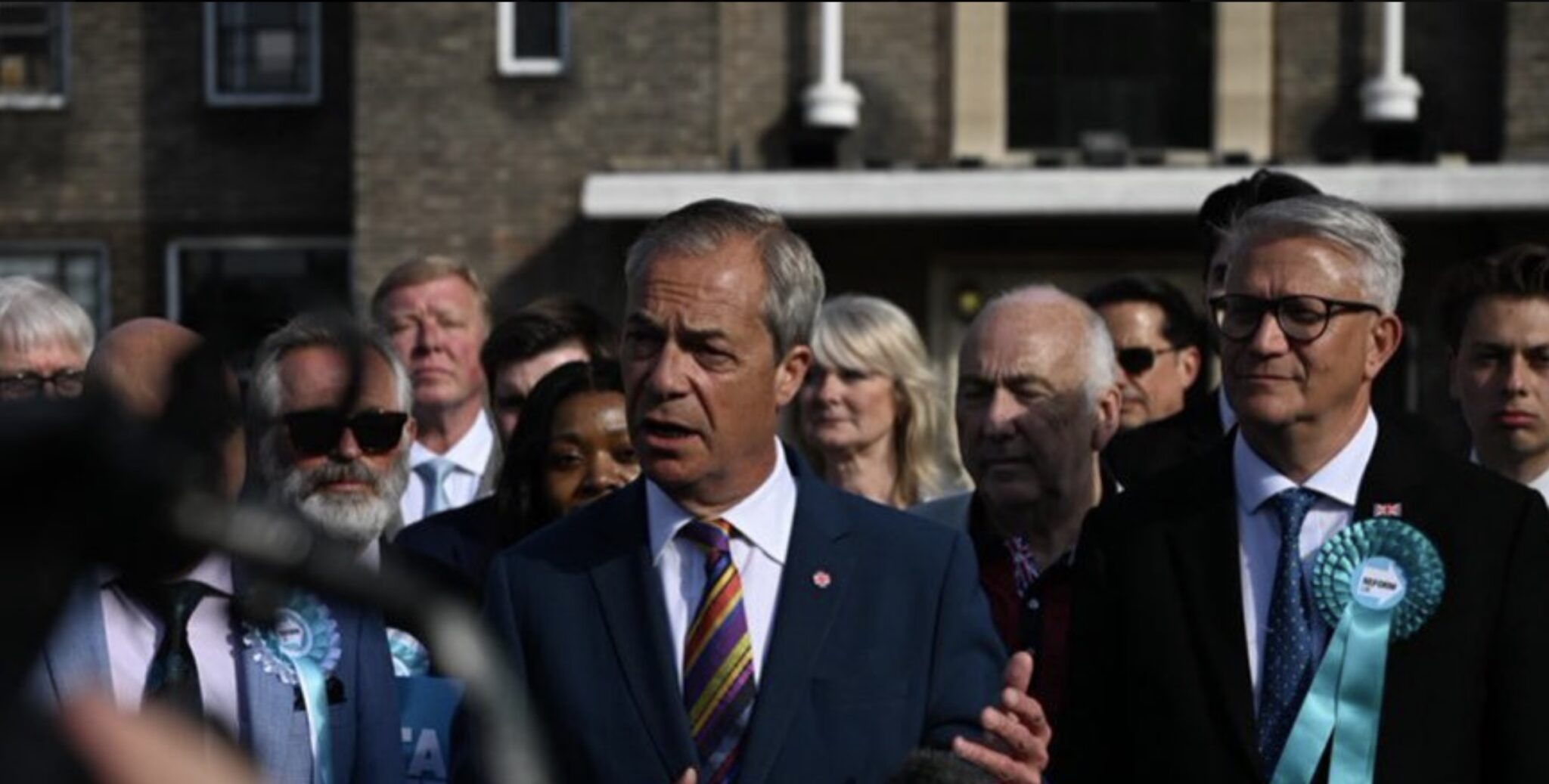
Nigel Farage has turned the digital pound (CBDC) into a new political battle. The Reform UK leader, a veteran architect of Brexit and a specialist in turning technical matters into culture wars, opposes the Bank of England moving toward a central bank digital currency. But that opposition is now entangled in his financial ties to cryptocurrency millionaires.
Farage and the Bank of England
The conflict has forced the Bank of England itself to step in. According to The Guardian, the institution's governor, Andrew Bailey, has been forced to respond in writing to suspicions that meetings held with Farage could have influenced the central bank's policy on the digital pound and digital assets. In a letter to Labour MP Joe Powell, Bailey said no policy change resulted from the Reform UK leader's interventions and defended the institution's independence against any attempt at pressure.
Bailey's response comes after Farage publicly claimed he had managed to influence the debate on the digital pound and stablecoins. The populist leader had said that in his conversations with the Bank of England he argued for abandoning the British CBDC project and promoting a more favorable environment for cryptocurrencies. However, the governor rejected that account and said, according to The Guardian, that the Bank of England is perfectly capable of identifying lobbying attempts and that its decisions are made independently of political or business pressure.
Million-dollar crypto donations
Farage is surrounded by two scandals involving crypto entrepreneurs who do not live in the United Kingdom. The first revolves around a five-million-pound donation, about 5.9 million euros, from billionaire Christopher Harborne, a cryptocurrency entrepreneur resident in Thailand.
The surprising story of COBOL, the software that sustains digital capitalism
The money arrived in early 2024, when Farage was officially retired from active politics. A few weeks later, he changed his mind and returned to the front line with a program that, among other things, defended interests close to the crypto sector. The timeline has fueled suspicions: first the money, then the political return and, in parallel, a campaign against the digital pound.
Farage did not report that income to Parliament. His explanation is that it was a personal gift from Harborne and that the money was used to pay for security measures to protect himself and his family. The Conservative Party, displaced by Reform UK in the fight to lead the British right, has referred the case to the Parliamentary Standards Commission. The Electoral Commission is also investigating the matter.
Connection to a digital pound
The second scandal points to George Cottrell, a former Farage associate, crypto entrepreneur and former adviser to UKIP, the Eurosceptic party that preceded Reform UK. Cottrell was imprisoned in the United States after pleading guilty to fraud. According to published reports, Farage received support from him in the form of staff, security, travel, hotels and coordination of social media campaigns. The question is whether those resources benefited only Farage as an individual or also his political structures.
The connection between these episodes and the digital pound is clear. A digital currency issued by the Bank of England could compete, at least in certain payment uses, with private stablecoins and other instruments in the crypto ecosystem. That is why Farage's opposition to a British CBDC is no longer read solely as an ideological stance against state control of money. It is also interpreted as a position with potential private beneficiaries.
Under that pressure, Farage has responded by playing the victim, making unproven accusations and systematically attacking his political and media enemies. In his version, everything is part of a conspiracy coordinated by Labour, the Conservatives and the media.
Bank of England denies everything
The Reform UK leader has been especially harsh on Sky News and The Times. In the case of the latter newspaper, for revealing much of the information now surrounding him. Farage denounces constant death threats, attacks on his properties and an alleged 70% cut in the budget allocated to his security by Keir Starmer's Labour government. He did not explain precisely what that cut consists of, but linked his fear to the murder of American Trumpist activist Charlie Kirk.
Farage's thesis is that all the money received was used to protect himself and his own. The Farage case shows how crypto money has entered the heart of British politics.
The Bank of England has denied that Farage influenced its policy. But the mere fact that it had to clarify this shows how far the battle over the future of money is also being fought in parties, in the media, in parliamentary committees and in international networks of political financing.