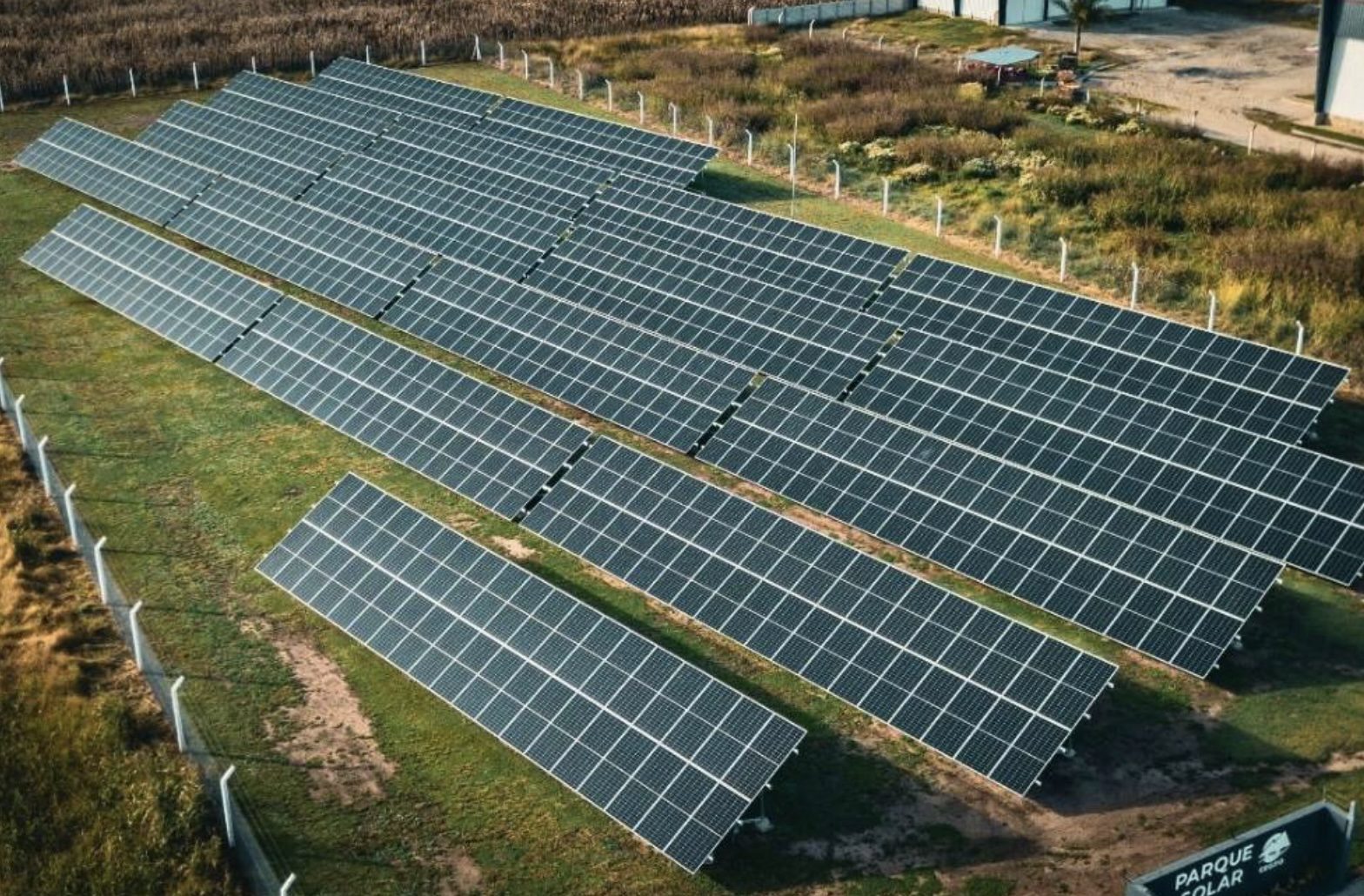
The Argentine province of Córdoba has implemented blockchain technology to tokenize renewable energy, allowing any citizen to invest from 100 dollars in solar farms and receive direct discounts on their electricity bill. The model is part of a broader transformation of the provincial energy system, aimed at redefining the relationship between users and energy.
100-dollar investment
In this paradigm shift, Córdoba residents are no longer merely passive consumers. Today they can generate their own renewable energy, inject surpluses into the grid and obtain concrete economic benefits through direct discounts on their electricity service. Electricity, traditionally perceived as an invisible service, has become a central element of daily life, from the use of digital devices to industrial activity.
Citizen participation is channeled through virtual wallets and mechanisms for fractioning energy production, which allows anyone to participate in renewable projects without the need for their own infrastructure. With an initial investment of close to 100 dollars, users can participate in community solar farms and see the result reflected in direct discounts on their electricity bill
A process that began in 2018
The path toward this transformation formally began in 2018, with the passage of a law that changed the province's energy map. Since then, the Ministry of Infrastructure and Public Services, in coordination with more than 70 public and private organizations, has driven a cultural shift aimed at fostering distributed generation.
Argentina ratifies the use of bitcoin and other cryptos to agree contracts
Today, Córdoba has more than 1,400 distributed generation installations, including solar farms, biodigesters and hybrid systems. This scheme, known as Classic Distributed Generation, allows residential, commercial and industrial users to install their own equipment and deliver to the grid the energy they do not consume. However, the model left out a significant part of the population, such as those who do not own their homes or lack the capital needed to afford an individual installation.
Blockchain and energy tokenization
The new community generation scheme allows the electricity produced to be tokenized, transparently records the surpluses injected into the grid and issues certificates linked to emissions reductions. With this system, energy is no longer associated exclusively with a physical generation point and is instead managed through verifiable digital records.
The model already has real experiences in operation. Institutions such as the Asociación Gremial de Empleados de Comercio de Córdoba (Agec) and companies such as Grupo Maipú have begun participating in this scheme, demonstrating its operational viability and its potential for scaling.
To sustain this development, the province uses an integrated system of georeferenced data that cross-references information on available energy resources, power grids, biomass, land use and local demand. This tool makes it possible to guide investments, define priority areas and plan the expansion of the system with greater precision.
Córdoba's goal is to multiply existing renewable capacity by 40 in 2025 and reach 800 megawatts of clean generation by 2030. According to official projections, this growth will reduce emissions from the provincial electricity system by 25% while improving industrial competitiveness and generating new economic opportunities across the territory.