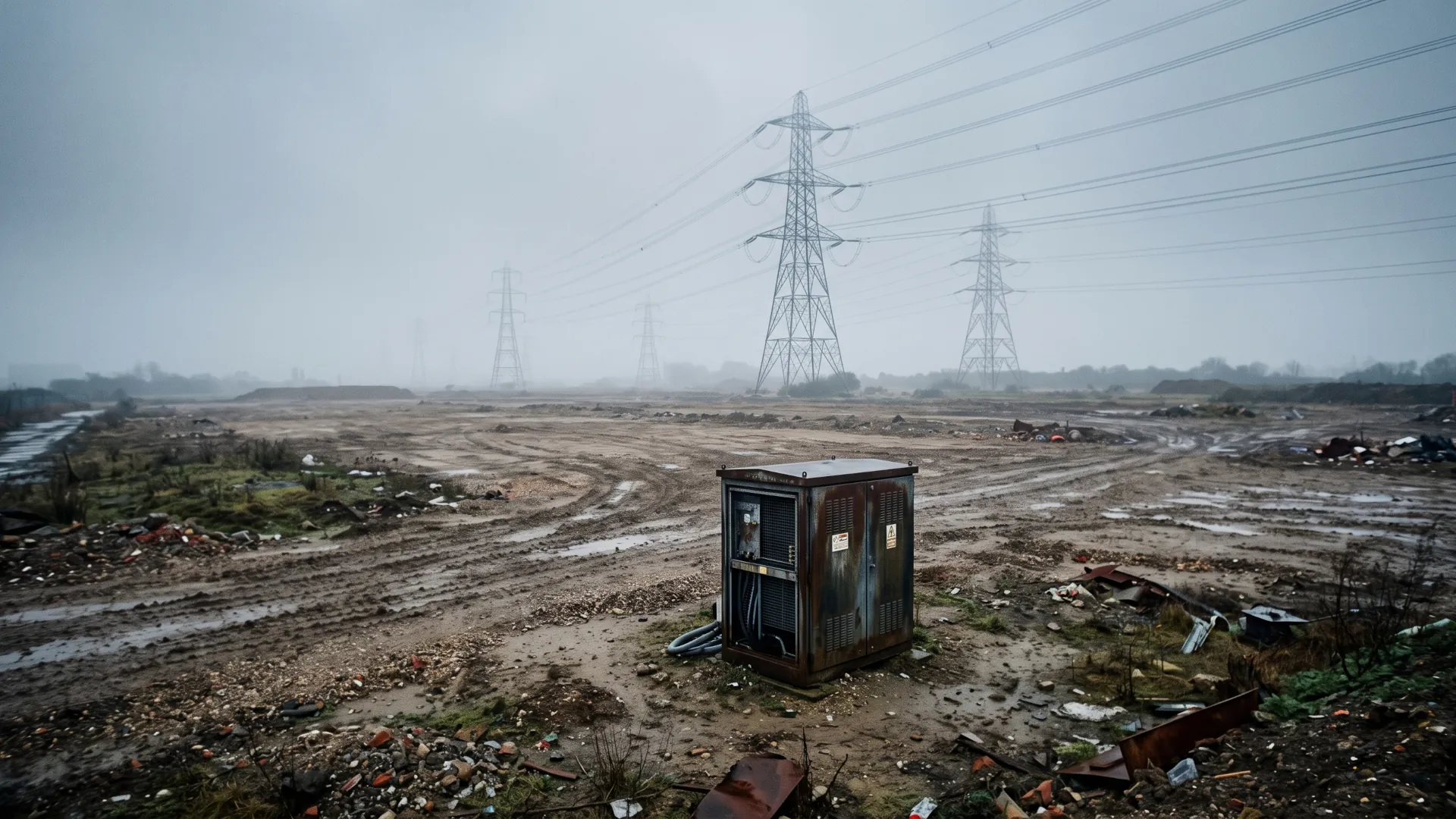
Venezuela's government ratified on Thursday an absolute ban on Bitcoin mining across the entire national territory, a measure the authorities justify by citing the historic rise in electricity demand and the current energy crisis the country is going through.
In the announcement, the Ministry of Energy warned that any activity related to this sector will be sanctioned, stepping up operations to seize cryptoassets and data-processing equipment in various regions.
The power collapse as a regulatory argument
Venezuela's electricity infrastructure is at a critical point, which has led the Executive to single out digital asset mining as one of the main factors behind the system's instability.
According to official communications, the high energy consumption required by mining farms directly interferes with supply for the general population. This narrative seeks to legitimize a veto that, according to the government's line, prioritizes access to electricity for Venezuelan households over industrial activity on the blockchain network.
However, the national power system has suffered decades of disinvestment and lack of technical maintenance, factors that predate the boom in cryptoassets in the region. By banning the activity, the State is trying to immediately mitigate demand peaks without addressing the grid's structural failures, such as the obsolescence of the turbines in the Caroní basin or the degradation of the national transmission lines.
US authorizes Venezuela's banks to operate with platforms such as Binance
A system in chaos
Just to offer some data, Carabobo state, one of the country's most industrialized states, has some 6 thermoelectric plants, which should guarantee its energy stability and provide surplus power to the country.
However, of the 6 units, only one of them operates steadily (Planta Centro, with about 2500 MW of capacity) and it does so in a limited way as far as its maximum output is concerned (generally, only 2 units run, 50% of its capacity). The rest are mostly inoperative, depriving the country of the ability to generate some 2500 MW of energy that would serve to supply the population. Reasons? Lack of maintenance, cooling system failures and limitations on access to fuel.
The situation is repeated elsewhere. In the Caroní Energy Zone, for example, the Guri, Caurachi and Macagua dams are operational. Guri, the oldest and most iconic, operates below its operating capacity due to structural failures and as a result of the 2019 event, which left the country without electricity for several days. Caruachi and Macagua are the ones currently operating within "nominal" ranges.
But here a project is missing: Tocoma. This project from the "Chávez era" remains inoperative after the 23 years of development the project has under its belt. All this, despite the dam being built and almost ready to operate.
The paradox of Venezuelan hashrate: 5 EH/s in the shadows
And this is what leads us to the most ironic point of all: despite the strict ban and the operations of the Bolivarian National Guard (GNB), Venezuela maintains a surprising statistical relevance in the global Bitcoin ecosystem.
Recent data from Hashrate Index estimates that the computing power (hashrate) originating in the country reaches approximately 5 EH/s. This figure contradicts a scenario of a total ban and suggests that the activity has not ceased, but has shifted to structures beyond the reach of public scrutiny.
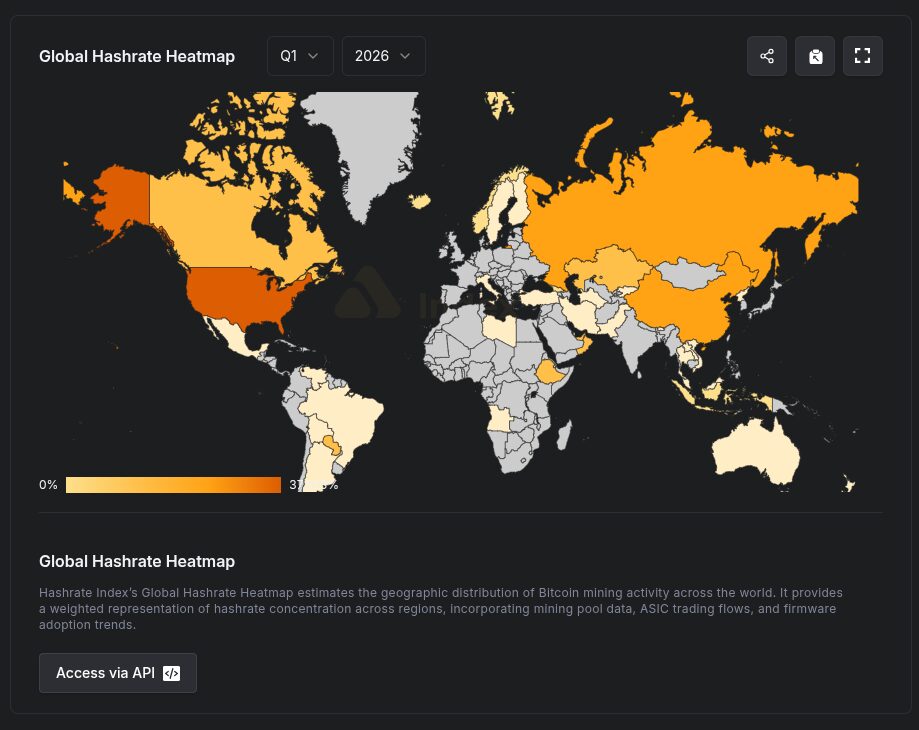
Furthermore, there are strong indications that this activity persists under the control of sectors linked to power or in state facilities that operate outside the restrictions imposed on the private sector. While independent miners are subject to raids and confiscations, large processing infrastructures remain active, which points to the veto being more a tool for centralizing the business than an energy-saving measure.
The dollar shortage and inflation fuel the use of USDT in Venezuela
Technology in the shadows
In any case, the crackdown on cryptoasset miners not only affects the digital economy, but also degrades the country's technical talent. The exodus of Venezuelan infrastructure and network experts is being felt, especially because they have had to go underground or leave the country for fear of legal reprisals under the pretext of "energy crimes."
Hence, those still in the country use high-security VPN connections and fragment equipment across multiple small locations to avoid detection through electricity consumption, practices that are common in this environment. However, these measures only increase technical inefficiency and do not solve the underlying problem: a national power grid that is crumbling while the State uses digital asset mining as a convenient scapegoat to hide the systemic crisis in public services.
Cryptocurrencies as an alternative to financial control in Venezuela
Thus, the situation in Venezuela reflects a constant tension between wasted energy potential and a governance that prefers restriction to regulated integration. While global hashrate keeps growing, the country falls behind in attracting transparent investment, maintaining a multimillion-dollar activity in the shadows that does little for the ordinary citizen who suffers the constant blackouts.