AI has reached the gates of the major Hollywood studios, but not everyone is willing to let it in. Steven Spielberg has sparked an intense debate after voicing his rejection of the use of AI in filmmaking, describing it as a process that deeply frightens him. At a time when efficiency seems to be beating craftsmanship, the director of Jaws and Schindler's List defends traditional filming as the last bastion of creative authenticity.
Defending the soul of cinema
For Steven Spielberg, cinema is not an accumulation of pixels or a logical sequence of algorithms, but an exercise in empathy and spiritual transfer. His opposition to the use of artificial intelligence on film sets rests on three essential pillars that define what he calls the soul of a film:
Spielberg argues that art is a direct extension of human subjectivity. AI, by definition, creates from the average of what already exists; it is a system that "recycles" data. For the director, cinema must be born from intuition, traumas, joys and the unique vision of an individual. The soul is lost when the creator stops being the origin of the idea and becomes a mere editor of results generated by a machine.
The AI fever sends the price of blockchain infrastructure tokens soaring
The value of human imperfection
At the same time, Spielberg has stressed that what makes us connect with a story are often the mistakes or organic decisions that happen on a film set. For example, improvisation, that moment when an actor changes a line of dialogue for a genuine emotion, completely transforming the film and connecting better with the audience. That is something Spielberg defends because it is impossible to achieve with AI.
AI seeks technical perfection, but for Spielberg, the soul of cinema lies in the fragility and imperfection that only a human being can bring.
The dehumanization of the viewer
Spielberg fears that, by automating narrative, we are desensitizing the audience. If viewers know that what they are watching has not passed through the filter of another person's suffering or passion, the emotional connection breaks. For him, cinema is a bridge between souls; if one end of the bridge is software, the message becomes empty, a digital echo with no moral or emotional weight.
In light of this, Spielberg argues that the soul cannot be programmed. It is what makes you cry when E.T. says goodbye, not because the pixels are perfect, but because there is a human truth behind every frame. What is most curious is that Steven Spielberg is no stranger to the technological avant-garde. In fact, he was the one who redefined what cinema could achieve through the use of computers, with an unforgettable film like Jurassic Park.
In 1993, Spielberg amazed the world by bringing dinosaurs to life through CGI, proving that technology could expand the limits of what was possible. But today, looking into the "silicon mirror" of AI, the director does not see a tool of expansion, but one of replacement. Thus, the man who used technology to serve imagination now fears that technology will be the one dictating the terms of creativity, turning the filmmaker into a passive spectator of his own work.
Paying for every click: the new network to stop AI from stealing content on the Internet
A support tool or creative replacement?
The central dilemma raised by Spielberg lies on the boundary between technical assistance and artistic decision within the filmmaking creative process.
On one hand, there is the tool, which is the use of algorithms and computational technologies to optimize technical processes without directly intervening in human creativity. An example of this is the use of algorithms to speed up rendering or improve image resolution, as happens with the use of OpenCL in post-production processes, where technology acts as a support that facilitates and perfects the work of the creative team.
An industrial assembly operation
On the other hand, there is replacement. The moment when artificial intelligence stops being a support tool and begins to take on decisions that belong to the artistic sphere. This happens when an AI decides the pace of an edit, generates dialogue or even acts through digital replicas of deceased actors. In this scenario, technology no longer just optimizes the process, but directly intervenes in the narrative and aesthetic creation of the work.
For Spielberg, when the artist's vision is subordinated to data processing, filming stops being a process of discovery and becomes an industrial assembly operation.
Machines already pay on the internet: this is the AI agent economy
The director warns that we are at risk of entering an era of algorithmic cinema. If we allow AI to take narrative control, we will lose the ability to "write with the heart," he says. Spielberg warns that the future of cinema could be full of technically perfect but emotionally inert images, where the human connection, that invisible spark that binds the director to his audience, dissolves under the weight of mass automation.
An example of what we can expect
A few hours ago, X user @nachos2d released a curious 4-minute short film of a live-action piece made with AI. The story, Evangelion, an anime from studio GAINAX, released in 1995, and which has become a cult work worldwide. Evangelion is one of those stories you watch and never forget, not only for the depth of its characters, its out-of-the-ordinary story and its endings, including the films, completely inscrutable.
This might seem like just any story, of no importance, but the live-action project for this series has been going from desk to desk in Hollywood since 2001. The studio most interested in bringing the story to the big screen is Warner Brothers, and it would not do so with just anyone, it would be Weta Workshops, the company that made The Lord of the Rings possible (also in 2001), who would make possible the special effects needed for such an event.
Spain's Tax Agency is already training its officials to use AI
A project difficult to carry out
However, the project has long been abandoned due to the enormous technical complexity, the difficulty of rewriting the script without losing the essence of the series (something that would directly cause it to lose interest on the part of the fan community). Building a live-action series has also been an option considered, but again, the technical difficulty and the script have kept it far from being made.
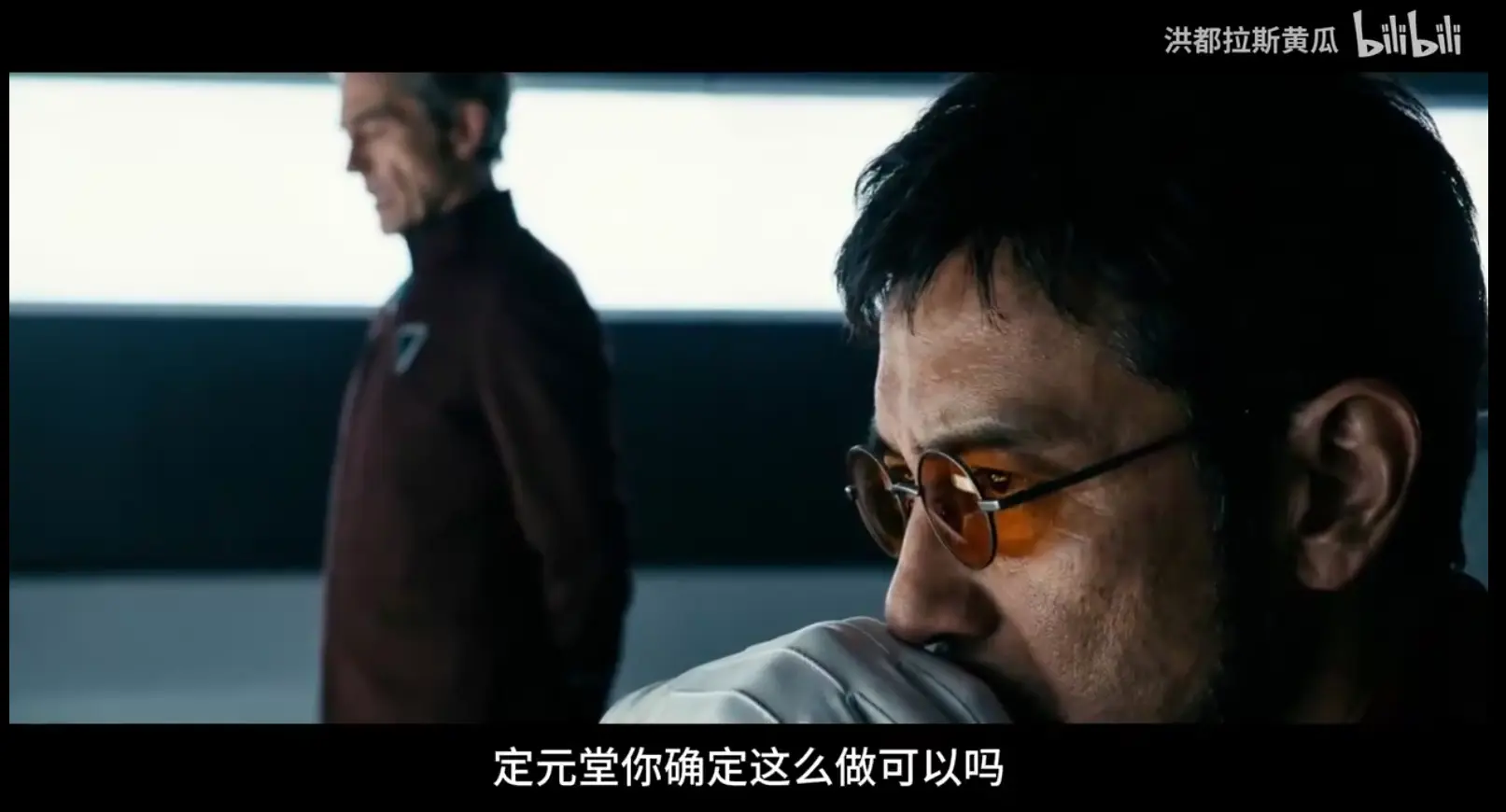
Now, an AI and a couple of hours of work have made it possible to recreate 4 minutes of that series, and while there are elements that need improvement, such as the actors' expressiveness (which can be fixed with real actors) and some inconsistencies in the FX (improvable with high-level post-production), the result has been surprising, especially knowing that just 5 years ago, doing something like that with AI was impossible.