The importance of this version of Godot lies in its ability to unify the power of three-dimensional graphics, the flexibility of modern artificial intelligence and advanced management of digital assets. The ecosystem has matured to the point that major commercial productions choose this engine to avoid operational and corporate governance risks. In this way, the technical community not only receives stability fixes, but also a robust environment that redefines the creation of free video games. Free software thus demonstrates that its decentralized development can lead technological innovation against closed commercial monopolies.
Origin, evolution and decentralized governance
This great project began in 2001, led by Argentine developers Juan Linietsky and Ariel Manzur. Originally conceived as an internal engine under names such as Larvotor and Larvita, it was used to bring various commercial projects in Latin America to life within OKAM Studio. The region's political and economic instability motivated its creators to release the source code on GitHub under the MIT license in 2014. This strategic decision allowed hundreds of contributors from around the world to join the platform's active development.
To formally structure this growth, the Godot Foundation (Stichting Godot) was established in 2022 as a non-profit organization in the Netherlands. This entity is responsible for managing donations to the development fund and for hiring programmers dedicated full-time to the system's core. However, the foundation does not own the engine's intellectual property rights, which belong collectively to each of its code contributors. This distribution of copyright acts as an insurmountable legal safeguard that prevents any corporation from buying or shutting down the platform.

A unique design paradigm
The deepest technical differentiation of this engine compared with competitors such as Unity lies in its architecture based on a scene graph. While other systems use a purely component-oriented approach on generic containers, here each entity is built through a tree structure of specialized nodes. A node in Godot encapsulates both data and behavior, inheriting functionality directly from the Node base class. This modular hierarchy makes it easy for any subgraph of scenes to be saved in isolation, reused and instantiated dynamically at any point in the project.
At the scripting level, the platform restricts code assignment to a single script per node, which conceptually generates a subclass of the associated node type. This design promotes clean inheritance and the logical ordering of the system's capabilities, avoiding the common problems of cross-dependencies. To optimize gameplay execution, GDScript is used natively, a dynamically typed language with Python-like syntax that is closely integrated with the engine.
Unlike C#'s garbage collector, GDScript manages memory through reference counting, eliminating the annoying performance hitches in the visual refresh rate. For high-demand code, GDExtension technology enables the direct use of compiled languages such as C++ or Rust without needing to reconfigure the editor's core.
Valve releases Proton 11 and gains ground on Windows in gaming
Commercial success stories and ecosystem tools
The success of this architectural paradigm is evident in complex commercial titles developed under severe budget constraints. The acclaimed three-dimensional RPG Cassette Beasts, created by Bytten Studio, is a clear example of the performance the engine offers.
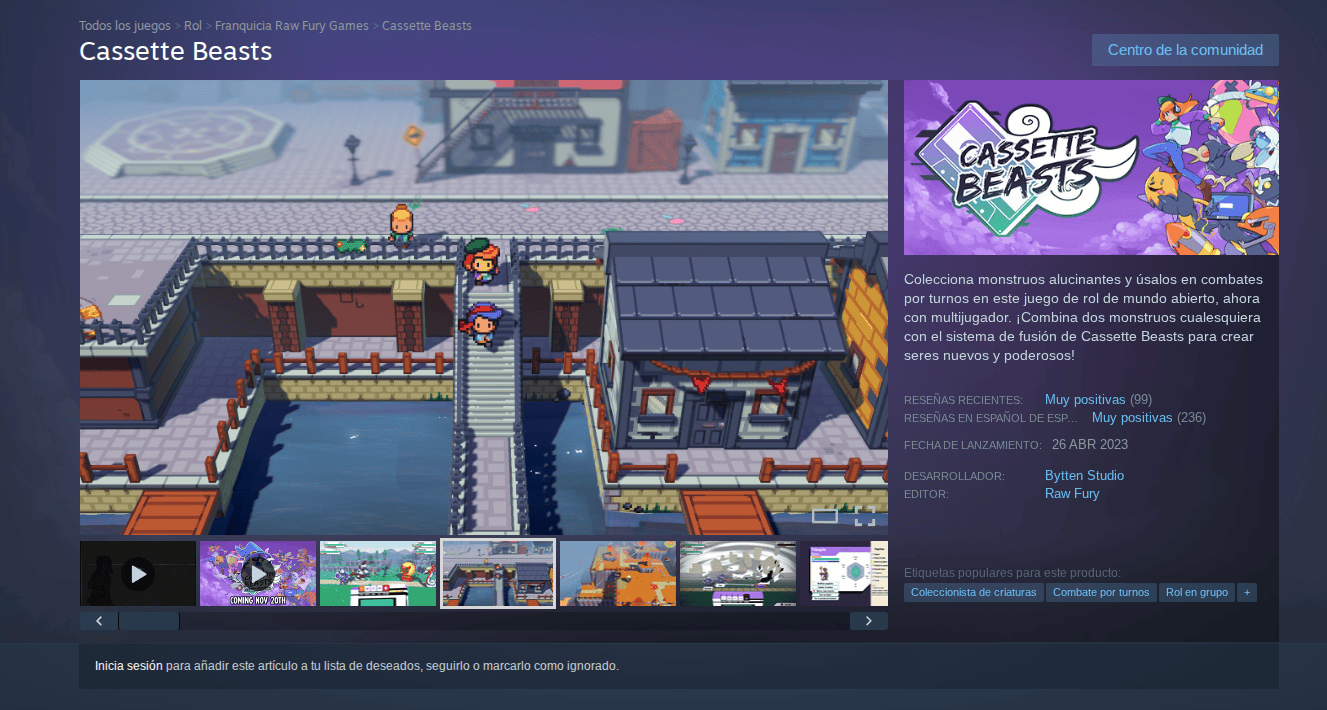
With a team of only two people, the studio managed to design a massive open world and a dynamic monster fusion system with more than 14,000 possible combinations. The developers highlighted that full access to the source code allowed them to rewrite and optimize the GridMap rendering node to adapt it to their voxelized design workflow.
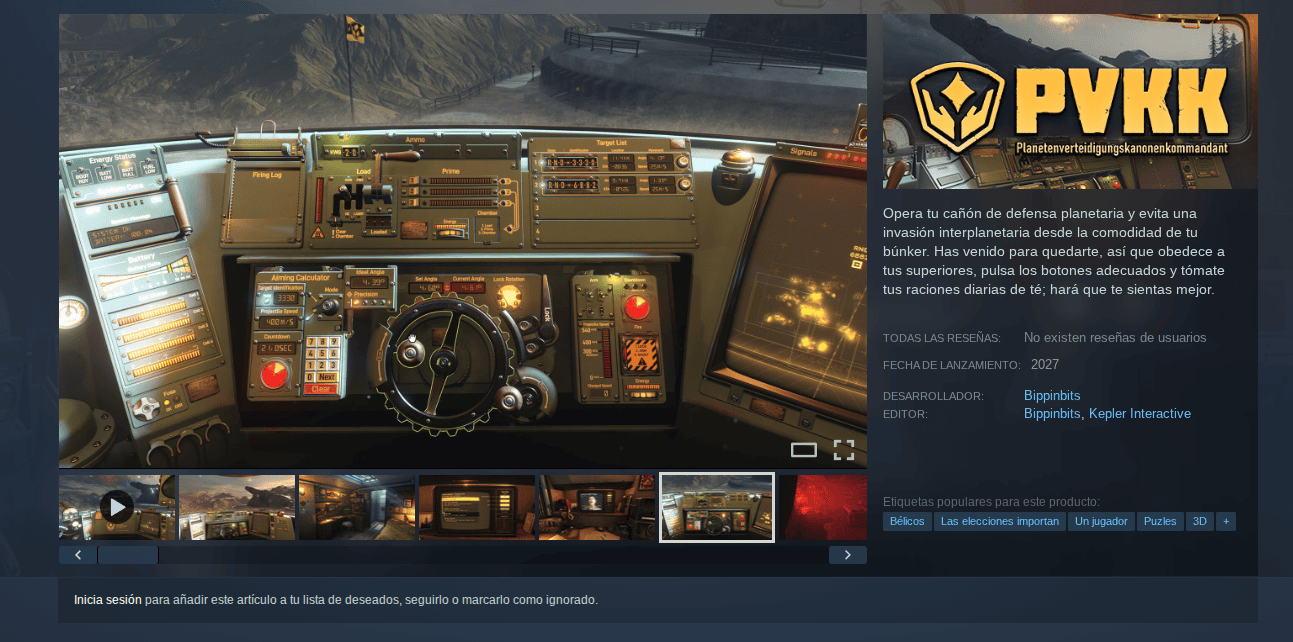
In the field of advanced three-dimensional graphics, the tactical simulator PVKK: Planetenverteidigungskanonenkommandant, developed by Bippinbits, stands out for its exclusive use of real-time dynamic lighting on high-fidelity dieselpunk surfaces. Likewise, the engine demonstrates its versatility in highly successful mobile projects such as the relaxing casual game Usagi Shima.
No less important is the fact that Godot is actively used to build software tools unrelated to video games. The pixel art editor Pixelorama, an open source program distributed on Steam and Itch.io, is developed entirely within Godot using its native interface design capabilities.
AI + Blockchain 2026: Wallets, agents and DePIN networks create the infrastructure of the future
The Artificial Intelligence revolution in the free engine
The engine's maturation has coincided with the massive adoption of artificial intelligence within video game production workflows. This has branched into classic navigation systems, deep reinforcement learning and generative development assistants.
Classic navigation and behavior systems
To build traditional enemy behaviors, the engine's native three-dimensional and two-dimensional pathfinding capabilities are used (employed to move characters through the virtual world). By using a NavigationRegion2D or NavigationRegion3D node, the system generates a traversable geometric mesh that delimits the spaces where agents can move.
These nodes query the navigation server to calculate optimal paths that avoid walls and dynamic obstacles in real time. Godot's navigation system also incorporates built-in debugging tools that allow the navigation meshes to be visualized during the physical execution of tests.
Reinforcement learning with the Godot RL Agents suite
To model advanced non-linear behaviors that exceed the capabilities of a typical state machine, researchers use the Godot RL Agents library. This open source package, originally designed by data scientist Ed Beeching, offers a high-performance technical gateway between Godot simulation environments and Python-based reinforcement learning algorithms.
The system interacts via TCP or gRPC sockets (for remote connection), allowing multiple simultaneous instances of the game to serve as parallel data collection environments. After the training cycle with libraries such as StableBaselines3 or CleanRL, developers can compile the resulting neural network into ONNX format to run inference locally and quickly within the game engine.
Local AI can now be up to 70 times cheaper than commercial APIs
Copilots and real-time editing agents
At the editor level, tools such as Ziva and the dlight plugin from Godot AI connect external intelligent assistants (such as Claude Code or Cursor) directly to the workspace through the MCP protocol.
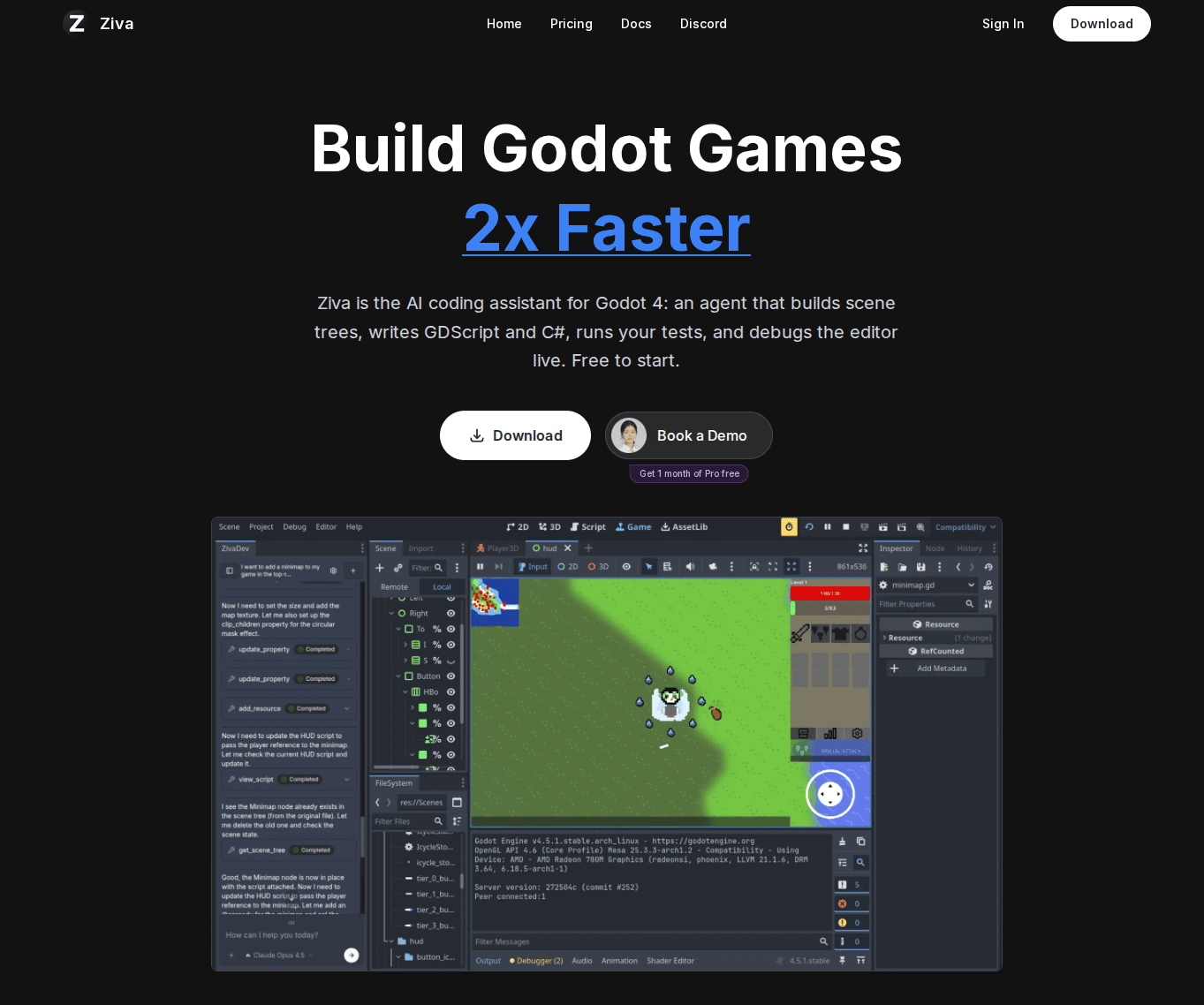
These intelligent agents are not limited to suggesting isolated lines of code in the text editor window. Their ability to integrate with the editor's internal APIs gives them the power to structure hierarchical node trees, autonomously configure complex three-dimensional materials and interpret live debugger errors to propose and implement fixes automatically. This automation of repetitive tasks frees solo creators from the technical burden associated with boilerplate.
Blockchain infrastructure and digital asset sovereignty
The evolution of Web3 and decentralized finance has driven strong demand for game architectures that support true ownership of virtual goods. Although the platform's technical core remains strictly free of commercial or proprietary software, its modular versatility facilitates the integration of distributed ledger networks through contributions from its community. The use of libraries such as Solana Godot SDK or the incorporation of Thirdweb 's .NET SDK allows developers to structure secure game economies based on cryptoassets and non-fungible tokens without compromising frame processing speed.
Through the use of previously audited smart contracts, an independent studio can implement authentication schemes that use sovereign digital wallets instead of centralized platform credentials. Through Account Abstraction and the deployment of Thirdweb wallet factories, the player can log in using their email address via a temporary one-time password (OTP), invisibly generating a secure Web3 wallet.
This allows real-time queries of token balances on test and production networks, managing transactions without gas fees and validating ownership of skins or digital collectibles registered on the blockchain. In web exports via WebAssembly, the engine interacts directly with browser extensions such as MetaMask through asynchronous JavaScript interfaces to execute secure smart contract calls natively.
Agentic Market: this is how the market for APIs and services for AI agents works
A future centered on creative independence
All this technological development achieved by the free engine demonstrates that open source environments are fully prepared to replace the hegemony of proprietary development tools.
The power and scalability of its scene graph, together with advanced reinforcement learning integrations and modular architectures for sovereign custody of digital assets, give developers total control over their technical and creative infrastructure.
By decoupling a studio's financial success from third-party restrictive licensing policies, the engine guarantees that the video games of the future can be truly free in their code, in their execution and in their economy.