Farewell to cheap AI. The party of free language models is over. Over the past few years, the artificial intelligence market lived in a bubble of unsustainable trial rates, where giants like OpenAI, Google and Anthropic subsidized every one of your chats with their investors' money. But in 2026, investors have said enough: AI has entered a phase of brutal economic realism.
The "all-you-can-eat" model for $20 a month has broken down. The reason is that new reasoning models, such as GPT-5.4 or Claude 4.6, don't just respond, they "think" internally. This process consumes a massive amount of thinking tokens that saturates GPUs.
That is why the artificial intelligence industry has entered a phase of brutal economic realism. Over the past few years, the market witnessed a race for mass adoption in which large-scale language model (LLM) providers subsidized the use of their technologies through "trial rates" that were unsustainable in the long term.
However, in 2026, the reality of infrastructure costs, the shortage of semiconductors and energy demand have forced giants like OpenAI, Anthropic, Google and Alibaba (Qwen) to redesign their business models. This transition is not simply a margin adjustment; it represents a deep restructuring of how intelligence is consumed, introducing concepts such as "inference priority," "token credits" and the integration of infrastructures based on digital assets to manage compute scarcity.
Why Anthropic's AI is today more lethal to the crypto sector than the quantum attack
The paradigm shift: From flat rates to stratified consumption
That means the all-you-can-eat model has come to an end. In its place, a pricing structure is emerging that discriminates usage based on the urgency and complexity of reasoning.
For example, OpenAI, which once simplified its offering to a single "Plus" plan, now presents a hierarchy that reaches $200 a month for professional users, while Google has fragmented its API into five different inference tiers to manage latency and cost.
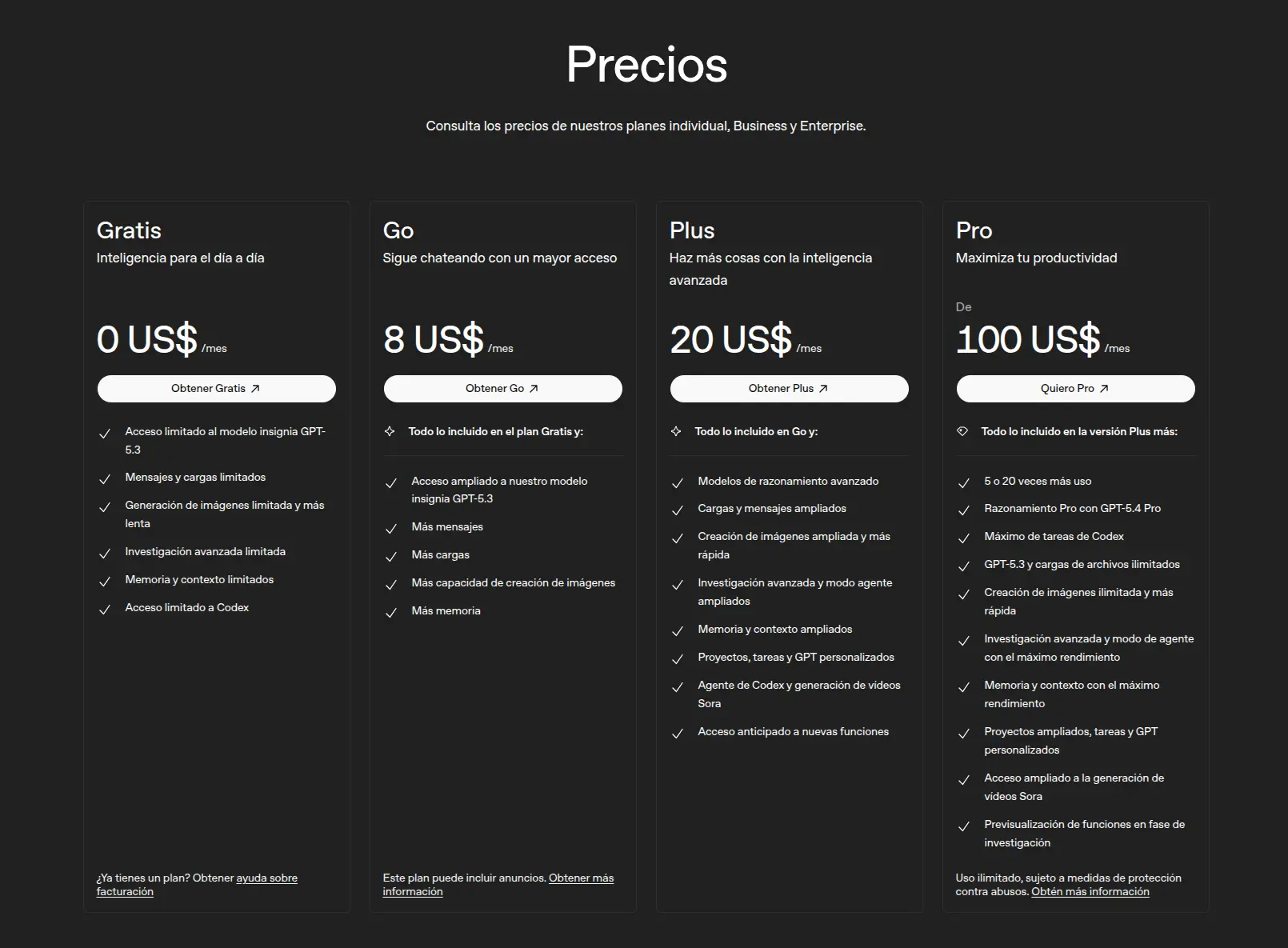
This phenomenon responds to a technical need: "reasoning" models (Thinking models) like GPT-5.4 and Claude 4.6 consume a number of internal tokens (thinking tokens) that are not always visible to the user but that saturate providers' GPUs. That is why companies like OpenAI have begun using "Mini" versions as a mandatory fallback when reasoning limits are reached, ensuring the service is not interrupted but drastically reducing the inference power delivered.
Why is AI inference the new oil?
To understand why prices are rising, it is imperative to analyze the life cycle of an AI request. There is a fundamental difference between the two phases of processing on a GPU: "prefill" and "decode." During prefill, the GPU processes the user's initial prompt; this task is compute-intensive and uses up to 92% of the tensor cores of an H100 chip.
However, during decoding (when the AI writes the response word by word), the GPU must wait for data to move from memory to the processor, which causes chip utilization to drop to 28%.
This inefficiency means providers are paying for $40,000 hardware that sits underused most of the time. To offset this waste, Google has introduced inference tiers based on system load.
For example, the "Flex" tier allows Google to sell its idle capacity at half price, while the "Priority" tier extracts a premium from users who cannot afford to wait. This model is analogous to the power grid or the bandwidth market, where system stability depends on providers' ability to discourage usage during peak hours.
Less traffic, more AI: how the media business is changing, according to KPMG
The digital asset factor: DePIN as an escape valve
Faced with the centralization and rising cost of OpenAI and Anthropic APIs, the digital asset sector has presented a disruptive solution: Decentralized Physical Infrastructure Networks (DePIN).
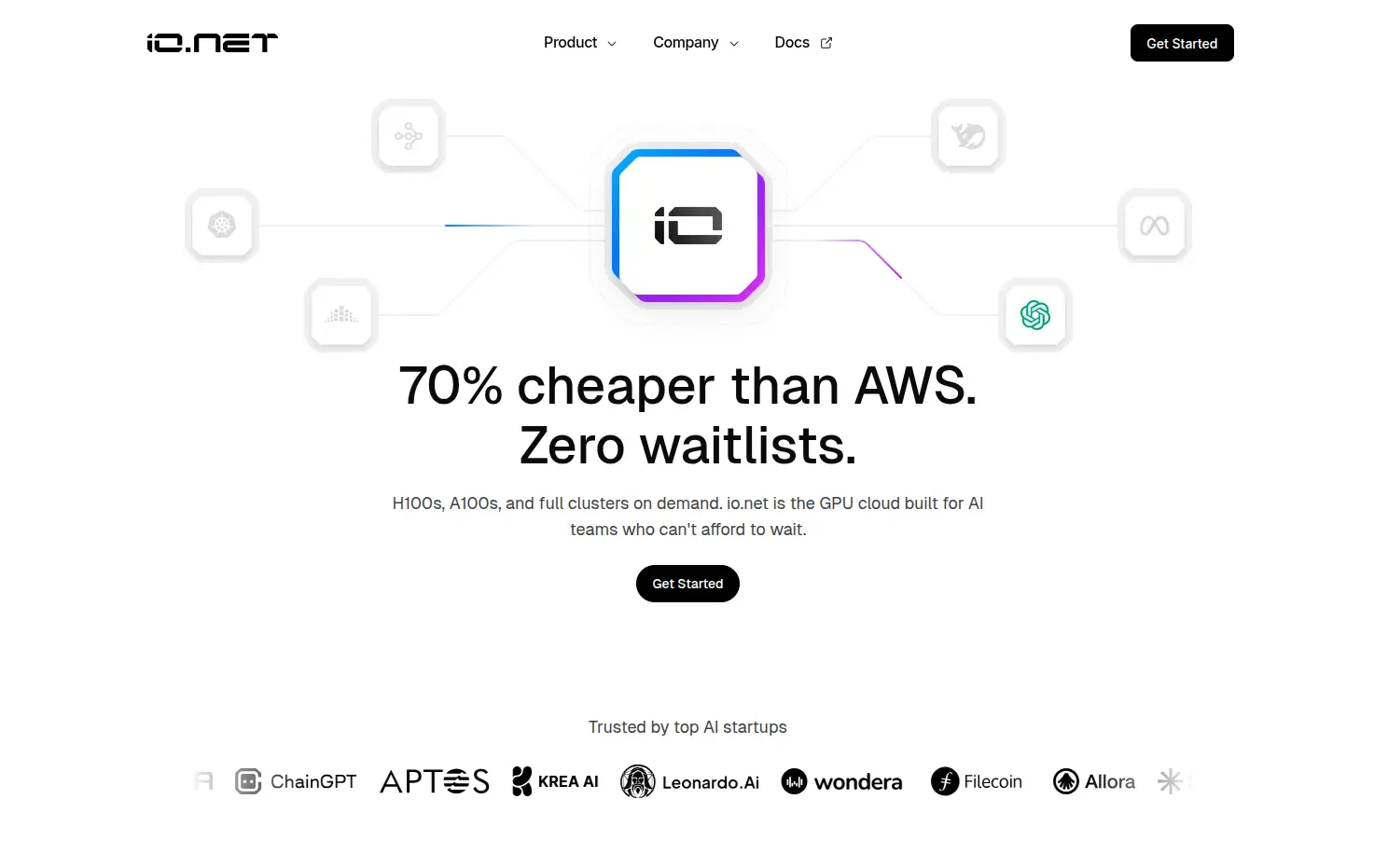
Projects like Akash, Render and io.net are creating open markets where anyone with a GPU can rent out their computing power in exchange for tokens. The economic advantage is obvious. While a developer may face million-dollar bills on centralized clouds due to corporate profit margins and marketing costs, DePIN networks offer cost reductions of between 50% and 80%.
The use of tokens in these networks is not just a form of payment; it is an incentive mechanism. Node operators receive rewards for maintaining high uptime and low latency, ensuring that distributed infrastructure can compete with the reliability of Google or AWS.
In addition, the integration of smart contracts allows AI agents to have their own digital asset wallets, buying compute autonomously as needed, without human intervention or traditional credit cards.
The token consumption crisis and the rise of autonomous agents
The price increase is also driven by the change in how we interact with AI. We are no longer in the era of single-question chats; we are in the era of agents. An AI agent, such as OpenClaw or Moltbot, does not just respond; it plans, browses the web, executes code and reviews its own mistakes. This process consumes an astronomical amount of tokens.
A recent Deloitte report suggests a "token paradox": although the price per token has fallen drastically (by up to 280 times in two years), companies' bills are rising because demand is non-linear. For example, an agent performing deep research ("Deep Research") can burn 8 million tokens in a single 20-minute session, compared with an "Ask-and-answer" model like the old GPT-3, which could spend the same amount of tokens in a week of continuous operation; that is where the enormous change in usage and the enormous cost it entails becomes clear.
To manage this, companies are adopting "FinOps for AI" strategies:
- Model Routing: Simple tasks are sent to "Nano" or "Flash" models, reserving "Ultra" or "Opus" models for critical decisions.
- Context caching: Reusing system instructions or base documents so as not to pay for them in every interaction.
- History compression: Summarizing past conversations instead of sending the entire chat history, which reduces the size of the prompt and therefore the cost.
Impact on cybersecurity and data sovereignty
The price increase has a side effect: security. As APIs become more expensive, some organizations may be tempted to use cheaper, less secure models, or to cut back on filtering and governance layers.
However, the trend in 2026 is the move toward "Sovereign AI." Companies are moving away from relying on external clouds to process sensitive data, preferring to run open models (such as Qwen 3.5 or Llama 4) on their own infrastructure.
How Blockchain and AI are creating the world's first autonomous financial infrastructure
The use of digital assets facilitates this sovereignty. Through Proof of Computeprotocols, a company can verify that an AI task was performed correctly on a remote node without needing to see the underlying data, thanks to technologies such as homomorphic encryption (FHE) and zero-knowledge proofs (ZKML). This enables an AI ecosystem that is at once powerful, economical and private.
The energy nexus: The physical limit of growth
We cannot ignore that AI consumes energy on an industrial scale. By 2026, global spending on energy for data centers will exceed $500 billion. The shortage of electricity supply is what Google calls the "gigawatt ceiling."
In many regions, it is no longer possible to build more data centers because the power grid cannot bear the load. This physical limitation is what is pushing prices up. Anthropic, for example, is investing in designing its own chips to try to reduce the electricity consumption of its Claude models, seeking an efficiency that Nvidia, as a generalist supplier, does not always prioritize. The relationship between the price of energy and the price of a token has become so close that some analysts see AI tokens as a form of "digitized energy."
Farewell to the CEO: the companies of the future will be AI agents with blockchain ownership
That is why the price restructuring by OpenAI, Google and Anthropic is a sign of maturity. AI is no longer a free toy; it is critical infrastructure of the modern economy. For companies, the challenge is no longer "whether" to use AI, but how to do so profitably. The adoption of digital assets and decentralized networks is not just a technical alternative, but an economic necessity to avoid the monopoly of big tech and ensure democratic access to artificial intelligence in the near future. Efficiency in token usage will undoubtedly be the metric that defines competitive success in the next decade.