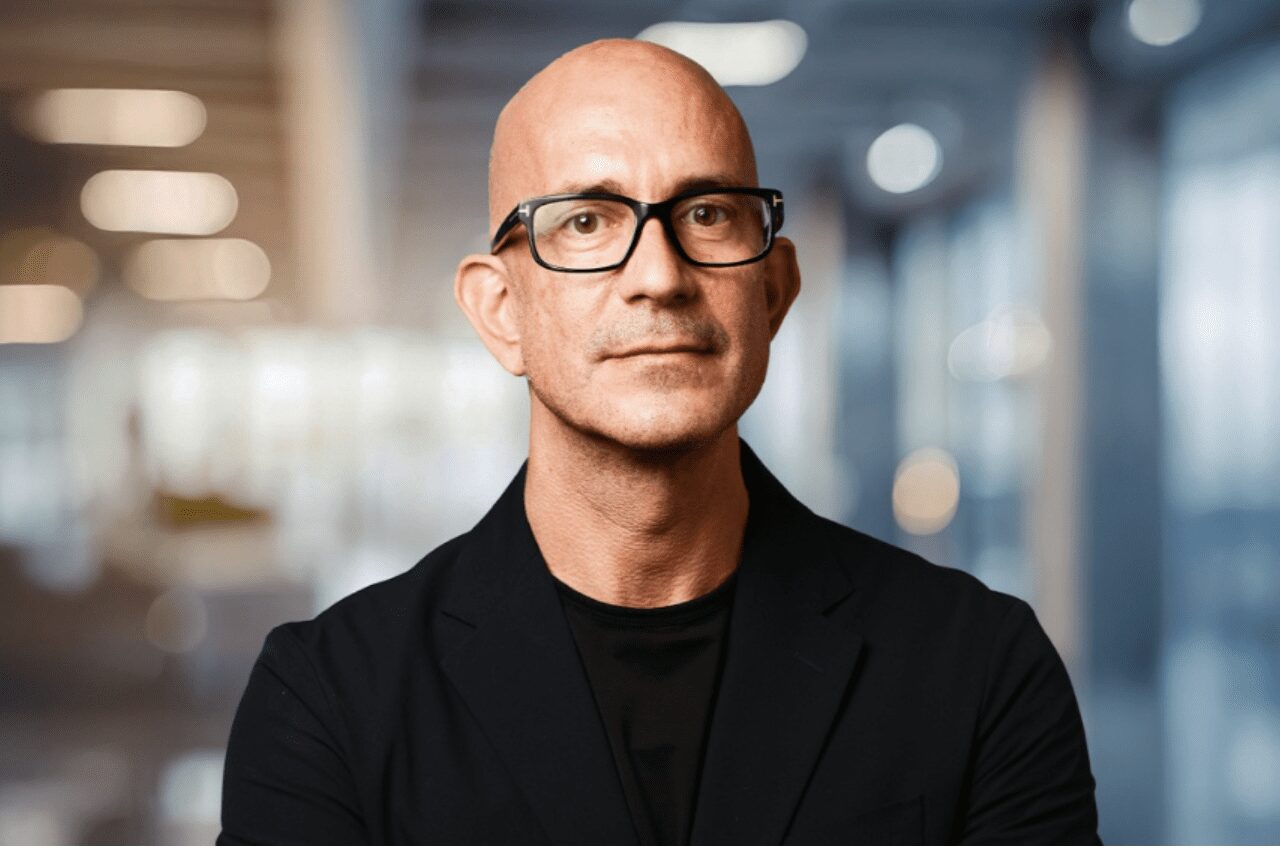
From the living room of his home in Miami, a few weeks before Securitize's stock market listing, Carlos Domingo, the company's chief executive and one of the few Spaniards, if not the only one, to have reached a position of global reference in the cryptoassets industry, speaks about tokenization with the conviction of someone who does not contemplate turning back. He does not present it as a possibility, but as a destination. By his calculations, it will take around 40 years for the global economy to operate fully on blockchain technology. To explain it, he turns to the evolution of the music industry.
Like music
First there were CDs. Then MP3. Then the iPod. And now streaming. Each step seemed like a disruption, but it was really part of an inevitable process, he explains. His vision is that blockchain will follow that same path and will move from experiment to infrastructure. There was a time when it seemed impossible to carry all your music on your phone. Today it is normal, he says. The same will happen with the economy. It will be on blockchain, he says.
Connected by video call with a small group of journalists, a few days before his company's stock market listing, scheduled for mid-April, Domingo describes a change of climate in the crypto sector that, in his view, no longer allows for turning back. Even so, he qualifies the moment and acknowledges that the current context is not as favorable as that of the summer and autumn of 2025, when Circle, the company issuing the USDC stablecoin, debuted on the New York stock exchange with great success.
For years, the industry has oscillated between excessive enthusiasm and skepticism. But, according to him, that cycle is behind us. He maintains that the success of several stock market listings last year was the signal that the market was ready. What has changed since then, he adds, is the degree of certainty.
At Telefónica
Before founding Securitize in 2017 alongside Jamie Finn, Carlos was a key figure in the digital transformation of the Spanish company Telefónica. That experience, he suggests, was a prelude to what would come later. From the shift from telecommunications to financial infrastructure. From its beginnings, Securitize's approach was direct and ambitious: to move the capital markets onto blockchain technology, eliminating intermediaries and friction in global investment.
Today, Domingo sums up his 2017 vision in two major trends that, in his view, are already transforming the financial system: stablecoins and the tokenization of assets. Stablecoins function as the money within this new system. Tokenization represents the assets, and when both pieces fit together, the financial system as we know it will change completely, he says.
He explains with a mixture of pride and surprise that Securitize's growth has gone hand in hand with alliances that, not long ago, would have seemed improbable to him. Among them, the one with BlackRock, the world's largest asset manager and one of the key players in the recent legitimization of the crypto ecosystem through its bitcoin ETFs.
Hand in hand with BlackRock
Domingo remembers the first contact well. "They were thousands and we were 40," he says. After more than two years of collaboration and of passing a demanding evaluation process, Securitize was finally selected as a partner by BlackRock, which also ended up investing in the company. To that relationship is added the work with Apollo Global Management, another of the big names in global capital, whose involvement, he stresses, reinforces the idea that traditional institutions are entering fully into the field of tokenization. Apollo, he adds, is also the firm that has invested in Atlético de Madrid, an example of how this type of capital increasingly connects with real-world assets.
For Domingo, another symbolic moment that finally consolidated the shift toward the tokenization of the economy is Larry Fink's annual letter. When someone of Fink's stature talks about tokenization, it stops being a marginal topic and helps consolidate the industry, give it legitimacy and accelerate its adoption. From that point on, he adds, the conversation stops being speculative and becomes part of the core of the financial system.
On real estate tokenization in Spain, Domingo is critical. He considers that many of the current projects look more like crowdfunding than a true transformation of the financial system. In his view, the logical development of the sector goes first through liquid assets, which are easier to scale, before moving toward illiquid ones, such as real estate.
The Trump family
In that context, Domingo mentions real estate tokenization projects in which Securitize participates such as the one linked to the Trump International Hotel & Resort in the Maldives, developed alongside the developer DarGlobal. In this operation, Securitize acts as the platform responsible for structuring and issuing the tokens. The initiative does not involve the direct sale of the asset, but rather the tokenization of loans that finance the project, offering accredited investors access to yields and possible future profits. For him, this type of structure illustrates where the sector is heading, a tokenization designed from the outset with regulatory frameworks, governance and financial architecture.
Asked about a possible conflict of interest between the businesses linked to Donald Trump and the crypto policies adopted in the United States, Domingo dismisses it outright. "It is false that Trump is legislating on crypto to benefit himself or his family," he maintains. He adds, moreover, that he has visited Mar-a-Lago on several occasions without having perceived dynamics pointing in that direction. In his opinion, this type of initiative responds more to a market logic and the advance of technology than to particular political interests.
Digital euro
Even more blunt is his view on Europe, where he paints a stagnant picture from a legislative standpoint. He also does not hold back criticism of the digital euro, which he directly labels a disaster. Against this, he contrasts the situation in the United States, where the possible prohibition of issuing a dollar CBDC is even being considered, in an environment that, in his opinion, is moving forward with much greater regulatory clarity.
For Domingo, Securitize's stock market listing comes at a moment of maturity for the sector. His diagnosis is clear. This is not a new technological wave, but a profound reconfiguration of the global financial system, where tokenization will stop being a promise and become the very foundation of the economy.