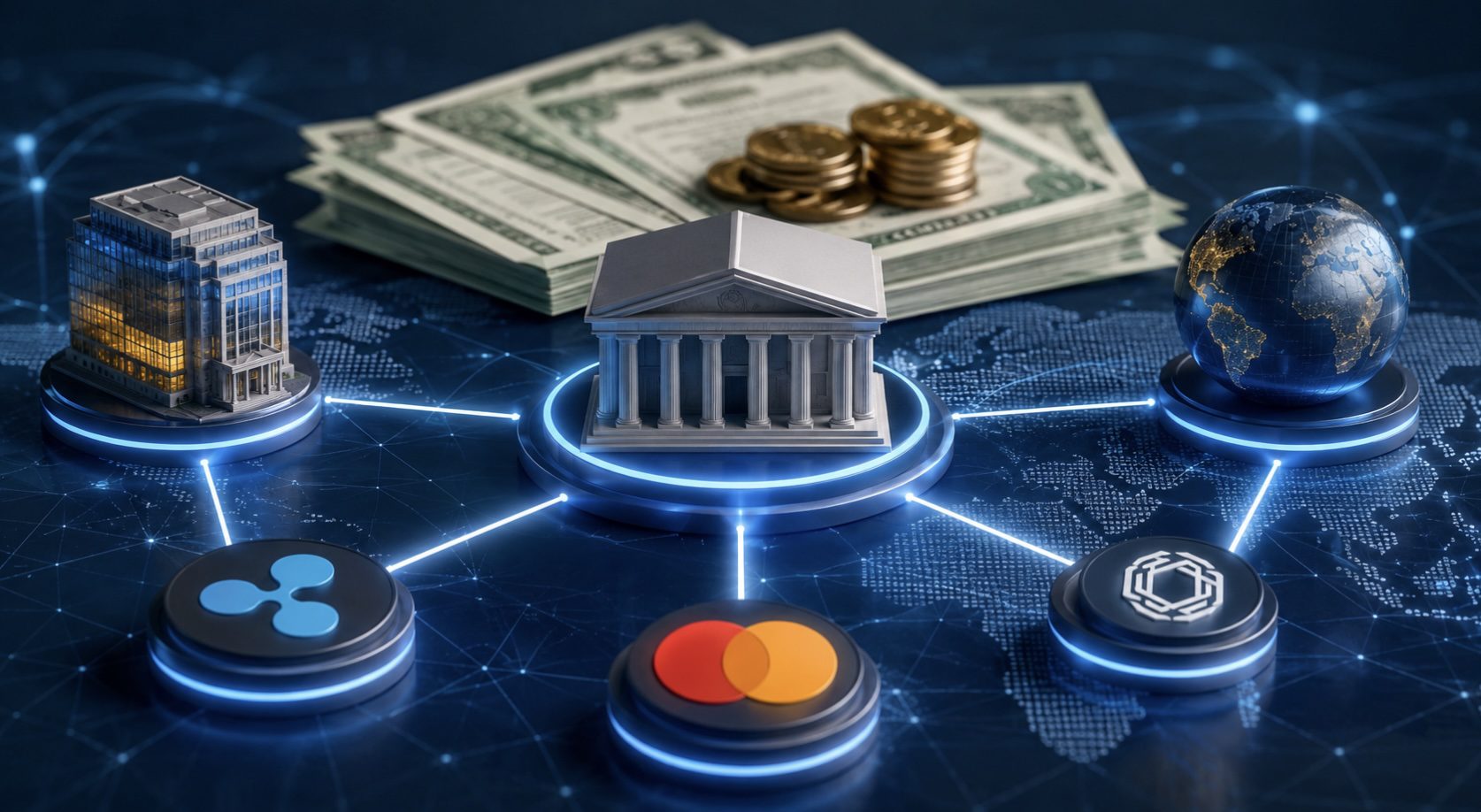
Ondo Finance, together with JP Morgan, Mastercard and Ripple, has successfully completed the first interbank and cross-border transaction of tokenized US Treasury bonds. The transaction was carried out practically in real time and combined public blockchain infrastructure with traditional banking systems.
The pilot project used Ondo's tokenized US Treasury bond fund, known as OUSG, issued on the XRP Ledger (XRPL). Ripple redeemed part of its holdings of this digital asset, while the dollar settlement was coordinated across different financial and banking platforms.
In less than five seconds
The transaction worked as follows: Ripple requested the redemption of the tokenized assets; Ondo processed the order and triggered a payment instruction through the Mastercard Multi-Token Network (MTN). Subsequently, Kinexys by JP Morgan's blockchain infrastructure executed the transfer of funds to a Ripple bank account in Singapore using JP Morgan's international banking network.
Anchorage and Google launch Agentic Banking, banking for AI agents
According to the participating companies, the blockchain portion of the transaction was processed in less than five seconds. This made it possible to connect a tokenized asset issued on a public blockchain with a traditional international bank transfer in a single coordinated flow.
The pilot represents a significant step forward for the financial sector because it demonstrates that tokenized assets can be settled between banks and across countries without relying on manual processes or the limited hours of traditional banking systems. In practice, the model opens the door to financial markets that operate 24 hours a day, seven days a week.
Outside traditional banking channels
Ian De Bode, president of Ondo Finance, said this is the first time tokenized Treasury bonds have been settled between banks and countries practically in real time and outside traditional banking channels. He added that the integration between public blockchain and global banking infrastructure lays the foundations for faster and continuous financial markets.
At Ripple, Markus Infanger, senior vice president of RippleX, said the project demonstrates how tokenized assets can move seamlessly between blockchain and the global financial system. He also highlighted the XRPL's capacity to process institutional transactions in real time.
For its part, Mastercard said its Multi-Token Network aims to facilitate interoperability between traditional money and tokenized digital assets. The company believes this type of transaction will be key to institutional adoption of real-world asset tokenization.